Saturday, September 16, 2006


The Case For Jeff Lynne's Electric Light Orchestra (ELO, Baby)

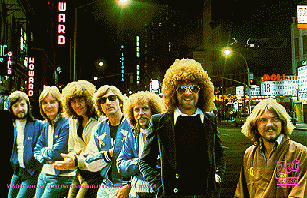
Music Review: Electric Light Orchestra - On The Third Day, Face The Music, A New World Record (Remastered Versions)


I have to be honest here and say that I'd completely forgotten just how great these albums actually are.

It was easy to do.

So much has happened in music since the late seventies to early eighties heyday of Electric Light Orchestra (or ELO as they are affectionately known by fans). Between MTV, Punk Rock, Hip Hop, and everything else that has come and gone since they married symphonic rock with impossible to deny pop sensibilities, ELO has, at times, seemed to have been reduced to some sort of punchline in the greater scheme of rock history.

They appeared so many times on Burt Sugarman's Midnight Special, for example, that in some quarters they will always be remembered as the guys Wolfman Jack barked out to with the initials "ELO" — somewhere in between "BTO" and "ELP.

"Which is really too bad. Because Jeff Lynne and ELO wrote some really damn great songs.
Lynne himself has long since gone on to considerable renown as a producer of the highest order, manning the boards for everyone from George Harrison to Bob Dylan to Tom Petty (his most significant work as a producer).

Anyway, Sony has simply done a bang-up job on the remastering of ELO's catalog. In this latest installment of that effort, the best of those years are represented here in these three discs. All of which came out before ELO began to decline in later years with albums like Discovery (which my friends in the seventies used to jokingly refer to as "Disco, Very").

If you were to do a Google search on ELO today, what you would likely come across is the fact they did rather extravagant tours in the seventies and eighties, complete with orchestras, lasers, and even a landing UFO at one point.

Which is all true. But it still completely misses the point.

Jeff Lynne had an ear for the pop hook that was virtually unmatched at the time, which is probably why everyone from Dylan to Petty would later beat a path to his door to produce their records.

These three records (along with 1974's criminally underated Eldorado), represent the peak of Lynne's powers both as a songwriter and as a master pop craftsman. ELO essentially started as a symphonic experimental offshoot of the Move, the band Lynne founded with another forgotten genius, Roy Wood. The idea here was to wed rock and roll with bigger, orchestral arrangements.

Which up until the records so beautifully restored here had met with only moderate commercial success, most notably in the form of ELO's melding of Chuck Berry's "Roll Over Beethoven," with the classical composer's own Fifth Symphony. By the time of Face the Music, ELO had carved itself out a commercial and critical niche by taking the musical reach of the progressive bands of the day — think Genesis and especially The Moody Blues here — and binding them to a string of brilliantly constructed three to four minute pop songs.

And damned if there weren't a ton of them.

From Face the Music alone there's "Evil Woman" and "Strange Magic" for starters. Less heralded (and certainly less played on classic rock radio these days), but equally strong, are forgotten chestnuts like "Nightrider," "Poker," and the beautifully haunting "One Summer Dream," which closes the album. And let's not forget the magnificent "Fire On High" which opens this album.
There is nary a pop hook to be found here.

But the spoken "madness... madness," which swirls around the menacing-sounding strings, sticks in your head every bit as much as anything else found on this album. Among the bonuses found on the newly remastered version here are earlier versions of that song, as well as "Evil Woman" and "Strange Magic."

By the time of A New World Record, ELO were bonafide worldwide superstars, and the hits just kept on coming. "Telephone Line," "Do Ya," and especially "Living Thing" are the big ones here.

The remastered disc puts a damn fine accent on the way the strings swirl around "Living Thing," for example, which is just a great pop tune to begin with. A New World Record is far from being my favorite ELO record (I'm much more partial to Eldorado and Face the Music), but it arguably does represent the band's commercial peak. The extras here include two alternate versions of "Telephone Line" and a really great little guitar driven pop tune called "Surrender" that wouldn't sound at all out of place done by somebody like The Raspberries.

Of these three reissues, On The Third Day is probably the hardest nut to crack. Lynne had yet to fully embrace the latent pop nerd lying deeply within, and as a result the more ambitious fare found here doesn't always reach the mark it aims for. There's more meandering orchestral passages here than found on the band's later albums. Still, Lynne's later and fully to-be-realized pop sensibilities are very much in evidence on tracks like the very Beatlesque — Lennon-style — "Oh No Not Susan," and the hit single "Showdown," (where the remixed guitar here is crisper than ever).

I will say this much about On The Third Day.

Of the three albums here, it rocks the most and the guitars are largely mixed front and center on this remastered version.

And once again, as with the other titles in the series, Sony has done an ace job of remastering. For audio freaks, the sound on these tracks probably represents the best of the three. Extras here include alternate takes of "Ma Ma Belle," when it was still known as "Auntie."

So for my money, all three of these wonderful reissues warrant consideration for either the hardcore ELO fan or someone looking to discover the band for the very first time

For the more selective among you, I'd head straight for Face the Music, and if you don't already have it, Eldorado.


Saturday, September 9, 2006


When Is It Okay To Feed The Writers Ego?

The following article was originally written for Blogcritics, where I have been a regular contributor since February of this year.

As we speak, there is currently something of a hot debate taking place over at Blogcritics within our private e-mail group. It seems that what goes on behind the scenes there can be quite the little soap opera at times.

Anyway, the subject of the debate revolves around the comments section there. Specifically, the writer's comments. The question is when and how often is it appropriate for a writer to comment on his own articles, a subject some there have privately referred to as "feeding" the comment box.

Here at my own personal blog, this is not exactly a hot-button issue. The World Wide Glen gets something like about 100 hits a day. Which isn't bad. But Blogcritics is read by something like 100,000 people daily. So for the writers there, getting their work good placement on the site can be a pretty big deal.

So anyway, this whole subject got me to thinking of the broader (and certainly the truer as it relates to this particular discussion) issue of the Writer's Ego.

The Writer's Ego is that ever present little thing anyone who has ever been published knows all too well.

He can be your best friend when he's actually doing the job he's paid for--which is giving the writer the confidence (some would say the "balls") to put his or her thoughts out there for the whole world to see.

Or he can be that nasty little devil that sometimes makes those around the writer choose to regard you (often rightly so) as a pompous, arrogant prick. When on it's worst behaviour, the Writers Ego can make you do things so stupid it would make the worst blacked-out alcoholic blush.

The Writers Ego at it's core begins first with the desire to write at all. From there it really starts to manifest itself when the writer comes to the realization that he can actually write, and has something important enough to say that other people might actually be interested in reading it. From there The Writers Ego can either become a healthy non-inhibitor, or it can become something more akin to a dangerous addiction.

I use the analogy to addiction because the most common manifestation of a Writers Ego is the buzz the writer gets from seeing his work published. The rush is seriously comparable to what I'm sure an alcoholic feels when he downs a shot of Jaeger or a junkie shoots a fix into his veins.

For me, when I first started getting my work published the rush was positively indescribable. It was a mixture of honest pride in my accomplishment combined with a a genuine burst of elation and exhilaration. It honestly felt like being high.

I can remember at my very first professional writing gig, (for a small community newspaper here in West Seattle) getting such a rush off of seeing my first review published that I actually grabbed a stack of about 25 newspapers and then spent hours in a coffee shop reading over and over that first article.

The rest of the newsroom thought I was nuts carting out all those papers under my arm, and I wont even go into what the waitress at the coffee shop must have been thinking. But that habit actually continued for several years. To this day, there are several boxes of old Rocket magazines (the Seattle music rag I was a contributing editor at for about ten years) sitting in my basement gathering dust.

I made about $20. an article at that community newspaper. I made even less at the Rocket. Which brings me to another important point as to the function of the Writers Ego:

Motivation.

Most of us writers make precious little in the way of actual income sharing whatever pearls of wisdom we choose to impart to the world. For every big-name journalist out there pulling down the big bucks of a steady gig at Time or Rolling Stone, there are hundreds if not thousands of us starving writers, and now bloggers, who choose to share our thoughts and observations with you the reader for little to no pay.

Fewer still of us have actual social lives, so yes the stereotype is somewhat true there as well (though not in my case of course...nudge, nudge...wink, wink...).

So what drives the bus here in terms of an actual reason to write?

The Writers Ego of course. Which in this case manifests itself when we writer's see the reaction to our work by you the reader. At Blogcritics, this reaction is measured in two ways. One is the little system of accolades our peers there have put together. This comes in the form of things like the Blogcritic Of The Day and the weekly Editor's Picks, both of which are published there.

Occasionally our work is also syndicated through Advance.net to several newspapers throughout the country. I'm proud to say that my own work has been chosen as an Editors Pick on a number of occasions and that I've also been syndicated. Good for me right?

But I also have to admit for example, that my own Writers Ego pretty much pitched a fit when my recent review of Bob Dylan's New Album wasn't chosen as an Editors Pick last week.

I thought that was the best damned review I'd done in awhile, and my Writers Ego loved it so much I must have re-read it fifty times. It was however spotlighted over the entire Labor Day weekend on the music page though, so I probably wisely kept my mouth shut about the slight I felt it received.

The other way a lot of us writers measure reaction, and hopefully feed the ever ravenous Writers Ego, is through the comments made by our readers. Which leads me back to that controversial little discussion currently raging among a few of the writers over at Blogcritics.

When and how often does a writer respond to one of his own articles via the comment box?

When I first began writing for Blogcritics back at the beginning of this year, I didn't respond to my articles at all. I was actually afraid it might be considered tacky. Then I read somewhere that one of the basic rules of blogging etiquette was to respond to those who took the time to comment on your article. Made sense, so I now make it a point to do my best to respond whenever someone comments on something I wrote.

That is, at least within reason.

My review of Neil Young's Living With War CD from earlier this year has generated something like 400 comments at Blogcritics (I think it got like two or three here at The World Wide Glen).

So my Writers Ego should be positively elated right? Wrong.

More than half of these--well more than half actually--have come from one person who has an ax to grind with the politics of that album. As of right now, the discussion there has very little to do with the review I actually wrote and I've simply taken myself completely out of it. Frankly, this is a case where Writers Ego or not, I wish that article would just die the nice dignified death it should have months ago. So this would be that rare example of a Writer's Ego actually not welcoming the comments at all because the thread has turned into something of an embarrasment.

Hey, even the Writers Ego has feelings right?

So the other question--the one so hotly debated at Blogcritics--is when does a writer inappropriately "feed his comments"? The net result, and benefit to the Writers Ego of course, is the better placement it will get you on a site that is as "busy" as Blogcritics. You get enough comments, and your story gets nice placement in either the "Most Popular" sidebar or better yet, the "Hot Topics" splashed dead center of the page.

The uglier flipside to this of course, is that in "feeding" comments, you place the importance of your own story over those of the other writers there. And when we're talking about something like 1400 contributors at Blogcritics, that's potentially going to be a whole hell of a lot of bruised Writers Egos to deal with.

Personally, I think it's something of a judgment call.


I know for sure that I have done it, just as many others have. Hell, I'll confess right here and now I've done even worse. There have been a couple of times (only a couple though okay?) where my Writers Ego has sat and watched an entire day go by without a comment to something I just wrote.

Mr. Ego, being the nasty little devil he is, then put an idea in my head. Why not post a comment under a different name? A pseudonym, yeah thats it. One comment certainly should begat another right? And besides, nobody'll know the difference anyway.

Right?

Well, actually they will. At Blogcritics there are some very good comments editors. And they know the IP addresses that each and every comment come from. I actually found this out recently when my ever trusty Writers Ego actually had me believing for about ten seconds that Neil Young himself had responded to one of my articles.

When the comments editor exposed the apparent hoax, my Writers Ego was a little disapointed. But I also learned a very important lesson and I wont be posting any comments under a pseudonym ever again. My Writers Ego is just going to have to learn some patience from now on.

So when is it appropriate for a writer to comment on his own articles?

Again, it's what I'd call a judgment call. Certainly, blogger's etiquette dictates we acknowledge our readers who take the time to comment. They are after all, helping feed our good friend the Writers Ego and should be recognized for it.

I also think that when a writer has something to add to his story that might have been missed it can be appropriate and perhaps even necessary. At Blogcritics, my blogger buddy Jet In Columbus suffers from diabetes (as do I though I was fortunate enough to get diagnosed sooner than Jet).

Anyway, Jet has recently had some very severe health problems as a result.

So he recently wrote what I feel is a very important article dealing with preventing the effects of that disease. Personally, I feel every man over 50 in America should read Jet's article (it also deals with certain male issues).


Jet has also posted a number of comments which (I feel at least) add to the information presented in the original piece.

This is what I personally would call an instance where the so-called practice of "feeding" is justified. The topic is an important one and the information presented in the additional comments was both valid and in this case warranted.

But thats just my opinion.

As for the rest of the time, I think that good old common sense should come into play. It's no secret that there are plenty of threads going on right now at Blogcritics that are basically little more than a discussion between a few people, and some of them happen to be the writers themselves. Personally, I don't have a problem with that. They have even made for some pretty damn good reading in and of themselves in certain instances.

These are after all, writers we are talking about here.

Writers with Writer's Egos.

As always, your comments are welcome and appreciated. Like you needed reminding right?

Sunday, September 3, 2006


Just Shut The Hell Up And Play...And On This Night, They Did...

DVD Review: Eric Clapton - Live At Montreux 1986

You know how there are certain musicians you just want to tell to shut the hell up and play?

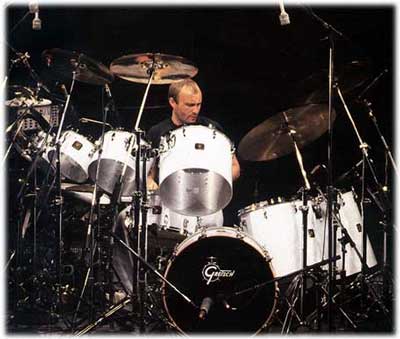
Well, for me Eric Clapton and Phil Collins are two guys who pretty much top that list.

In Clapton's case, it's when he veers away from what he does best--playing the guitar--and tries to reach that "wider audience" record company execs talk about in their corporate boardroom meetings by making pop records with people like Babyface and Lionel Richie.

And speaking of Lionel Richie, let's talk about his whiter eighties counterpart, one Mr. Phil Collins.


There was a time in said eighties that I was seriously convinced Collins had to be the Antichrist.

First he ruined Genesis, turning the once proud prog-rock pioneers into a hit machine complete with corny chereographed videos like the atrocious "I Can't Dance." And then there were those God-awful solo albums. Collins is still for my money one of the best drummers on earth. But I swear to God in heaven, for awhile there in the eighties I wanted nothing more than for Phil Collins to "Su-Su-Sussudio" right the hell off of my radio and my MTV.

So what happens when guys like this--great musicians that they are--simply do what they really do best and play? Well what can happen, and did happen in this particular case, is you get a really great concert like the one captured on the DVD Eric Clapton Live At Montreux 1986

Clapton's career at the time of this recording was on an upswing, and he was touring with a leaner, meaner band that not only included Collins on drums, but crack session guys Greg Phillinganes on keys and backing vocals, and bassist Nathan East (who remains with Clapton today).

Touring between two of Clapton's eighties albums, Behind The Sun and August, the emphasis of the show was strictly on the music, and the performances here are nothing short of stellar.

The show kicks off with a couple of old chestnuts from Clapton's Cream days, "Crossroads" and "White Room." Here the performances are servicable enough, but certainly nothing special (although the rearrangement of "Crossroads" is an interesting one).

But by the third number, "I Shot The Sherriff" of all things, Clapton takes off on something of a guitar tear and basically never looks back for the rest of the concert.


With his very eighties (and very pre-metrosexual) bright orange shirt soaked in sweat, Clapton shows for all the world to see just why he has developed the reputation he has as one of rock's premier guitarists.

Normally a master of understatement in the latter stages of his career, Clapton basically just lets it rip here. For his part, Collins drumming is equally frenetic, mixing plenty of Rastafarian flavored rimshots with his more trademarked mix of power and finnese.

I swear, "I Shot The Sherriff" never sounded so damn good.

From there, several songs from the still unreleased August are previewed, including one that never made it to the actual record, "I Wanna Make Love To You" (which later did finally show up on Clapton's Crossroads box set).

Here Clapton is allowed to really stretch out his solos and there is some great improvisational interplay with Collins in particular. If you appreciate watching really great musicians the same way I do, this moment alone is worth the DVD's $15. price tag.


Later in the show they get back to the hits, and there is a nice segueway from "Badge" to "Let it Rain" which once again finds Clapton just soloing his ass off. From there, Collins gets his solo turn for "In The Air Tonight" and it proves to be a bit of a buzzkill.

I'm sorry but as much as I love Collins the drummer, I loathe Collins the song and dance man.

As the show begins to wind to it's inevitable close the hits just keep on coming.

A very tasty "Cocaine" is followed in short order by an absolutely blistering "Layla." Clapton begins his signature tune with a beautifully played slowed down bluesy intro and then tears into the song as though he were playing it for the very first time, rather than the thousands of nights and stages this classic rock staple has no doubt seen. Greg Phillinganes handles the keyboard parts of the songs second half so well you half expect to see Joe Pesci running out to claim his shinebox from Goodfellas.

And thats what happens when really great musicians like these guys just shut up and play.

Thursday, August 31, 2006


Bob Dylan's New Album: Saved Again?

Music Review: Bob Dylan - Modern Times (Deluxe Edition)

Bob Dylan's remarkable new album Modern Times is set against an apocalyptic backdrop of broken levees, broken dreams, and a "world that has gone black before my eyes," according to at least one of this album's brilliant ten new songs.

But if Dylan's got doomsday on his mind, the impending apocalypse he foresees seems to be as personal as it is biblical.

Bob Dylan has employed religious imagery in his lyrics at various points throughout his illustrious career. But unless I am wildly misreading the lyrics here (and I honestly don't think I am), the Modern Times Dylan refers to on this album mean nothing less than the End Of Days itself.

This in itself should surprise no one.

Dylan has always been a rather astute commentator on our times since at least his "spokesman of a generation" heyday in the sixties.

And whether it's because of a Christian president fighting a "war on terror" against what are largely Islamic enemies (let's be honest here), or the biblical level disasters like Katrina we've seen in recent years, or any and all of the above, make no mistake.

Apocalyptic thought has become a deeply ingrained part of the national, if not the global psyche. That someone like Bob Dylan would take note of this on his new record is again, hardly a surprise.

Still, this album contains some of the darkest, most overtly religious imagery that Dylan has used since the Slow Train Coming days. But there is a distinct difference between then and now. While Dylan himself seems to be acutely aware of the impending doom of songs like the opening "Thunder On The Mountain", the man we find here is not really so much the zealous fire and brimstone preacher of the infamous "Born Again" years.


Well okay, there is the occasional biblical chastisement. Such as found in the line "Well I got up this mornin', see the rising sun return, Sooner or later you too shall burn" from Dylan's modern uptake of the blues standard "Rollin And Tumblin."

Dylan similiarly brings another blues standard into his Modern Times vision of doomsday with "The Levees Gonna Break." Here Dylan sounds for all the world like a cross between Muddy Waters and John Lee Hooker, as he implores his baby to "put on your cat clothes Mama, put on your evening dress, few more years of hard work, then there'll be 1,000 years of happiness," in a line that seems to reference the future millennial kingdom of biblical prophecy.

More often though, what we find here is a broken down traveller, who's made all of the usual mistakes such men make and is seeking redemption pretty much wherever he can find it. Which in this case, means walking the usual tightrope between devotion and desire.


On "Thunder On The Mountain", Dylan's world weary traveller of the apocalypse's thoughts go from "wonderin where in the world Alicia Keys could be" to yearning for "some sweet day I'll stand beside my King" in pretty much an instant of time. This, even as he seeks refuge from the "mean old twister bearing down on me," as the band puts a fine shine on the fact with a swagger that recalls "Highway 61" or that great forgotten Shot Of Love B-side "The Grooms Still Waiting At the Altar."

In another of Modern Times best tracks, "Nettie Moore," Dylan brilliantly lyricizes the delicate balancing act between the carnal and the spiritual within the very same song.

On the one hand the traveller admits to "a pile of sins to pay for and I aint got no time to hide," and then in the very next line declares "I'd walk through a blazing fire baby, if I knew you was on the other side." Dylan's traveller then laments about "these bad luck women that stick like glue, it's either one or the other or neither of the two."

Clearly, this is a conflicted guy.

Making matters worse is that without his beloved Nettie Moore, "theres no one left here to tell, the world has gone black before my eyes." Musically the song is instantly familiar sounding as Dylan wraps his words around a simply strummed guitar punctuated by an ominously metronomic bass drum.

With the apocalypse raging outside, the final track, the eight minute opus "Aint Walkin," finds Dylan's beaten down traveller "walkin through the cities of the plague" and that there "aint no altars on this long and lonesome road." Nothing is resolved as he confesses that "I am a tryin to love my neighbor and do good unto others, but oh mother, things aint going well." The album itself likewise fades into the black of "the last outback at the worlds end."


I don't know about you, but personally I'm game for a sequel.

While Modern Times is being promoted as the final album of the trilogy that began with Time Out Of Mind and continued through 2001's Love & Theft this album not only stands completely out on it's own, but for my money is the best of the three.

Musically, the vibe is very similiar to the other two albums in the so-called trilogy. Still, I personally find the mix here to be far more varied in terms of styles. Dylan's vocals here are also not only a lot smoother around the edges (though still carrying the bluesy croak of the other two), the phrasing here is just way sharper, perhaps reflecting the more thematic focus of the lyrics.

As for the lyrics themselves? I downloaded sixteen pages worth just to properly decipher them before writing this review. Dylan hasn't written stuff this darkly fascinating and evocative in years.

Modern Times is a masterpiece that is right now easily the best record I've heard this year. Five Stars? Not to put too fine a point on it, but oh hell yeah.

Incidentally the bonus version includes a DVD which includes nifty live footage of "Love Sick" live from the Grammy Awards (sadly with the infamous Soy Bomb footage edited out) and videos for "Cold Irons Bound," "Things Have Changed," and "Blood In My Eyes."

Sunday, August 13, 2006


The Greatest Concerts I Have Ever Seen Vol. 1:

Neil Young with The Restless At The Paramount Theatre, Seattle WA 02/21/1989

Let me start by simply saying this. There are concerts, and then there are concerts.

I've gotta be honest here and say I'm a little reluctant to write anything about Neil Young here in the wake of the spamming and flaming frenzy that continues to this day over at my review of Neil's controversial Living With War CD released earlier this year.

But like I said, there are concerts, and then there are concerts.

When you've gone to as many shows as I have over the years there are a handful which really stand out. For me, one such night was when I saw Bruce Springsteen on the Darkness On The Edge Of Town tour at the Seattle Center Arena in 1978. Some five hours after I first entered the building, Bruce came out at 2 AM, with the house lights up and half the equipment already torn down, and played "Twist And Shout" for the fifty or so of us diehards who refused to leave.


It was just amazing.

Another such night was when I saw Neil Young at the Paramount here in Seattle in 1989. This was billed as a solo acoustic show and Neil was coming off a string of largely forgettable albums like Old Ways and Everybody's Rocking. Most Neil Young fans remember this as the most schizophrenic period of his career.

Many we're ready to write off Neil Young entirely.

So what actually transpired that night was something I will never forget. I've seen Neil Young numerous times, both solo, with Crazy Horse, and with Crosby Stills & Nash. And it's always pretty much a guarantee you're going to get a decent show. I mean when we are talking about a guy who has written as many amazing songs over the years as Neil Young has, how can can you not?

But this was something else. Let me set the stage...

Like I said, this show came at a point when Neil Young's last really great record, Rust Never Sleeps had come some ten years prior. So what those of us attending the show that night expected was nothing more than what it was actually billed as. A night of Neil Young playing an acoustic set of his greatest hits. You know? "Heart Of Gold," "Sugar Mountain" and the like.

And that is exactly how the show began innocently enough. There was a very nice acoustic set of Neil playing the hits, followed by an intermission. Perfect opportunity to drain the lizard and get a beer. But then something totally unexpected happened. I was about midway through my beer when I heard feedback.

Thats right. Feedback.

The same kind of feedback that takes up a full third disc of Neil's Arc/Weld live album if you happen to own that now rare version of it.

Something was up. And it was goodbye beer, back to seat.

And for the next hour or so, Neil Young and his new band, The Restless proceeded to completely blast the 3000 or so of us folks crammed into the Paramount out of our seats with the loudest, most blistering, and completely unannounced and unexpected set of electric (very much so) music I've ever had the shock to witness.


It was absolutely incredible and even more unexpected. Not only that. This was one tight ass band. Don't get me wrong. I love the stuff Neil does with Crazy Horse. But nobody will ever accuse them of being a well-oiled unit okay? The Restless on the other hand? Sharp as a fricking razor.

And you've got to understand something here. Freedom, the album widely acknowledged as Neil Young's comeback after wandering somewhat aimlessly through various genre experiments in the eighties, was still some nine months away. A lot of folks had written Neil off entirely.


But on this night, Neil Young was trying on this new music for the very first time. At that point the album which would eventually became Freedom was still in the working stages, and was actually going to be called Eldorado.


None of us attending that night had any idea that the album that would re-establish Neil Young as one of the all time greats was in our futures. But Neil gave us a little taste of this particular future that night. Big time. Performing yet to be released songs like the then title track of Eldorado in between glorious feedback laden takes on gems like "Down By The River."

It was absolutely incredible.

A full on metallic assault worthy of a 15,000 seat arena in the confines of a 3000 seat theatre more suited to somebody like George Benson (and Neil played a version of "On Broadway" that night so heavy it peeled the ceiling), than to somebody like Metallica.

"Rockin In The Free World"?


Played for the very first time before an audience that night. What became one of Neil's all-time classics was tested out on those of us fortunate enough to be in attendance that night.

So what prompted me to write about this, one of the greatest concert memories I have in a lifetime of seeing shows tonight?

Well that would be the gift dropped in my mailbox this morning from my good friend James Tolin. Don't ask me where on earth he found this. I don't care. But James dropped a bootleg CD of this very show in my mailbox this morning.

I didn't even know that such a bootleg existed. Earlier tonight I called James to thank him and he said that all he wanted to know was whether the concert I have raved about for years was as good as I remember it.

Well ya know what James?

I'm listening to it right now and getting floored all over again. I'm also actually very pleasantly surprised at the quality of the recording, given how loud I remember the show as being in such a small place.

So that would be an affirmative James. And Thank You.

Like I said, there are concerts. And then there are concerts.


Setlist:
1. Comes A Time
2. Sugar Mountain
3. The Needle And The Damage Done
4. After The Gold Rush
5. For The Turnstiles
6. Silver And Gold
7. The Ways Of Love
8. Days That Used To Be
9. Heart Of Gold
10. Heavy Love
11. Don't Cry
12. Cocaine Eyes
13. Eldorado
14. Box Car
15. Mr. Soul
16. Cinnamon Girl
17. Rockin In The Free World (first time ever played)
18. Bad Fog Of Loneliness
19. Down By The River
20. Hey Hey, My My
21. On Broadway
22. Tonights The Night

Saturday, August 12, 2006

When Is It Time To Let The Music Go?


So I saw this really good band tonight.

Not that this is any big revelation in itself, but the news flash comes in the unexpected place I saw these guys. Who, by the way, are called Glass Republic (and yes, I agree they need a better name ... among other things we'll get to in a minute).

Earlier tonight I met my friend Dave, as I often do on Friday night, at the Poogie Tavern here in West Seattle.

The Poogie is pretty much your classic beer bar.

And it is something of an institution. It's a place where guys go to drink beer. End of sentence right? It's a place where various drunks, bikers, and working class types go to quaff a cold beverage at the end of a hard working week.


Been that way for years. As my West Seattle neighborhood has experienced the proliferation of various upscale restaurants and bars in recent months, the "Poog" has remained something of a constant. It's a place you can go to drink a cold beer that isn't going to come with some fancy name and an even fancier price.

Anyway, my beloved "Poog", in an effort to compete with the fancier joints populating the neighborhood these days, adopted a live music thing sometime earlier this summer. No big deal right? You get your shitty Top 40 bands providing a backdrop to the usual working class dudes getting their buzz on and trying to score on that hottie at the bar with the tight jeans.


So imagine my surprise tonight when they actually booked a decent band. Not just decent, but actually pretty damn good. Glass Republic needs work to be sure. Their name sucks, as I've already noted. But the basic ingredients were there. They played all original material (which takes a lot of balls in a place like the "Poog") --think of the Blues Brothers playing "Rawhide" at that shitkicker bar.

Not only that. These guys had chops. The bass player was playing this wildly progressive Chris Squire shit and the drummer was playing in time signatures to match (think King Crimson circa the Red album, or someone like Bill Bruford).

Anyway, I know a diamond in the rough when I see it. I always have. Which gets me to the real point of this article.

My friends will tell you. I am the very definition of a music freak, as in obsessed. I can't let it go. I go out to have a beer at some dive with my friend and there is always the potential I may discover the next great progressive band.

It's a fucking curse.

Let me put this into perspective if you don't mind. Like anyone afflicted with this particular disease, I've heard the naysayers since I was a little boy. Stuff like: "What is it with this music of yours? You know that will never amount to anything, right?"

It's a story that it is at least as old as rock and roll itself. You know, the stuff about you need to cut your hair, put on that tie, and get a real job. Makes sense right? Except, at least in my particular case, I managed to beat those odds. And I did so for a very long time.

I've always had a gift for writing. Don't know what it is — something in the genes or whatever — but I've always had it. As a 3 year old, I was reading the billboards out of the window of my parents' car. As a 1st grader, they had to put me in a third grade reading class. And around that same time, I first saw The Beatles on The Ed Sullivan Show.

Like a fool, I squandered the paid education, (and the journalism degree I surely would have attained), my grandmother (God Bless Her Soul) offered me, in order to work in a record store. It's what I wanted to do. And you know what? I never looked back afterwards. While working at the various record stores I eventually managed over the years, I continued to write. Because I had the gift and I knew it.
Eventually, I landed a freelancing gig at the Rocket (which at that time — the late Eighties — was pretty much Seattle's music bible). I fell into covering what was Seattle's music ghetto in the age of the pre-grunge revolution that was to come. Then I happened onto a guy that would later come to be known to the world as Sir-Mix A-Lot.

And that's when everything changed. Everything.

I became the "Shockmaster". There is no question that other people, (most notably a Seattle DJ named Nasty Nes) were involved in the discovery of what would become to be known as the "Baby Got Back" guy. But I was there. There's no question about that.

Anyway, the Seattle college radio station KCMU soon called me up and asked me to host a rap show. And that's how I became the "Shockmaster." I decided to call my show "Shock Frequency," (I'd considered other names including "Play That Funky Music White Boy," for obvious reasons).

The first night I was on the air, my first caller was the Rocket editor at the time, a guy named Robert Newman, and he called me "the Shockmaster". The name stuck.

I never made a dime as the "Shockmaster." But it did open some doors. Some very big doors actually. And you have to understand that at the time, being the music geek I was, I was very aware of the potential of the new (at that time) genre of hip-hop. In some ways I felt like a fricking hip-hop version of Alan Freed (for you novices, the DJ who coined the term "rock and roll"). I felt pretty damn lucky.

I eventually ended up in L.A. working for Rick Rubin at American Recordings. Rick Fucking Rubin.

He interviewed me at his house where we talked about things like the pro-wrestling God Ric Flair and the great metal pioneers Blue Cheer. We clicked. I got hired. I had arrived.

Unfortunately this is the part where things began to go south. At this point I began hearing those old voices of doubt in my head:

"What is it with this music of yours? You know that will never amount to anything, right?"

Well ya know what? It did amount to something. Damn right it did. If only for three short years, it surely did. But after those three short years, I got fired by American. I won't go into the details for reasons that should be both private and obvious to anyone reading this. They have their take on that. I have mine. Simple as that.

But after that three-year stint in L.A., I got sent home to Seattle. But those three years changed my life. Damn right they did.

Once I got back home to Seattle, I simply tried to get along in whatever way I could. I opened and closed a record store. And then I got out of music altogether and went to work for the cable company. I eventually rediscovered that I could write. About music. About the things that I really love. Problem is, I still gotta make a living don't I? Well, to quote Ringo Starr, "It Don't Come Easy."

I'm currently working at a temporary gig dotting the I's and crossing the T's for a digital music service. For all intents and purposes the gig runs out on September 1. And you know what? I like it. I really do. I make one hell of a lot less money than I'm used to. But it's OK. For now it really is. But what happens next? Your guess is as good as mine.

Music has changed a lot since my day. I'm sorry if I'm sounding like the proverbial old fart here, but it really has. I'm a 50-year-old guy. Convict me as charged okay? But I still keep up. Honest I do.

I do confess, somewhat at least, to being somewhat guilty of the "old guy syndrome" though. I confess to looking a lot more forward to the releases of a guy like say, Bob Dylan (I'm stoked about this Modern Times record), than I do about what, for instance, Beyonce and Jay-Z are up to these days.

At least I'm not following the latest tour plans of Lynyrd Skynyrd (like a lot of guys my age are), what with all of the main guys being dead and buried.

Play Free Bird dude.

Or queuing up for tickets to the "New Cars" with Todd "Hello It's Me" Rundgren all of recreating Ric Ocasek's parts. I wont even go into Boston and Styx. They play Sheds on double bills in the summer. They play Indian Casinos and the like in the winter. Not that there's anything wrong with that.

Do I have problems with the state of music right now? Well, yes I do. I have a huge problem. For example, I have a problem with the emphasis on "delivery systems" these days. At least as opposed to the more artist driven music of the past. On the one hand, the choices offered in terms of selection by things like cell phones and MP3 players do offer freedom to anyone choosing a specific track to play.

On the other hand, what motivation is there for an artist to create a work like "Pet Sounds" or "Born To Run," for instance, in a "track specific" environment?

Especially one played on some tinny cell phone speaker?

So I saw this really good band tonight. They're called Glass Republic. Shitty name? You betcha.

But they'll figure things out as times go on. And I did see something in them.

Question is: When Is It Time To Let The Music Go?

In my particular case, maybe the answer is now. Then again...

Friday, August 4, 2006


The Beatles, The Bible, And Bodega Bay

Book Review: The Beatles, The Bible, And Bodega Bay: My Long And Winding Road By Ken Mansfield

A couple of weeks ago, I happened across an interesting advertisement in my community newspaper, The West Seattle Herald. The ad was for a presentation being given at a local Calvary Chapel church about the Beatles.

What caught my eye, was the name of the speaker, a guy named Ken Mansfield.

Having been a pretty hardcore Beatles fan for most of my life, I knew that name from somewhere. I just wasn't sure exactly where the recall came from. With my curiosity appropriately piqued, and with the church in question a very convenient two block walk from my house, I decided to check it out.

Now, if your experience has been anything like mine, you already know that at least part of me expected the worst. When Christian churches or organizations do any sort of special presentation having to do with rock music, it is most often going to be to expose it as the evil scourge it surely is, what with all the backward masking and those satanic heavy metal bands out there.

If you've ever come across one of those late night broadcasts from something like The 700 Club, where some guy who worked as a roadie for say, Marilyn Manson, is dishing up salacious tales of group orgies and blood drinking, you know exactly what I'm talking about. The message is usually something along the lines of you need to burn all of your rock CDs and get with Jesus.


Which is why Mansfield's presentation ended up being such a pleasant surprise. Mansfield's church lecture actually turned out to be a truly wonderful remembrance of his time in the inner sanctum of the greatest band of all time, complete with music and lots of rare slides.

Mansfield did not dish up a single sordid tale of drugs or groupies (though he did verify this sort of thing went on...I mean, let's be honest here). Nor did he have a single bad thing to say about "The Lads" as he referred to them often in the most endearing of terms. In fact he described them as "the sweetest, most polite group of guys you'd ever want to meet." Perfect Gentlemen, was how he put it.

I honestly had to pinch myself to make sure I was really in church.

So the expected "burn your rock CDs" part of the program never did come. The "Get With Jesus" part, of course did. But here again I was rather surprised and somewhat taken back by the gentle and non-judgmental way this was presented.

Mansfield wrapped up his remembrances of the Beatles with his personal testimony of his eventual fall from the music business (again revealing none of the sorry details in the same show of class that characterized his earlier memories of the Beatles).

He went on to tell a simple story of finding personal peace with Jesus and settling down in the quiet California fishing town of Bodega Bay with his wife.

There was no hell and brimstone preaching to be found anywhere in the entire presentation. Yet, I was absolutely rivetted by it.

The part where he talked about one day not being able to find a job in the business he devoted so much of his life to hit me especially hard. As someone who worked in that business myself for over twenty years (though at nowhere near Mansfield's level), his was a testimony I had no problem relating to myself.

After introducing myself to Mansfield and embarrasing myself by attempting to bribe him out of a copy of his book with a Blogcritics review (he'd never heard of BC by the way), I decided to buy a copy from Amazon anyway the very next day. I devoured it in a single six hour sitting.

In much the same laid back style of the presentation I saw in church, The Beatles, The Bible, And Bodega Bay alternates chapters between Mansfield's Beatles memories of the past, with his present day prayers and meditations with God, most taking place from the idyllic Bodega Bay home he so clearly loves.

Alongside the Beatles pages, run chronological event summaries in the form of bullet points highlighting the Beatles career milestones. Meanwhile selected biblical passages run alongside the pages recounting his bayside devotional conversations with God.

Despite what one might see as a contradiction here, the two themes weave together remarkably well, and never for one second does the Christian part of his story come across as preachy or judgmental.

In the Beatles portion of the narrative, Mansfield traces his journey from his humble Idaho beginings to the ivory tower of Capitol Records in Hollywood, to being asked by the Fab Four themselves to run their Apple Records operation in the U.S. Along the way, Mansfield recounts numerous personal recollections from those heady days in the form of some very interesting and telling annecdotes.

This is all wonderfully illustrated with priceless, never before seen pictures and memorabilia from his personal collection. He even tells the story of nearly selling one such piece--a handwritten and signed note from John Lennon--to a used record dealer when he was later down on his luck. As soon as he realized what he almost did, he snatched back the picture as well as the twenty five cents the dealer was about to pay him for it.


Mansfield describes the thrill of being at the Beatles historic final London rooftop concert for the Let It Be film, with all of the excitement and awe of being a kid in what had to be the world's greatest candystore.

He also details the negotiation tactics of a ruthless Allen Klein as he was in the process of taking over Apple. In what came down to a tennis match for Mansfield's job, Mansfield won enabling him to wisely walk away from Klein's offer. He talks about how Capitol Records handled the "Paul Is Dead" rumors which swirled about after the release of Abbey Road. They eventually got a handwriting expert to verify everything Paul had signed for Capitol came from the same man.


There are also the numerous personal stories of his private moments with the most famous four men on earth. Like the time Mansfield had to be literally saved by Paul McCartney at a meeting where he was first shown the nude photographs of John and Yoko for the Two Virgins without prior warning. Or when he witnessed an impromptu living room jam session at George's house with the likes of Eric Clapton, Donovan, and the Jefferson Airplane's Jack Casady taking turns trying to one-up each other.

Of course there are also tragedies as Mansfield recounts the deaths of close friends like Beatles confidant Mal Evans, who was found shot under mysterious curcuimstances while Mansfield was across town accepting a Grammy Award. The two had spoken earlier the same day and Mansfield recalls sensing there was something terribly wrong.

When Mansfield got the news of John Lennon's death, he was in the process of going through his archive of Lennon photos at his home in what proved to be a moment of bittersweet, poetic irony.

Amazingly, Mansfield recounts these stories (and many more) not only fondly, but without even a hint of the scandal which colors so many of the other Beatles biographies and tell-all books which have come out over the years.

His credentials of having actually been there at a very high level are without question, having run Apple in the U.S. for the Beatles. The numerous photographs and personal recollections which color this book only further cement Mansfield's credibility. Yet it's clear that despite being the ultimate insider, Mansfield was also the Beatles friend first and foremost. And that he remains so without a single ax to grind here.


It is little wonder that this book is the only Beatles retrospective outside of the official "Anthology" that Paul, George, Ringo, and the Lennon estate represented by John's widow, Yoko Ono, personally signed off on and approved.

Likewise, Mansfield never really dishes up any dirt on his own eventual fall from the grace of the music industry, though it is clearly implied that such a fall did in fact take place at some point. Rather he fast forwards throughout the book to the present.

This is a time which finds Ken Mansfield at peace. With his past. With his family and his marriage. With his life. And at peace with the God who he finds himself in deep devotion and prayer with in his daily walks along his beloved Bodega Bay.

For a man who has lived several lifetimes worth of experience, any one of us should find ourselves so lucky at the journey's end.