Friday, November 10, 2006

Borat And Mahir: Twin Sons Of Different Goat?

So I finally got out to see Borat the other night, and can happily report that everything you have heard about the film is true and then some.
Borat is easily the most offensive, politically incorrect movie I have seen in what seems like forever.

It is also so hilarious, my gut is still hurting as I write this. There are scenes in this movie that are so disgusting I literally had to turn my head away from the screen, even as I was laughing so hard I was practically in tears. Gross beyond description, scenes like the nude wrestling match between Borat and his grotesquely fat movie producer are also hysterically funny.


In Borat, not only are there no sacred cows--there aren't any sacred bears, goats, or roosters either. You'd have to see the film to fully grasp the real meaning of that last sentence I just wrote. In the meantime, you'll just have to take my word for it.

But here's a quick synopsis:

In his quest to discover American culture, Kazakhstani journalist Borat manages to piss off just about everybody from holy rolling pentecostals to angry "old man" feminists. Puzzling over why "nobody like me," Borat does everything from jerking off in public, to "making shit in toliet" at a dinner designed to teach him American dinner etiquette. Of course bringing the shit neatly bagged to the dinner table is apparently considered perfectly good manners in Kazakhstan.


I think I'm starting to see why government officials in that country are none too happy about this film.

So as you can probably imagine, I couldn't wait to get back home to my computer and type out a review after seeing Borat. The problem I didn't anticipate was finding a unique angle. Seems that the film hailed in it's own advertising as the "best reviewed movie of the year," has also been the most reviewed movie of the year. Some of the very best scribes out there have already covered it from every perspective imaginable. What was this writer to do?

So imagine my delight, when like manna from heaven, I discovered Mahir. As in Mahir Cagri.


Now you have no doubt heard about some of the lawsuits already said to be brewing over the real-time situations so hilariously exploited in this movie.

You may have heard for example about the frat boys who picked up the hitchhiking Borat and took him on a wild, drunken ride in an SUV. Said to be humiliated by the racist and sexist comments made during their party on wheels, these boys are now doing the choir act. More legal hilarity is no doubt bound to ensue.

But Mahir is the one guy who could actually have a legitimate case. The similarities between the real-life Mahir and Sasha Baron Cohen's character Borat Sagdiyev are striking to be sure. They are both tall, mustached men from foreign lands (Mahir is from Izmir,Turkey), who speak a sort of fractured form of English. They are both journalists who share a taste for things like ping pong; exotic music and clothing choices; and making sexy time with nice nude models and other peoples.


Mahir first became an underground Internet phenomenon in 1999.

His I Kiss You website first became a cyber-oddity and in-joke among the geek crowd, before growing a huge world wide audience that at one point drew daily hits numbering six figures and included celebrity fans like Roseanne Barr and Kenny G. On Mahir's somewhat modest looking site, you can find him talking about his various interests and see him in lots and lots of pictures. Playing ping-pong. Relaxing in a tight red speedo. And most of all, professing his love for sex.

Sound familiar? Then there is this from Mahir himself:


"My profession jurnalist, music and sport teacher , I make psycolojy doctora. I like to take foto-camera (amimals, towns, nice nude models and peoples)."

A note to my readers here that the mispelled words are Mahir's rather than mine. Mahir's fondness for music ("I like music, I have many many music enstrumans my home I can play") and sports ("I like sport, swiming, basketball, tenis, volayball, walk") are fully documented. As his is love for sex ("I like sex").

Mahir is also a man of the world who says that "I like travel I go 3-4 country every year I went , Germany , Nederland , Belgium , Austria , Denmark , Sweden , Hungary Moldovia , Ukraina , Bulgaria , Romania , Macedonia , Azerbaijan , Georrgia , Iran ....."

You get the idea. But most of all, Mahir enjoys making friends. Both while traveling abroad ("I like to be friendship from different country") or making new aquaintances at home ("Who is want to come TURKEY I can invitate...She can stay my home...").

According to Wikipedia, Mahir's website has both the distinction of being named as one of CNET's Top Ten Internet Fads (on July 15, 2005) and PC Magazine's 25 Worst Web Sites (on September 15, 2006).

Whether or not the real life Mahir's internet fame actually predates Sasha Baron Cohen's fictional Borat character probably depends on who you talk to. But Mahir--who has enjoyed something of a revival in popularity since the Borat film became a national phenomenon this week--is said to be pondering legal action. He plans to travel to London seeking to sue Cohen "first for honour and money after."


At the very least, Mahir wants an apology from Cohen "for what is my right." He has however added that he would accept Sacha's friendship "if he want to make friends."

Monday, November 6, 2006


Dylan Speaks: The Legendary 1965 San Francisco Press Conference

Music DVD Review: Dylan Speaks - The Legendary 1965 Press Conference In San Francisco

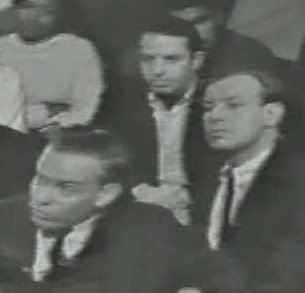
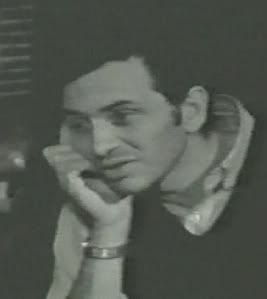
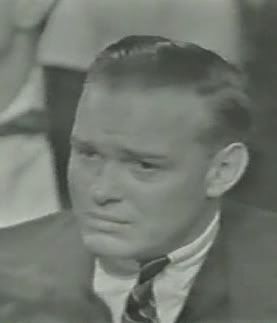
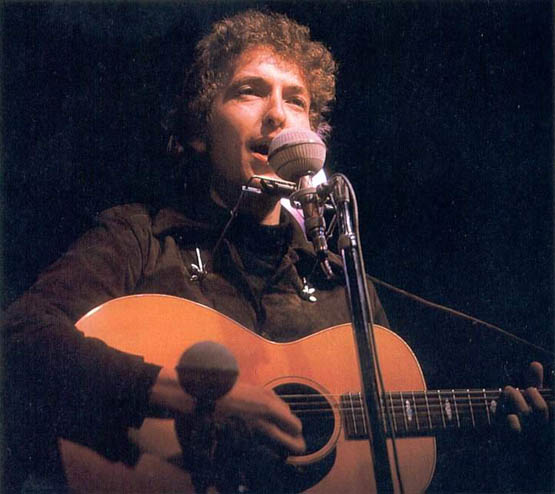
On Friday December 3, 1965, Bob Dylan held what has long since gone down as one of the most legendary press conferences in pop music history.

Standing in sharp contrast to the often mumbling, rambling Dylan seen in many of his more recent-day press events — such as when he was interviewed by 60 Minutes a year or so back — here Dylan was animated, engaging, and even funny at times.

Orchestrated by the celebrated jazz turned pop-music critic Ralph J. Gleason, the event was held in the studios of San Francisco's KQED TV. Coming just a few months after Dylan had stunned the crowd at Newport by going full-blown electric (and basically horrifying the folkie purists there), media interest in Dylan was at an all-time high.

So the room that afternoon was filled with a throng of chain-smoking old school reporters (Dylan himself was never too far from a cigarette) who rubbed shoulders side by side with counter culture figures like Allen Ginsburg and Bill Graham. As you'd probably expect, the sixties generational mix often made for some truly inspired theatre.

Over the years, this infamous press conference has been seen in bits and pieces in many of the various Dylan biopics - the most recent being Scorsese's brilliant No Direction Home. Fully restored here the way it was meant to be seen — filmed in glorious black and white and recorded in beautiful mono sound — this DVD replays the entire event here and now for the first time some forty years later.

Although Dylan looks a little tired (he rubs his eyes constantly throughout), he is fully engaged in a way rarely seen in his interviews. And as I said, he is downright funny at times. Such as when he is momentarily distracted by a cigarette ash apparently dropped down onto his pants.

But he never misses a beat as he is asked every imaginable question from the ridiculous ("What does that motorcycle on your shirt on the album cover actually mean?"), to the sublime. The great quotes here come so fast and furious over the course of fifty minutes; it is sometimes a little hard to keep up. The most well known of these comes early. When asked whether he thinks of himself as more of a singer or a poet, Dylan famously responds "I think of myself as a song and dance man."

We also learn his opinions of some of the various other artists of his day. When asked if he thinks Donovan is a good poet for example, Dylan responds with a flat sounding "no." He then adds, "but I think he's a nice guy though." When asked who his favorite poets are, Dylan rattles off a list that includes Allen Ginsburg (seated in the audience) as well as Charlie Rich, W.C. Fields, and Smokey Robinson.


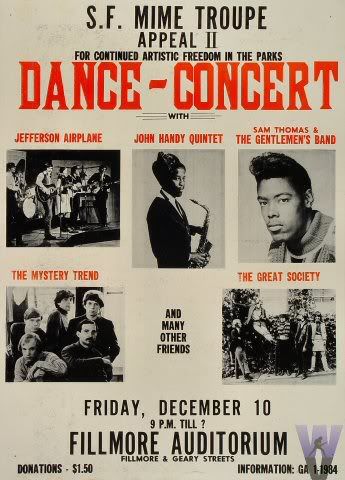
When Bill Graham asks who he thinks did the best covers of his songs, Dylan singles out Manfred Mann for praise. Ever the concert promoter, Graham manages to place a flyer for a Jefferson Airplane concert at the Fillmore on Dylan's interview table. Dylan later happily pimps the show for Graham by holding the poster up and saying he'd be there if he didn't have other commitments.


In another quote that is classically Dylan, he describes folk music as "a constitutional replay of mass production." If that one has you scratching your head, just think of the folks who were there that day.

Perhaps most interesting is the nonchalance Dylan displays about his own success. When one reporter brings up the charges of sellout from the folk music purists, Dylan replies by saying that he has no comments, no arguments, and that he doesn't feel guilty. When another needles him repeatedly over why he thinks he is so popular, Dylan claims a sort of puzzled indifference. When it comes right down to it, he simply says he doesn't really know why. For a guy around whom the entire pop music universe basically revolved at the time, perhaps it is that quote that is the most telling one here.

With the release of the great Modern Times CD this year, there has been a notable revival of interest in Dylan of late. For those climbing aboard for the first time, this DVD provides some great insight into the earliest years of a musical icon. For longtime fans, it makes for a glimpse of Dylan at his most revealing that has rarely been seen since.

It also makes for some great theatre.

Saturday, October 28, 2006

Sirius-ly Funny: Now I Remember Why I Miss Howard Stern


The following article was named an "Editors Pick" at http://blogcritics.org for the week ending November 2, 2006

In case you missed it, Sirius Satellite Radio offered a two-day long free internet preview of it's programming earlier this week. Millions of potential new listeners tuned in to what is being hailed by some as a revolutionary new vista of broadcasting unrestricted by commercial formats--but more importantly, unrestricted by an ever vigilant FCC.

The drawing card for most was the first chance to hear Howard Stern since he left the commercial airwaves for this brave new world well over a year ago.


If you believed the hype put forth by Stern during the two day free promotion, as many as 47 million people tuned in via the internet.

I was one of them.

And within minutes, I remembered just why, and just how much, I've missed hearing Stern on my radio.

I first got hooked on Howard in the early nineties back when I had my cushy music biz job in Los Angeles. Back then, our entire office would have their radios tuned in to Stern on L.A.'s KLSX Radio, one of the many major market stations which syndicated him (and in doing so demolished their competition in the arbitron ratings).

Our work in the morning often came to a standstill, as everybody from the top executives there to some of the artists themselves could be heard laughing out loud from behind closed office doors and cubicles.


Stern drew a fair amount of heat even back then. Always an equal opportunity offender--guilt ridden white liberals cried foul every bit as quickly as the right wing nuts you'd expect--his brand of "shock radio" seemed to piss just about everybody off. Longtime co-host Robin Quivers, as a black woman, in particular used to get hit pretty hard with both barrels by critics of bits branded as both sexist and racist.

Some people just don't get it.

Then, as now, Stern's brand of "shock radio" is one where everything and anything from wrestling midget lesbians to Ku Klux Klansmen playing Hollywood Squares is considered fair game. In other words, it is so ridiculously over-the-top, that anyone who would for a minute take it serious needs to pick their brains up off of the floor. Or at least, find a sense of humor.

Some of Stern's biggest fans back at my record company office were our rap artists. These guys would often ask us if bits featuring peripheral Stern characters like "The King Of All Blacks" could be legally sampled on their records. That is because stereotypes like that are so ridiculous they become the joke in and of themselves. And the joke is a laugh out loud, falling down funny one--especially to someone who knows what that stereotype means first hand.


It's no wonder that rap artists were some of Howard's most frequent guests.

So a few years after my experience in L.A., I found myself back home in Seattle working a job with an hour long commute. Seattle was one of the last major markets in the country to pick up Stern (so much for our "progressive" reputation), but FM Rock powerhouse KISW finally did so a few years back.

Thank God.

Between Stern in the mornings, and another "shock-jock", Tom Leykis on the drive home, I was probably saved from several convictions for road rage or worse. Stuck in the infamous rush hour gridlock of Seattle-Tacoma's I-5 corridor, it was quite therapeutic to be able to lose yourself by laughing your ass off at the radio.

Still, a lot of people were speculating that Stern had "jumped the shark" by then. For the last year we had him on the air here in Seattle I wouldn't totally disagree. Before he left so-called terrestrial radio for the bigger bucks (and censorship free) oasis of Satellite last year, Stern was clearly distracted trying to stay one step ahead of an FCC empowered both by Nipplegate and a sympathetic Republican administration. By this time last year, not only was Stern gone--here in Seattle, so was Leykis.

It's amazing how much you'll forget in a years time (especially when you are no longer making that ball-buster of a commute). I knew I missed Stern. But until this week's Sirius preview, I had no idea how much I missed him.

The last time I listened to Howard Stern a year ago, he frankly sounded tired. Not quite defeated, but tired. Those last few weeks he was on my car radio played more like a countdown to getting his get out of jail free card than the stuff that used to make me laugh out loud in standstill traffic. The bits by this time were censored to the point of being something of a joke themselves. In the words of Tom Leykis, Stern was clearly emasculated--which is basically a nice way of saying his balls had been cut off.

So the Sirius preview this week? Night And Day.

Part of it was a little like catching up with old friends actually. I found out that former Stern writer Jackie "Jokeman" Martling, who had jumped ship to embark on a career which subsequently went nowhere was (at least sort of) back with his own one-hour show on one of Stern's two Sirius stations. I also learned that his replacement, the over the top substance abuser Artie Lang, had apparently overcome heroin.

But more importantly, over those two days Stern and company had me laughing out so loud from my desk at work (Thank God for headphones), my co-workers had to double-check to make sure I hadn't lost it. Stern, Robin, Artie and the rest have not only regained their edge, but are doing their most hilariously over-the-top work in years.

Some of it takes a little getting used to to be sure. I found myself wincing just a little at first at just how free the speech really is on satellite. If you thought Stern pushed the envelope before, the new material can be a downright shock (even by Stern standards). Hearing the F-bomb dropped this freely really takes you aback for a minute for one thing.

But over two days, I heard some great, great radio.

A mercilessly uncensored roast of Stern's producer, and longtime whipping boy Gary "Baba Booey" Delabate was probably the highpoint.

But the way they turned around a potential disaster--a heavily hyped appearance by The Who's Peter Townshend which he abruptly cancelled at the last minute when Robin brought up his dropped pedophile charges--was pure genius. Not only did they get Roger Daltrey to come on anyway, but they badgered him into actually singing. And that was after they called Townshend's girlfriend "Yoko." For the record, Stern also apologized to Townshend for the gaffe afterwards.

The point is you just can't buy radio like this. Well, actually you can.

Much as I still despise the idea of having to pay for radio, I may just be looking into Sirius after hearing this week's free broadcast. In addition to Stern himself, the two Howard channels also feature post Nipplegate terrestrial radio casualties like pro-wrestling mark Bubba the Love Sponge. There are also tons of other channels, including Little Steven's awesome Underground Garage format in a 24 hour version.

I may not have to commute in Seattle's gridlock anymore, but listening to Howard this week did help me out at my current job too. Because hearing Stern this week didn't just make me laugh my ass off and bring back memories of how much I miss great radio. In a job where I enter endless strings of metadata into a computer database for eight hours a day, listening to Stern actually upped my productivity.

Perhaps more crucially, it kept me awake.

Thursday, October 19, 2006


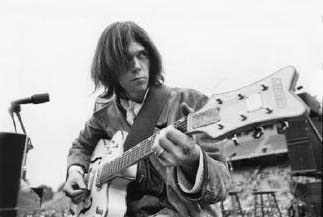
Is Neil Young Finally Going to Start Releasing Those Archives?

Apparently the answer is yes.

Fresh off a summer long concert tour with bandmates Crosby, Stills and Nash, and his annual appearance with Willie Nelson at this year's Farm Aid, Neil will apparently have two new CD releases in record stores in time for the Christmas season.

Well okay, they are not exactly new - but at least one of them has been anticipated for something like twenty years.

According to reports published on Billboard Magazine's website, Young will first issue a new version of his controversial Living With War CD. The newly remixed version will reflect a "more accurate" version of the original CD, which was recorded live in the studio in about ten days and released last May.

The new Living With War - Raw (maybe Neil's a closet WWE wrestling fan) will also include a bonus DVD with videos, directed by Young himself, of every track on the album. The videos, which presumably will mirror the anti-Bush theme of the songs on the original album, contain footage from the Iraq war as well as from Al Gore's acclaimed documentary An Inconvenient Truth.

The new version of Living With War will be released first via iTunes November 7, to be followed by a traditional retail release December 19.

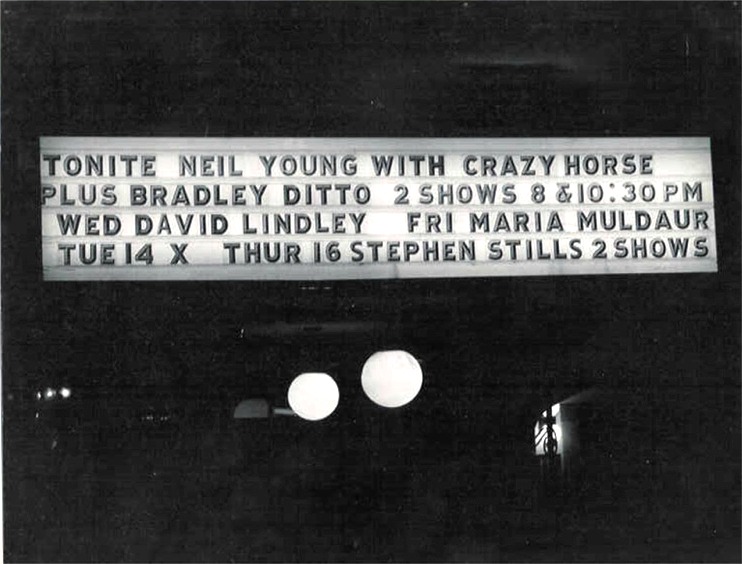
Perhaps of greater interest to long-time Neil Young fans however, is word that the long rumored Archives will finally begin to see the light of day. On November 14 — assuming everything holds — Neil Young will release the first of that series, Live At The Fillmore East 1970. Recorded at the legendary rock venue with the original lineup of Crazy Horse, the set has been rumored for official release at least since around the same time as the 3-CD retrospective set Decade more than twenty years ago.

Young — a notorious perfectionist when it comes to the remastering and re-packaging of his back catalog — has talked for years of putting out his "archives," but has thus far been frustratingly (for fans) slow in doing so. Several of Young's back catalog releases, including critically acclaimed albums such as On The Beach, were similarly unavailable for many years until Young finally put them out about two years ago.

This represents the first time an actual release date has been scheduled for any material from the infamously rumored Archives series. If all goes as planned, Live At The Fillmore East 1970 should begin a process of regular releases from that archive, much in the way Columbia has handled Bob Dylan's Bootleg Series. However, while Billboard reports that Live At The Fillmore East 1970 will be a CD/DVD release, Amazon.com currently only has a CD release up at its site (the presumed cover-art can be seen by going to my Blogcritics article here).

Either way, here is the track listing for the Live At The Fillmore East 1970 CD as it appears at Amazon.com:

1. Everybody Knows This Is Nowhere
2. Winterlong
3. Down By The River
4. Wonderin'
5. Come On Baby Let's Go Downtown
6. Cowgirl In The Sand

Curiously, the Billboard article also mentions such Young classics as "Broken Arrow," "Cinnamon Girl," and "On The Way Home" as possible inclusions on the set.

Assuming the planned Novenber 14 release date actually holds (and when it comes to Neil Young's Archives that could be a very big "if"), hopefully all will be revealed soon.

In the meantime, Neil Young will perform his annual Bridge School benefit shows this weekend near San Francisco, with a lineup that also includes Brian Wilson and Pearl Jam.

Saturday, October 14, 2006

Bob Dylan "In Concert And In Show": The Song And Dance Man Returns

Music Review - Bob Dylan And His Band - October 13, 2006 at Key Arena, Seattle WA

When you've seen Bob Dylan live as many times as I have, you kind of come to expect the unexpected. Based on the ten or so Dylan concerts I've seen since 1974, the man largely runs hot and cold. From my experience at least, you are either going to get the quieter, introspective "detached" Dylan or the somewhat more energetic "song and dance man" model.

As old as I am (50 for those keeping score), I am not nearly old enough to have seen Dylan when he was pissing off the folkie purists at Newport by strapping on an electric guitar with Mike Bloomfield and the like. For those memories, I'll have to settle for my DVD of Scorsese's brilliant No Direction Home.

Nor was I old enough to witness his original groundbreaking shows in the sixties with The Band. My experience with Dylan live actually began when I was a high school senior in 1974. Eighteen years old at the time, I wandered down to the Seattle Center Coliseum on pretty much a lark and ended up accepting a free ticket to his sold out reunion show with the Band from the stoned out hippie who offered it up to me. Imagine my luck.

After witnessing that amazing show, which is captured on Dylan and The Band's live Before The Flood album, I became a fan for life.

Of the many Dylan shows I have witnessed, I've seen him through most of the more interesting phases of his career since that time. I saw the Vegas model Dylan introduced on the tour for Street Legal in 1978 (and later captured for posterity on the Live At Budokan album), where Dylan debuted his "song and dance man" routine in earnest.

I saw him on the Jesus tour where he pretty much pissed off every hippie and leftover sisxties radical still alive by performing a super-charged gospel revival show and refusing to play stuff like "Like A Rolling Stone." About a year later, I saw Dylan when he came back and played a "greatest hits" show that seemed almost like an apology for all of the hell and brimstone of that "Born Again" show--a rare artistic compromise in a career marked by so few of them.

Through it all, I can tell you that what they say about Dylan live is largely true. Not only does the man run either very hot or very cold, but you can pretty much count on him reinventing his songs in a concert setting every time. Usually to the point where it may take a minute to even recognize them--at least until the lyrics start to kick in.

Bob Dylan And His Band "In Concert And In Show" October 13, 2006 at Seattle's Key Arena, was no exception.

Taking the stage to one of the most bizarre self-depreciating introductions I've ever heard--the intro read more like a career bio mentioning everything from his "poet laureate" status to his Jesus years--Dylan and his amazing band played a dazzling near two hour set (long by Dylan's recent live standard). It was a show that was long on radically revamped versions of old hits, and surprisingly short on material from his brilliant new Modern Times release.

On the second night of an arena tour meant to promote that album, only three of it's songs showed up on the setlist in Seattle. The first of these, a poignant and lovely sounding "When The Deal Goes Down" found Dylan in fine voice for a version that remained true to the album. "Workingman's Blues #2," Dylan's most recent lesson on war and economics (and one of Modern Times many standouts), came a few songs later.

Surprisingly, "Thunder On The Mountain," the apocalyptic sounding blast which opens that album didn't come until the encores. It's opening wash of bluesy sounding guitars actually brought a high-five from the fifteen year old sitting behind me who'd been complaining about the lack of new songs all night.

Which begs the obvious question--when was the last time you heard people complain about so many hits and so little new stuff at a show by someone who's been around as long as Dylan? Certainly not at a Stones or McCartney show.

Sandwiched in between the lone three Modern Times tracks was what can only be a charcterized as a fan's dream setlist. And from the opening "Maggies Farm" to the last encore of "All Along The Watchtower," nearly all of the songs were radically reworked to represent Dylan's more recent musical turn towards a darker, bluesier sound. They were also expertly played by a great band that seems to specialize in making these songs swing like the proverbial pendulum do.

Actually, save for Dylan's raspier croak of the past few years, "Watchtower" stayed pretty close to the original, as did "Rolling Stone," and a version of "Highway 61 Revisited" where the band blew the roof off of the place. "Positively 4th Street" and the opening "Maggie's Farm" on the other hand sounded so different it took many (myself included) a few minutes to even recognize them.

As great as Dylan's current band sounds onstage, it was Dylan's voice that was the star of the show here. With it's deeper resonance, and the way Dylan's been using his voice as more of an instrument lately, Dylan dramatically phrased certain words, going from a low croak to a high register often in an instant. It was like hearing these songs--many of them over thirty years old--for the very first time. Although he is most often recognized as being this generation's greatest songwriter, as a master of vocal phrasing Dylan likewise has few equals

This was displayed most dramatically during a wonderful new take on the Blood On The Tracks classic "Tangled Up In Blue" where Dylan's weathered and weary voice breathed new life into that song's famous lyrics about love and heartbreak. Some of the reworkings of classics were also a little cruel. Dylan teased the opening notes of "Every Grain Of Sand" (one of my all-time favorite Dylan songs), during an intro for what eventually became a new reading of "Just Like A Woman." Good as "Just Like A Woman" sounded, I had a hard time masking my disapointment when he failed to deliver on the initial tease.

But Bob Dylan was most definitely in "song and dance man" mode for this show. Dressed in black gamblers hat and suit (his band wore carefully color-coordinated matching duds), he displayed some pretty impressive dance moves (for an old codger) from behind his keyboards, and he smiled more often than I can ever remember seeing the man do onstage. Dylan seemed to be having a great time up there.

Sadly, this was the second Dylan show I've seen in the past couple years where he never strapped on a guitar--something I now suspect we're not going to see again anytime soon. There we're a few nice turns at the harmonica though.

For those who've seen some of the more withdrawn shows Dylan did with people like Merle Haggard on the so-called "Neverending Tour," I highly recommend getting out and seeing the man this time around. Rocking again like the born "song and dance man" he is, this is truly Bob Dylan "In Concert And In Show."

Hopefully, he'll work in a few more songs from Modern Times by the time he reaches your town too.

Bob Dylan And His Band
October 13, 2006
Key Arena - Seattle, Washington
Setlist:
1. Maggie's Farm
2. She Belongs To Me
3. Lonesome Day Blues
4. Positively 4th Street
5. It's Alright, Ma (I'm Only Bleeding)
6. Just Like A Woman
7. Highway 61 Revisited
8. When The Deal Goes Down
9. Tangled Up In Blue
10. A Hard Rain's A-Gonna Fall
11. Watching The River Flow
12. Workingman's Blues #2
13. Summer Days

Encores:
14. Thunder On The Mountain
15. Like A Rolling Stone
16. All Along The Watchtower

Friday, October 13, 2006


Bragging Rights: ABC Did Not Really Quote The World Wide Glen This Week Did They?

It's been quite a week for The World Wide Glen Blog and it is all due to the story you'll read directly beneath this one.

The hits to this site have doubled, and I am happy to report that for once, it's not due to that hot picture of Jamie Lynn Sigler we put up here some months ago.

When Blogcritics published our story When Are We Going To Let The Hippies Back Into The Record Store this past Monday, among those who took notice were the folks who produce the webcast for
ABC News
.

As a result, I was interviewed for a piece, anchored by none other than Charles Gibson, on Tower Records closing it's stores. Think I'm kidding? Then check out the resulting video clip of the story by going
here
.

So pardon me a little bit for exercising some bragging rights here okay?

As noted below, the article also received the highly coveted Blogcritic Pick Of The Week. And let me tell you, they don't call them Blog-"Critics" for nothin'! So allow me to bask a little okay? And check out the link.

And of course, as always, thank you stopping by our little corner of the Blogosphere.

Sunday, October 8, 2006


When Are We Going To Let The Hippies Back Into The Record Store?


The following article was named an "Editors Pick" at http://blogcritics.org for the week ending October 12, 2006

So let me go ahead and say out loud what everybody has known for at least a couple of years now.

The music industry is officially dead.
What blows my mind is not only the way nobody will come right out and acknowledge the obvious, but the way those who do sort of see the writing on the proverbial wall try to rationalize just what the hell happened.

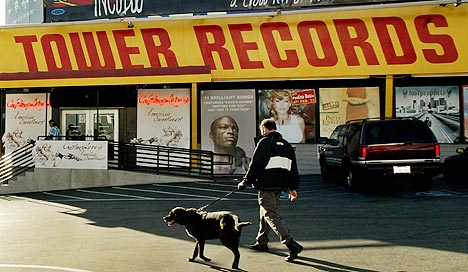
In case you haven't heard Tower Records this weekend became the latest casualty of the music business, and will soon close some ninety stores, costing some three thousand record store clerks their jobs.

Now, you've gotta understand something about Tower Records. For at least a couple of decades now, Tower has represented the very epitome of the ultra-hip record store.

When you think of the type of snotty, hipper than thou record store employees sitting behind a counter with their green hair and multiple piercings snickering as you bring your copy of the new Kenny G album up to the register, nothing comes to mind quicker than Tower. Admit it. You've been there, and so have I (though in my case it was probably something by Genesis rather than by Kenny G).

Pain in the ass that these ultra-hip, underpaid record store jockeys could be, they were essentially a big part of what made the wheels turn for the record industry at large. They were the proverbial oil in the grease. Simply put, they were record guys (and gals). You see, the record business up until very recently was a very unique animal. It was the one job in the universe where you basically didn't have to worry about showing up to work hungover, because the chances were pretty damn good that your co-worker was out checking out the same band as you in some club the night before.

Record stores like Tower--but to a much greater extent the smaller Mom And Pop indies--used to be a place you could go to not only get good recommendations on the latest music, but maybe even a leftover promo poster or bumper sticker. Once you got past the snotty, hipper than thou persona of the underpaid guy behind the counter with the green hair, chances were pretty good you could make a valuable connection with a music expert. Especially if you connected with that person on a common ground of musical interest. I mean these guys didn't work for minimum wage for nothing.

They did it because they loved the music--man.

To a much larger extent, this extends all the way up the ladder up to the guys running the show in their ivory towers at the record companies in New York and L.A. You see, once upon a time the guys who sat in these offices were music fans just like you and me. Bands were signed based on actual talent and potential rather than marketable good looks and the ability to draw a quick nickel based on a good gimmick.


Today, a band like Cheap Trick for example (who were nearly dropped by Epic Records back in the days of a much more music friendly climate) wouldn't make it past their first record if it failed to move 250,000 or so units. Record companies today have become so concerned with the bottom line that long-term careers are no longer allowed to develop. Of course there are exceptions to this--the folks at Capitol for example are no doubt pleased with the way Coldplay turned out even as they wring their collective heads over Radiohead's more "experimental work" of the past couple years.

But by and large, the attention spans of the folks calling the shots at the record labels have become as short as Prince on his worst day. Artists are no longer looked at as long term investments. Which means that yesterday's pretty face like Britney Spears is simply shoved aside to make way for tommorrow's Justin Timberlake. Say what you will about guys like Dylan, the Stones, or Pink Floyd. But nobody could rightfully ever accuse them of being pretty faces.

But what is really killing the music business is all this downloading right? Think again. I heard this very same argument about home taping some twenty years or so ago and it holds as little water now as it did back then. The bottom line is your every day average music fan--who usually can't hear the cool new bands on the radio anyway--will check out a song or two, and if he likes what he hears will probably end up buying the whole damn album.


Which brings us back to that green haired record store geek sitting behind the counter at Tower. Music is a very personal business, and forging a personal relationship with your local record store jockey can make all the difference in the world. Sadly, the apparent demise of Tower is just one more nail in the coffin of that dead horse. But then you could always take your business over to the cellphone kiosk at the Supermall.


Because cellphones are apparently the delivery system of choice for music fans today. At least if you are buying into the bill of goods the record industry wants to sell you. When it comes to choice, I suppose this could even be considered a good thing. Since the blow-dried pop idols the record industry chooses to shove down our collective throats these days might have one or two decent tracks on an album, you can pretty much pick and choose your song choices.

But the question simply has to be asked here. What motivation does that leave an artist with to create work that reaches further than the three minute pop tune or flavor of the minute gangsta rap song?

Somewhere out there is a Bruce Springsteen waiting to create the next Born To Run. God willing, there may even be a future Brian Wilson with a work as artistically expansive as Pet Sounds lying in wait. But consider this...

If there are actually guys like that still out there (and I have little doubt that there are) banging their craft away in some garage, what motivation do they actually have? First of all, chances are they wouldn't make it past their first record assuming they actually got signed to a deal at all unless it moved a zillion or so copies. Second, if they have anything in them with a creative reach beyond that of your average housewife, what good will it do if your potential listener is most likely going to end up hearing it on a speaker smaller than your thumbnail? And finally, what difference does it make when the idea of creating pop music that goes anything beyond the reach of a hooky single has become as obsolete as the fifties?

Oh wait a second. The music industry has gone back to the fifties hasn't it?

And people wonder why records aren't selling anymore.

R.I.P. Tower.