Saturday, December 9, 2006


Not Your Mammy's Grammys: Handicapping the 2007 Nominations

As first reported on Blogcritics yesterday, the nominations for the 2007 Grammy Awards have been announced.

Which means that by the time you read this, it will no longer qualify as an actual news story.

So what follows here is instead going to be a bit of a rant about the institution known as the Grammy Awards.

But before I get started, I need to qualify things just a bit. It needs to be acknowledged that the organization who puts on the Grammys, NARAS (which stands for The National Academy of Recording Arts And Sciences), does do great work on behalf of those who make their trade in the recording industry.

One of their best charitable organizations, Music Cares, provides financial assistance in things like housing and medical care to members of that industry who otherwise couldn't afford it. I know this because when I lost my eye in an accident some ten years ago, Music Cares took care of a good chunk of my own medical bills.

So thank you NARAS for the great work you do through organizations like Music Cares. That being said, this year's Grammy nominations warrant comment.


For starters, you wanna tell me that Bob Dylan's brilliant Modern Times does not merit consideration for best album of the year? And the latest releases by Justin Timberlake, John Mayer, hell, even the Dixie Chicks (who get begrudging points for standing up to those evil Republicans) do?

I could go on for days about this glaring omission alone. But let's call a spade a spade here. Dylan got snubbed, plain and simple. And I don't even want to hear about Dylan's nomination for Best Solo Rock Performance (for "Someday Baby," a pleasing, but relatively minor track from Modern Times) either. That to me represents classic Grammy gratuitousness. It's the same sort of reasoning that got Springsteen a win in the best folk category for Devils & Dust, yet lost him the big prize a year or so earlier for The Rising (to Norah Jones for those keeping score).

And while we're on that particular subject, I didn't see Springsteen's We Shall Overcome: The Seeger Sessions nominated anywhere in the Best Folk/Americana Album category. I did however see Dylan's Modern Times up for the folk prize. To anyone who has heard both, you tell me which one belongs where: Best Album or Folk/Americana? Seriously, you tell me.


After putting out mostly spotty releases for the better part of the nineties (some would say the eighties as well), Dylan's been on a roll since the turn of the millennium. While the album that started that creative resurgence, Time Out Of Mind, did get itself a Best Album Grammy, Modern Times is Dylan's best reviewed record since Blood On The Tracks. It has been universally recognized as one of the best records of his long and legendary career — a milestone from an artist whose catalog is loaded with them.

Of course this wouldn't be the first time that Grammy didn't get it right. These are, after all, the same folks who have bestowed the Music Industry's "highest honor" on such past recipients as Christopher Cross, Milli Vanilli, and the Starland Vocal Band.

Anybody remember "Afternoon Delight?" Or maybe you just "selectively" forgot it like the rest of us. Or how about the year that Grammy chose Jethro Tull as Best Metal Act over then still trailblazing pioneers Metallica? At least that one was good for a laugh, such as when Melody Maker wrote a story about it with the priceless headline "For Whom The Bell Tulls."
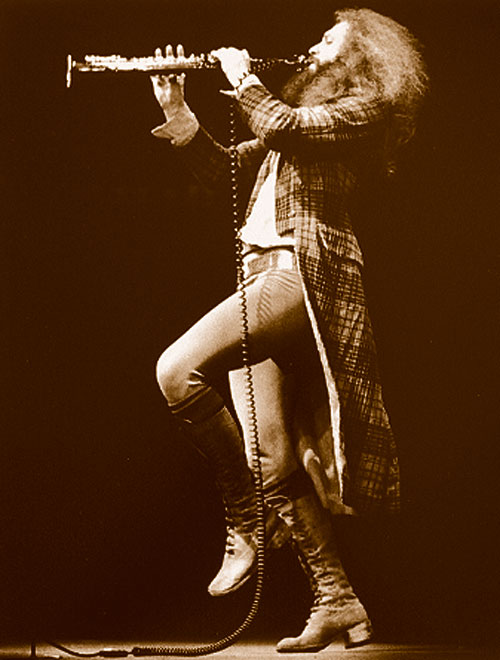
But Justin Timberlake? I mean, come on. That's what God created the American Music Awards for. There's your popularity contest right there. I've got nothing against Justin. Nothing at all. But the AMA's is not only the awards show where he belongs, but the one where he actually deserves to win. At least until Jay Z's new record comes out or something. Past blunders aside, Grammy is supposed to be where we honor the best in artistic excellence for the past twelve months.


But I guess that is why we have a Rock And Roll Hall Of Fame. Because even guys like Jimi Hendrix, Lou Reed, and the Grateful Dead need somewhere to park their careers. Not that Grammy doesn't acknowledge the great ones. The Rolling Stones finally got some sort of "Lifetime Acheivement" honor something like 25 years after "Satisfaction" was released (and long after they stopped making landmarks like Exile On Main Street). I believe it was their first Grammy.

But Grammy is also all about the here and now. This year's nominees in the major categories, for better or for worse, represent what is happening in music today, rather than yesterday. In other words, these ain't your Mammy's Grammys. On that point alone, I will give the Grammy Awards credit this year. The unfortunate thing is that at least partially because of this, I'm taking even odds right now for Timberlake to win the big prize.

Speaking of which, what can we expect to see when the Grammys are telecast live on CBS February 11, 2007?

If you are anything like me, the awards themselves will probably have you hurling things at your TV screen. Still year after year, they keep me coming back because through the miracle of live television, the unexpected occasionally does occur.

Sometimes it's simply a great performance. Like when Prince blew the doors down with Beyonce on the eve of his Musicology comeback tour a few years ago with a scorching version of "Purple Rain." Other times, it's one of those weird, unexpected moments of spontaneity that remains forever etched in memory. Remember the "Soy Bomb" guy during Dylan's performance the year he performed?

The constants of course remain things like the endless stream of winners getting all religious and thanking God for bringing home the gold for hits like "Spank My Bootylicious Booty" (or something along those lines).

Or the boring ten minute speech by the president of NARAS warning us all about the evils of home taping, downloading, or whatever the industry is blaming sluggish sales on this time around.

Pssst — it's called putting out better records for a more affordable price guys.

As for the major awards themselves, I'm handicapping it like this with these very early predictions. Now mind you, please note these are just based on my opinion. In no way are they to be taken scientifically.

Album Of The Year Nominees: Taking The Long Way by the Dixie Chicks: St. Elsewhere by Gnarls Barkley; Continuum by John Mayer: Stadium Arcadium by the Red Hot Chili Peppers; FutureSex/LoveSounds by Justin Timberlake.

Should Win: Chili Peppers
Should Win But Isn't Even Nominated: Dylan
Dark Horse: Mayer
Will Win: Justin Timberlake

Record Of The Year Nominees:

"Be Without You" (Mary J. Blige); "You're Beautiful" (James Blunt); "Not Ready To Make Nice" (Dixie Chicks); "Crazy" (Gnarls Barkley); and "Put Your Records On" (Corinne Bailey Rae)

Should Win: "Crazy"
Will Win: "Crazy"
Dark Horse: "Be Without You" or "You're Beautiful"

Best New Artist Nominees:
James Blunt; Chris Brown; Imogen Heap; Corinne Bailey Rae; Carrie Underwood.

Should Win: James Blunt
Will Win: Carrie Underwood

Song Of The Year Nominees:"Be Without You" (performed by Mary J. Blige); "Jesus, Take The Wheel" (performed by Carrie Underwood); "Not Ready To Make Nice" (performed by the Dixie Chicks); "Put Your Records On" (performed by Corinne Bailey Rae); "You're Beautiful" (performed by James Blunt).

Should Win: "Not Ready To Make Nice"
Will Win: "Be Without You" (largely because "Crazy" didn't make this category).
Dark Horse: "You're Beautiful", "Jesus Take the Wheel" (tie)

As for elsewhere, look for these to win:

R&B Album: Mary J. Blige
Pop Album: John Mayer (unless Timberlake takes this one too).
Rock Album: Chili Peppers (though I'd love to see Neil Young get this for Living With War)
Rap Solo: Missy Elliott for "We Run This"
Rap/Sung Collaboration: Beyoncé featuring Jay-Z for "Deja Vu"
Best Producer: Rick Rubin. Between the Peppers and The Chicks, it's Rubin's year. Besides, in another life I actually briefly worked for him. Whaddup Rick?
Country Album: Dixie Chicks (unless a strong anti-Chicks vote gets Alan Jackson the award by default. Just for the record, Johnny Cash, yet another glaring non-nominee, would get my vote for the posthumous American V: A Hundred Highways)

Stay tuned for the Grammys on CBS February 11, 2006. And keep the glass items away from the TV.

Friday, December 1, 2006


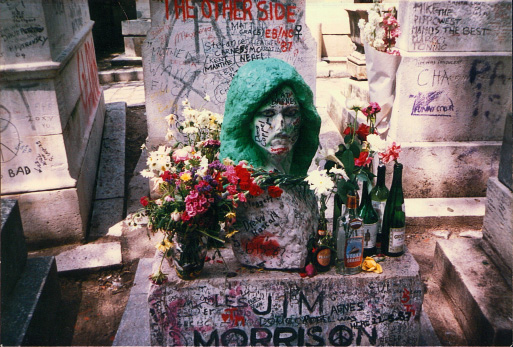
My Personal Perceptions Of Jim Morrison And The Doors On Their 40th Anniversary: Still Hot, Still Sexy, And Still Dead

Music Review: The Doors - Perception (6CD/6DVD Limited Edition Box Set - Original Remastered Recordings)

To commemorate The Doors 40th Anniversary this year, the folks at Warner Music and Rhino are pulling out all the stops.

Here in The States, we have Perception. A deluxe box-set comprising some twelve discs, Perception constitutes the most ambitious, elaborate repackaging of the Doors original catalog ever undertaken.

All six original albums, from 1967's The Doors to 1971's L.A. Woman have been completely remastered by the three surviving members along with original producers Paul Rothchild and Bruce Botnick in double disc editions. In addition to the original remastered recordings, there is an accompanying second DVD disc for each album. Each DVD features the original album remastered in Dolby 5.1 surround sound, along with rare, often unreleased video content including live performances, video films, rehearsal footage and more.

If all of this weren't enough, each original CD also includes several bonus tracks (including both alternate studio takes and previously unreleased material), completely new liner notes for each album, and it all comes in this big ol' box that opens itself like--what else?--a door. Whew!

But that's just what we get here in the States.

Over in Europe, the Doors 40th Anniversary is apparently an even bigger deal. Take what they are releasing just in France--where Jim Morrison himself is "reportedly" dead and buried. Of course if you believe that, you probably think Elvis is really dead too.

In addition to the Perception box (with two extra tracks not on the stateside version no less), the French are getting something like ten or so additional new collections of rare and unreleased material. They are even getting at least one additional boxed set. Oh Yeah. You heard me right.

The reason I know this is because in my day job, I edit "content" for a digital music provider, or what we in that particular trade call "metadata." And earlier this week, I spent an entire day on a project entering data for the various Doors 40th Anniversary releases for a number of European countries.

Here's just a sample of what France gets:

For starters, there will be a boxed set devoted entirely to what are being called "bootleg recordings." There are also a number of new collections of live recordings. These include two complete early performances recorded at the Aquarius Theatre that can be bought either seperately or as (what else?) a multiple disc set. Another multiple disc set boxes performances from Detroit and other cities. These can also be purchased seperately but a bonus performance from what I believe was Philadelphia, can only be obtained by getting the complete boxed version.

Or how about this? Two volumes of Jim Morrison Interview discs? One entire disc is devoted completely to an interview Jimbo did for Circus Magazine back in the sixties covering among other things, the fallout from the infamous 1969 "Miami Incident" where a certain Lizard King is said to have indecently exposed said "Lizard."

Oh yeah, Jim Morrison is still hot alright. He is also still sexy. And he is also still dead.

Don't get me wrong here. I love the Doors. I loved them back then. And I still love them now. But this is nothing short of an onslaught for a band who, all told, recorded six albums proper over a period which only spanned five years.

I have some great memories of listening to the Doors as a kid.

The first time I heard "Light My Fire" for example, it was like nothing I had ever previously experienced. As a twelve year old boy whose ears should have been prepared by the steady diet of Jefferson Airplane, Sgt. Pepper era Beatles, and Good Vibrations era Beach Boys that Top Forty stations were already serving up at the time, the Doors still sounded absolutely surreal. There was this deep, resonant voice serving up dark lyrics about funeral pyres and setting the night on fire, over what sounded to me like a carnival organ. For this twelve year old adolescent, it was as instantly cool as it was hypnotic.


A few years later as a pre-teenager living in Hawaii, I remember getting stoned on pot and getting lost in the "seminary school where you cannot petition the lord with prayer" of The Soft Parade. I still have no idea what Morrison was actually talking about, but hell, I could've said the same thing about Dylan back then. All I know is that stoned out of my fourteen year old mind on Maui Wowie at the end of the sixties, it made complete nonsense.

In retrospect, I have since come to regard Jim Morrison as somewhat overrated though. At least as far as being a poet goes. The most memorable line of Morrison's spoken word poetry I can think of--besides that bit about petitioning the lord with prayer I listened to as a stoned teenager anyway--is something about true sailing being dead or something or another.

The posthumously issued album of Morrison's poetry An American Prayer loops jazz-fusion lounge music played by the Doors, over things like Jim Morrison rambling something about a "Lament For My Cock" of all things. He sounds like a drunk muttering into a Whiskey bottle at a cheap dive around closing time. Which, by all accounts, he basically was towards the end I guess.


Still, as overrated as Morrison may have been as a poet, in the mysterious, sexually charged persona of the Lizard King he carried with him a charisma that practically defined the words rock star. Morrison is the sixties template, along with Mick Jagger around the same time, for pretty much everything else that followed after his death in 1971.

Were the Doors important enough to warrant the 40th Anniversary treatment they receive on the Perception box here in America? Of course they were. And given what Rhino had to work with in terms of actual released material, they have done a superb job of repackaging it.

Perception is the sort of eye and ear candy that will draw collectors like a magnet. For audiophiles, the superb 5.1 surround sound mixes should ring a few more cash registers for those high-end hardware retailers.

For actual musicologists, the alternate takes and unreleased material are pretty limited when you consider the price tag. We music nerds are also notoriously tight with our wallets.

Since the last time I checked not too many of us were getting rich from passionately listening to and obsessing about music.

As for all the 40th Anniversary overkill in France and Europe, my guess is that will all be available here in America around this time next year. Which I guess is great news for all you Doors "completists" out there.

So do you think they'll do all this with Kurt Cobain in say 2044 or so?

I mean, Nirvana only released three albums proper right?

Sunday, November 26, 2006


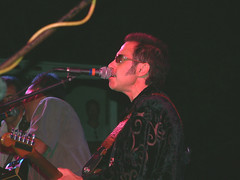
Nils Lofgren And Friends Put On A Guitar Clinic

Music DVD Review: Nils Lofgren & Friends Live Acoustic

Somewhere about midway through this great DVD, Jeff "Skunk" Baxter, one of the numerous "friends" who join Nils Lofgren here--and no guitar slouch himself--offers the following assessment of Lofgren:

"There are three kinds of guitar people. There are guitar owners, and there's about a million of those. There are guitar players, and there's a few of those. Then there are guitarists," Baxter says turning to look at his friend Lofgren. "Nils writes great songs. He sings beautifully. But there are only a few people who can do what he does with a guitar."

To be sure, Nils Lofgren has written some damn fine songs over the years. It's possible you may have even heard a few of them. The funky "I Came to Dance," the lovely ballad "Valentine," or his ode to a Rolling Stone "Keith Don't Go" come to mind.

However it's far more likely you haven't, as Nils Lofgren is best known as a sideman. You know him for his fine work on Neil Young albums like After The Gold Rush. You even more likely know him as that guitarist for Bruce Springsteen's E Street Band who looks like a sawed-off cross between Keith Richards and Joey from Friends.

You remember right? Nils was that guy who did the backflips off a trampoline on the Born In The USA tour. He even did a solo album called Flip around that time.


The thing is, what a lot of people don't know about Lofgren is that he is a world class guitarist. Although he has had his moments with Springsteen--the solos on the title tracks of both Tunnel Of Love and The Rising are just two such moments uniquely stamped with his signature--Lofgren's virtuoso ability is largely swallowed up in the big noise created by the E Street Band.

Not so on this great DVD. Recorded live over three nights at a place called the Birchmere in Alexandria, Virginia before a rapt audience of hard core fans, Lofgren is joined here by an assortment of friends including three of his guitar playing brothers. In a set that covers his lengthy career from his first band Grin to last year's solo album Sacred Weapon, Lofgren shows that he is indeed a great, perhaps even under-appreciated singer-songwriter.

But mostly he puts on what basically amounts to a guitar clinic. Of the numerous musical highlights on this DVD--and there are many of them--none of them match simply watching Lofgren play his instrument. Whether you are a musician or not, seeing Lofgren's technique in the several closeup shots shown here is just nothing short of amazing.

Lofgren doesn't merely strum or pick the strings the way that many guitarists do. He plays the entire instrument. He strums it open-handed at times, using all four fingers and his thumb at the same time. At other times, particularly when playing in the open-ended harmonics he so often favors here, Lofgren will play from the top of the neck all the way down the fretboard. The resulting sounds you wind up actually hearing are simply as stunning as they are beautiful.

Lofgren plays in this harmonic based style completely solo on "Keith Don't Go," making the one acoustic guitar he plays sound more like two playing at once. You hear both the lower bass parts and the higher notes. On "Girl In Motion" he continues to play in the harmonic style while switching over to an electric guitar. Here he takes one of the countless stunning solos heard throughout this DVD, as Buck Brown's equally dextrous fingers match him note for note on the keys.

By the time of "Because The Night," (the only tune played here not written by Lofgren), there is a full compliment of guitarists onstage in the form of Lofgren's brothers Tom, Mike, and Mark. Together, they make as big as noise in their own way on the Patti Smith hit as Springsteen does when it's played in stadiums with the E Street Band. There's also yet another of those great, crying guitar solos from Nils.

Earlier in the set, Nils also comes across as an engaging, even funny performer at times. Knowing he has this particular crowd eating out of his hand, he promises a long night early, joking that "I couldn't take a show this long myself, so if you need to get up and get a drink, you won't hurt our feelings." Performing solo acoustic, Lofgren seques nicely from a lovely sounding "I Found You" into the borderline spanish style of "You". Lofgren's playing here takes on such a dramatic, flamenco type of feel you half expect sagebrush to go floating across the stage.

On "Black Books," Lofgren goes back to electric and proceeds to take off on yet another harmonic fueled solo tear, as Buck Brown's pastoral synthesizer provides a swirling backdrop. For "Valentine" and "Tender Love," Lofgren is joined by Baxter and Mary Ann Redmond for a round of vocal duets. At one point during "Tender Love," Lofgren stops and says "we gotta do that again." After replaying the track a few times, I still couldn't locate the apparent screw-up here.

When Lofgren later uses improvised song lyrics to announce "It's so nice to have friends who play so great, I feel so inspired think I'll take a break," he leaves the stage to Baxter and Buck Brown who use the spotlight to get into a tasty little guitar duel of their own.

Bob Berberich, who was Lofgren's one-time partner in Grin joins him here for a reprise of Grin songs "Everybody's Missing The Sun" and "Aint Love Nice." The show finally draws to a close with "I Came To Dance," "No Mercy," and a searing "Moon Tears" which features another Lofgren solo which begins dark and bluesy before taking a left turn into Hendrix territory.


The extras on this DVD include several bonus tracks, including a few I've already mentioned here such as "Because The Night" and "Keith Don't Go." There is also a backstage interview where Nils talks about his shaky start doing acoustic performances at a time when he felt "a little more naked and exposed." He humorously recalls one early gig with several false starts where he was "waiting for the fire alarm to go off." There is also footage from the rehearsals for the shows captured here.

On Live Acoustic, Nils Lofgren & Friends more than prove their mettle as performers, and Lofgren's songs alone are enough to make for a great night. But if you appreciate watching a great, if criminally underrated guitarist do his thing nearly as much as I do, this DVD rates as required viewing and listening.

Sunday, November 19, 2006


Did Nirvana Save Rock And Roll Or Did They Kill It Dead?

Music DVD Review: Nirvana - Live! Tonight! Sold Out!

If the story of Nirvana is not the strangest, and least likely in all of the history of rock and roll, I'm not sure at all what is. So please bare with me a little here as I go out on a limb and deviate somewhat from the standard review.

You see, I was there. But I was not there as part of the Seattle grunge scene.

Not at all.

Rather, I was there, as part of the other, less celebrated at the time side of what was going around 1992, when everything "Seattle" broke wide open to worldwide acceptance. And the time where much of what is captured on this live DVD was--well, captured.

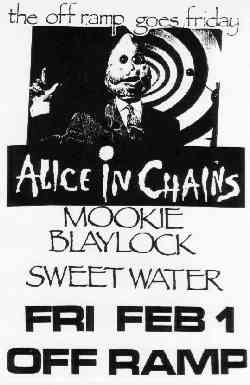
1992 was a strange time to be in the music business in Seattle. And I don't think I ever really got just how big the "scene" had become here, until I moved to Los Angeles to seek my fortunes in the music business. Back then, even as Nirvana's "Smells Like Teen Spirit" was becoming a worldwide phenomenon, most of us here in Seattle always thought of them (as well as Soundgarden, Mudhoney, Alice In Chains, and the rest) as just another great local band.

I can remember working at Seattle's Nastymix Records promoting then up and coming rapper Sir Mix A Lot for example (that "other side" of the Seattle music scene I referred to earlier). Back then I can also distinctly remember going out on a Friday night after work to see somebody like Nirvana or Soundgarden at the Offramp or RCKCNDY for instance.

For us, it was just another rather routine weekend night of boozing, clubbing, and hopefully getting lucky with that pierced, tattooed angel next to the bar. During my daily routine at Nastymix Records, I can also remember how the guys from Sub-Pop Records would come over to our office to marvel over at how I was able to pull up Billboard's weekly chart reports on my MS/DOS computer system.

Imagine that.

It was only when I got to L.A. in 1992 to work at American Recordings after Sir Mix-A-Lot had signed his deal with them, that I realized just how big a deal this Seattle Grunge thing really was. During our weekly sales meetings at American for example, they used to joke with me how Seattle had exploded at exactly the same time I moved to L.A., and how once I got to L.A. sales of their own artists had died.

Funny stuff, right?

In reality, it was just a nice way of busting my balls.

So I'm gonna say this about Nirvana, at the risk of really pissing my neighbors up here in Seattle off. They were in the right place at the right time. Plain and simple.

Not that I would minimize the impact of something like "Smells Like Teen Spirit." Not even. But there are times when something comes along when it is absolutely necessary to knock a complacent, fat and lazy rock and roll on it's collective ass. If Nirvana didn't qualify for doing that in 1992, I honestly don't know what ever has. But the bottom line is they just happened to be there.

There is absolutely no question that Nirvana represented a huge cultural shift back then. One that would later prove to be of historical proportion. They did everything the Sex Pistols were supposed to do at the end of the seventies (but didn't). And nobody--least of all me--disputes that. However, I will maintain this. Nobody saw it coming at the time.

It happened completely by accident.

You want to talk about truly revolutionary music coming out of Seattle at the time? Look no further than Mudhoney. At this point, I seriously doubt Mark Arm and company are ever going anywhere near a platinum or gold record. But Mudhoney's mix of Blue Cheer psychedelia and Stooges era Iggy Pop paved the way for a certain little band from po-dunk Aberdeen, Washington to knock corporate rock and roll on it's ass.

In my opinion at least, Nirvana lucked into the three minutes of "Smells Like Teen Spirit". Whether that luck came by chance or by design is of course open to question.

That said, Nirvana's impact on rock and roll simply cannot be understated. Nor can Kurt Cobain's immeasurable talent. Cobain had a way with a neat little pop hook like no one has before or since. No question about it.

There are some great performances captured on this DVD from the band's native Seattle to Amsterdam, all recorded during the band's earlly nineties peak. Originally released on VHS, the quality is often raw. Many of the performances here look grainy to the point that they may as well have been filmed on a Super 8 home movie camera. But that's OK. In fact, it is probably exactly as it should be, in that it quite effectively captures the raw, minimal sort of feel of the time.

Still, as a rock and roll fan, and with the added benefit of hindsight, I'm not sure I really like what rock became after Nirvana. For awhile there, you simply could not turn on a radio without hearing the numerous knock-off bands that came in Nirvana's wake. From Bush to Silverchair, these bands were in many ways every bit as faceless as the REO Speedwagon sort of corporate rock that Nirvana sought to destroy.

Kill Rock Stars indeed.


While guys like U2 and Springsteen tarry on and continue to wave the banner of a bygone era, your choices in music these days basically boil down to flavor of the minute rappers and popsters played through the delivery systems of choice you hear on your tiny MP3 and cell phone speakers. The music business itself is run by and large from the corporate cubicles of software companies.

I'm not even sure that marvels of studio craft like Dark Side Of The Moon, Pet Sounds or Born To Run are even possible anymore.

Nirvana may well be the last of the great rock and roll bands. When Nevermind shocked the world by knocking Micheal Jackson's Dangerous off the top of the pops, I cheered just as loud as anybody.

But looking at things as they stand today, you've simply gotta ask yourself. Was this the revolution? There is no doubt that Nirvana succeeded in stripping a bloated rock monster back to it's core essentials at a time when this was sorely necessary. But in doing so, was rock ultimately stripped out altogether?

Think about that while watching this DVD.

Friday, November 17, 2006


The Archives Have Landed: Neil Young Launches Series With Live At The Fillmore East 1970

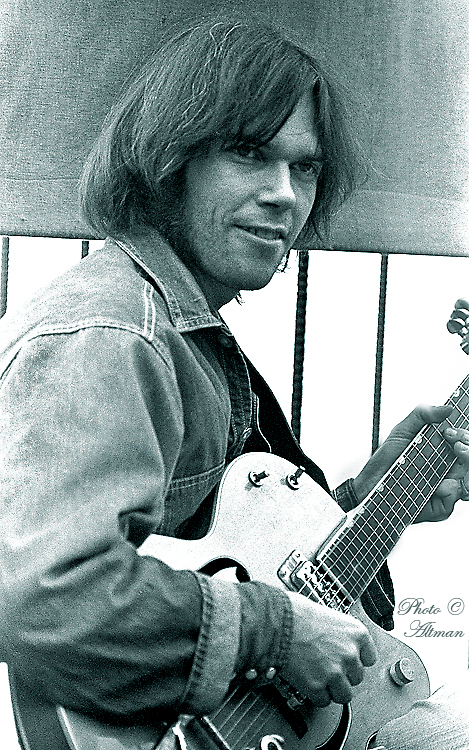
Music Review: Neil Young & Crazy Horse - Live At The Fillmore East March 6 & 7, 1970 (Neil Young Archives - Performance Series) (CD)

It's official. The Archives have been opened.

As first tipped here last month, Neil Young finally began the arduous process of releasing his long-rumored Archives Series this week.

Said to number some hundreds of hours of rare and unreleased recordings, the Archives have been discussed in one form or another as a potential Neil Young project dating back to at least around the time the three disc Decade anthology was released in the 1970's.

On numerous occasions since, the Archives have been rumored as everything from several pricey multiple disc boxed sets, to a series of gradually released collections much in the same vein as Bob Dylan's Bootleg Series.

Apparently opting for the latter, with this week's release of Live At The Fillmore East March 6 & 7, 1970, they are rumors no more. But in typical Neil Young fashion, this week's release comes with the obligatory curveball. Live At The Fillmore East 1970 is actually credited as being part of something represented by a Marvel Comics-like logo on the sleeve's upper left hand corner called "NYA:PS." It stands for Neil Young Archives: Performance Series, which suggests an offshoot series concentrating on live performances documented through the years.

To which I can only say, fine by me.

But this set is noteworthy for yet another reason. Live At The Fillmore East 1970 in fact, represents the first available live recording of the original Crazy Horse, when Neil was sharing guitar and vocals with the late Danny Whitten. The subject of several latter Neil Young songs such as "The Needle And The Damage Done," and much of the album Tonights the Night, Whitten died of a drug overdose in 1972.


It's easy to forget that Crazy Horse was once an actual band who recorded their own albums, in addition to collaborating with Neil Young. It is particularly easy to do so, when--in recent years anyway--the only time you see them is every couple of years when Neil Young trots them out for an album and a tour. Most often these days, you'll hear Crazy Horse backing a cranked to eleven Neil Young for projects like Ragged Glory or the tours captured on albums like Live Rust and Weld.

Crazy Horse played plenty loud back when Live At The Fillmore East 1970 was recorded too. But on this live album, they sound much more like an actual band, than merely backup for Neil's guitar-shredding with Old Black. You can actually hear the sort of genuine musical interplay here--particularly between Young and Whitten--that is closer in spirit to the loose jamming heard on the electric side of Crosby Stills Nash & Young's live Four Way Street album. Which, perhaps not coincidentally, was also recorded in 1970.

Apparently touring behind the 1969 release Everybody Knows This Is Nowhere, the songs of that album account for fully one half of the setlist here, making up three of the six songs on this album. Danny Whitten takes center stage on vocals and guitar for "Come On Baby Let's Go Downtown," showing the real promise he once had on a song he also wrote. Neil turns in a fine pre-release version of the always gorgeous sounding "Winterlong" which takes on a more electric feel here.

But as on "Everybody Knows This Is Nowhere" itself, it is those two blockbuster jams--you know the songs I'm talking about here--that overshadow everything else on this CD. You may have heard "Down By The River" and "Cowgirl In The Sand" done live with Crazy Horse before, but never quite like this.

In scorching versions running well over twelve minutes apiece, the guitar interplay bewteen Young and Whitten heard on the original studio versions is taken to epic lengths here. It's easy to forget just how much those "ooh, la, la" backing vocals added to "Down By The River" on the original. Or how Young's choppy, staccato leads we're made all the more effective when slicing through Whitten's own guitars punctuating the rhythm.

For it's own part, "Cowgirl" goes nearly fifteen minutes, building the tension steadily throughout before climaxing in crescendo upon crescendo of cacophonous sound. Towards the end there is so much going on, Neil's screaming guitar occasionally gets lost in the mix. As Whitten and Jack Nitzsche admirably try to keep pace throughout on guitar and electric piano respectively, Neil goes off into one of those trance places near the end. The end result is just nothing short of magnificent noise.

When it's finally over, the CD continues to run for several minutes so you can actually hear a spent audience as it attempts to catch back it's collective breath. Incidentally, if anybody can tell me the name of the song played over the PA as this set finally goes to fade, I've got your first round next time you're in Seattle.

One final compliment I'd like to pay Live At The Fillmore East 1970 is on it's rather modest, but nice packaging. Designed like an old gatefold vinyl sleeve, it actually folds out to reveal an old faded-from-aging newspaper review of the show. The review reveals that the show was opened by the Steve Miller Band and a Bitches Brew era Miles Davis (who I didn't think opened for anybody). The review itself is pretty funny in retrospect as the writer comments on Neil being an "enormously talented performer and songwriter," while adding that his "lyrics sound uncomfortably like Bob Dylan's work circa '63-'64."


Too funny.

If Live At The Fillmore East 1970 is any indication of what lies ahead from the Neil Young Archives, this is going to be one hell of a great series, "performance" and otherwise. I can't wait.

Friday, November 10, 2006

Borat And Mahir: Twin Sons Of Different Goat?

So I finally got out to see Borat the other night, and can happily report that everything you have heard about the film is true and then some.
Borat is easily the most offensive, politically incorrect movie I have seen in what seems like forever.

It is also so hilarious, my gut is still hurting as I write this. There are scenes in this movie that are so disgusting I literally had to turn my head away from the screen, even as I was laughing so hard I was practically in tears. Gross beyond description, scenes like the nude wrestling match between Borat and his grotesquely fat movie producer are also hysterically funny.


In Borat, not only are there no sacred cows--there aren't any sacred bears, goats, or roosters either. You'd have to see the film to fully grasp the real meaning of that last sentence I just wrote. In the meantime, you'll just have to take my word for it.

But here's a quick synopsis:

In his quest to discover American culture, Kazakhstani journalist Borat manages to piss off just about everybody from holy rolling pentecostals to angry "old man" feminists. Puzzling over why "nobody like me," Borat does everything from jerking off in public, to "making shit in toliet" at a dinner designed to teach him American dinner etiquette. Of course bringing the shit neatly bagged to the dinner table is apparently considered perfectly good manners in Kazakhstan.


I think I'm starting to see why government officials in that country are none too happy about this film.

So as you can probably imagine, I couldn't wait to get back home to my computer and type out a review after seeing Borat. The problem I didn't anticipate was finding a unique angle. Seems that the film hailed in it's own advertising as the "best reviewed movie of the year," has also been the most reviewed movie of the year. Some of the very best scribes out there have already covered it from every perspective imaginable. What was this writer to do?

So imagine my delight, when like manna from heaven, I discovered Mahir. As in Mahir Cagri.


Now you have no doubt heard about some of the lawsuits already said to be brewing over the real-time situations so hilariously exploited in this movie.

You may have heard for example about the frat boys who picked up the hitchhiking Borat and took him on a wild, drunken ride in an SUV. Said to be humiliated by the racist and sexist comments made during their party on wheels, these boys are now doing the choir act. More legal hilarity is no doubt bound to ensue.

But Mahir is the one guy who could actually have a legitimate case. The similarities between the real-life Mahir and Sasha Baron Cohen's character Borat Sagdiyev are striking to be sure. They are both tall, mustached men from foreign lands (Mahir is from Izmir,Turkey), who speak a sort of fractured form of English. They are both journalists who share a taste for things like ping pong; exotic music and clothing choices; and making sexy time with nice nude models and other peoples.


Mahir first became an underground Internet phenomenon in 1999.

His I Kiss You website first became a cyber-oddity and in-joke among the geek crowd, before growing a huge world wide audience that at one point drew daily hits numbering six figures and included celebrity fans like Roseanne Barr and Kenny G. On Mahir's somewhat modest looking site, you can find him talking about his various interests and see him in lots and lots of pictures. Playing ping-pong. Relaxing in a tight red speedo. And most of all, professing his love for sex.

Sound familiar? Then there is this from Mahir himself:


"My profession jurnalist, music and sport teacher , I make psycolojy doctora. I like to take foto-camera (amimals, towns, nice nude models and peoples)."

A note to my readers here that the mispelled words are Mahir's rather than mine. Mahir's fondness for music ("I like music, I have many many music enstrumans my home I can play") and sports ("I like sport, swiming, basketball, tenis, volayball, walk") are fully documented. As his is love for sex ("I like sex").

Mahir is also a man of the world who says that "I like travel I go 3-4 country every year I went , Germany , Nederland , Belgium , Austria , Denmark , Sweden , Hungary Moldovia , Ukraina , Bulgaria , Romania , Macedonia , Azerbaijan , Georrgia , Iran ....."

You get the idea. But most of all, Mahir enjoys making friends. Both while traveling abroad ("I like to be friendship from different country") or making new aquaintances at home ("Who is want to come TURKEY I can invitate...She can stay my home...").

According to Wikipedia, Mahir's website has both the distinction of being named as one of CNET's Top Ten Internet Fads (on July 15, 2005) and PC Magazine's 25 Worst Web Sites (on September 15, 2006).

Whether or not the real life Mahir's internet fame actually predates Sasha Baron Cohen's fictional Borat character probably depends on who you talk to. But Mahir--who has enjoyed something of a revival in popularity since the Borat film became a national phenomenon this week--is said to be pondering legal action. He plans to travel to London seeking to sue Cohen "first for honour and money after."


At the very least, Mahir wants an apology from Cohen "for what is my right." He has however added that he would accept Sacha's friendship "if he want to make friends."

Monday, November 6, 2006


Dylan Speaks: The Legendary 1965 San Francisco Press Conference

Music DVD Review: Dylan Speaks - The Legendary 1965 Press Conference In San Francisco

On Friday December 3, 1965, Bob Dylan held what has long since gone down as one of the most legendary press conferences in pop music history.

Standing in sharp contrast to the often mumbling, rambling Dylan seen in many of his more recent-day press events — such as when he was interviewed by 60 Minutes a year or so back — here Dylan was animated, engaging, and even funny at times.

Orchestrated by the celebrated jazz turned pop-music critic Ralph J. Gleason, the event was held in the studios of San Francisco's KQED TV. Coming just a few months after Dylan had stunned the crowd at Newport by going full-blown electric (and basically horrifying the folkie purists there), media interest in Dylan was at an all-time high.

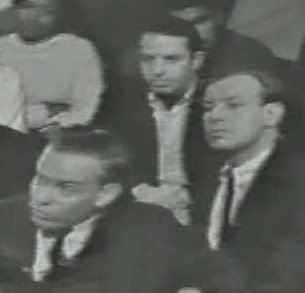
So the room that afternoon was filled with a throng of chain-smoking old school reporters (Dylan himself was never too far from a cigarette) who rubbed shoulders side by side with counter culture figures like Allen Ginsburg and Bill Graham. As you'd probably expect, the sixties generational mix often made for some truly inspired theatre.

Over the years, this infamous press conference has been seen in bits and pieces in many of the various Dylan biopics - the most recent being Scorsese's brilliant No Direction Home. Fully restored here the way it was meant to be seen — filmed in glorious black and white and recorded in beautiful mono sound — this DVD replays the entire event here and now for the first time some forty years later.

Although Dylan looks a little tired (he rubs his eyes constantly throughout), he is fully engaged in a way rarely seen in his interviews. And as I said, he is downright funny at times. Such as when he is momentarily distracted by a cigarette ash apparently dropped down onto his pants.

But he never misses a beat as he is asked every imaginable question from the ridiculous ("What does that motorcycle on your shirt on the album cover actually mean?"), to the sublime. The great quotes here come so fast and furious over the course of fifty minutes; it is sometimes a little hard to keep up. The most well known of these comes early. When asked whether he thinks of himself as more of a singer or a poet, Dylan famously responds "I think of myself as a song and dance man."

We also learn his opinions of some of the various other artists of his day. When asked if he thinks Donovan is a good poet for example, Dylan responds with a flat sounding "no." He then adds, "but I think he's a nice guy though." When asked who his favorite poets are, Dylan rattles off a list that includes Allen Ginsburg (seated in the audience) as well as Charlie Rich, W.C. Fields, and Smokey Robinson.


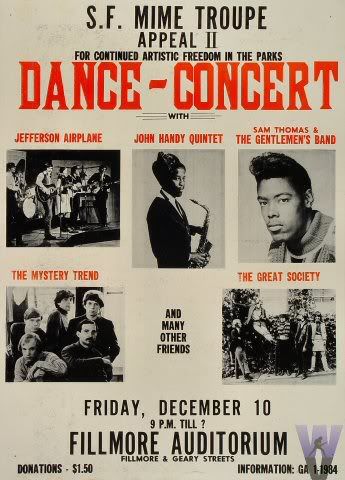
When Bill Graham asks who he thinks did the best covers of his songs, Dylan singles out Manfred Mann for praise. Ever the concert promoter, Graham manages to place a flyer for a Jefferson Airplane concert at the Fillmore on Dylan's interview table. Dylan later happily pimps the show for Graham by holding the poster up and saying he'd be there if he didn't have other commitments.


In another quote that is classically Dylan, he describes folk music as "a constitutional replay of mass production." If that one has you scratching your head, just think of the folks who were there that day.

Perhaps most interesting is the nonchalance Dylan displays about his own success. When one reporter brings up the charges of sellout from the folk music purists, Dylan replies by saying that he has no comments, no arguments, and that he doesn't feel guilty. When another needles him repeatedly over why he thinks he is so popular, Dylan claims a sort of puzzled indifference. When it comes right down to it, he simply says he doesn't really know why. For a guy around whom the entire pop music universe basically revolved at the time, perhaps it is that quote that is the most telling one here.

With the release of the great Modern Times CD this year, there has been a notable revival of interest in Dylan of late. For those climbing aboard for the first time, this DVD provides some great insight into the earliest years of a musical icon. For longtime fans, it makes for a glimpse of Dylan at his most revealing that has rarely been seen since.

It also makes for some great theatre.