Saturday, January 20, 2007

Take Me To A Circus Tent: The Jefferson Airplane Flight Manual

"The object of this book was not to reinvent the wheel, or in this case reinvent the Plane," author Craig Fenton explained to me earlier this week, describing his remarkable new book on the Jefferson Airplane.

"The aim was rather to help the spread the word, and to keep the torch going of one of the greatest bands ever."

Amen Brother.

Make no mistake.


Craig Fenton' s Take Me To A Circus Tent: The Jefferson Airplane Flight Manual is not just any rock book. It is in fact, the final, definitive word on the music of the band which most defined the so-called psychedelic acid-rock "San Francisco" sound of the late sixties (the very sound which would define an entire generation).

The fact is, this may be the most extensive, meticulously researched account of the music of any rock and roll band ever. Period. From a purely historical, and especially from a musical standpoint, Take Me To A Circus Tent delves as deeply into the sixties phenomenon that was the Jefferson Airplane as any rock and roll book ever has.

But let's get one thing straight right up front. This is a book which focuses strictly on the music.

If you are looking for one of those sex, drugs, and rock and roll exposes, you'd best look elsewhere. You are not going to find any tales of band members lying face down in a pool of their own vomit. Nor will you find the sort of acid-fueled sex-orgies which have characterized the written accounts of other rock stars from the sixties, fallen and otherwise.

Not that Craig Fenton didn't have his chance however. In the extensive research that went into this book, Fenton was given what amounted to an all-access pass, resulting in rare footage such as this, a great clip from the Dick Cavett show in 1969 of the Airplane performing "Somebody To Love," with David Crosby sitting in:


There are complete interviews (and opportunities to dish the dirt) with no less than 32 Jefferson Airplane insiders contained within the 543 pages of this book. These include everybody from original members Paul Kantner and Marty Balin (who says that Fenton "knows so much about the Jefferson Airplane family I had to ask him the questions"), to guys who were there like Moby Grape's Jerry Miller and Big Brother And The Holding Company's Peter Albin (who remembers the late JA drummer Spencer Dryden).

These interviews make up the latter half of the book. For the first part, Fenton exhaustively and extensively recounts the complete history of every single song written, recorded or performed by the Jefferson Airplane, as well as it off-shoots such as Hot Tuna and the various Jefferson Starship aggregations.

The result is the sort of scholarly work that could have only come from the pen of a true music obsessive. Craig Fenton is basically an Airplane archivist. From his roots as a fan who discovered the Airplane after hearing "The Ballad Of You Me & Pooneil" on progressive rock station WNEW in the sixties, to his own career in rock radio, he has meticulously documented the evolution --the flight path if you will-- of the Jefferson Airplane.

In Take Me To A Circus Tent, no less than 121 Jefferson Airplane shows are broken down song by song. There are also some 93 photos, many of which have never been seen before. But we are not just talking about photos and setlists here. Fenton breaks down everything from the first and final performances of individual songs; who played what and when; to songs never before officially documented at all.

On page 149 for example, we learn of an incredible show performed in San Bernadino where the songs "Wooden Ships," and "Volunteers" were performed for the very first time. Later, we learn of a show in 1969 at San Francisco's Golden Gate Park days later where "Good Shepherd" is debuted, but sung by Grace Slick, rather than the version sung by Jorma Kaukonen on the Volunteers album.

That's the type of detail we are talking about here.

However, Take me To A Circus Tent is by no means complete. How could it be?
By his own yardstick, Craig Fenton refused to include any information on shows or performances that he could not confirm either through interviews or tapes from his own rather extensive archives.

For example, I had no luck finding my own point of reference to a 1969 show in Honolulu, Hawaii where I had my first exposure to the powers of Jefferson Airplane's live performances myself. As a thirteen year old attending that show at Honolulu's Civic Auditorium, I met the band on a day that also saw one of Hot Tuna's earliest performances opening for JA. Paul Kantner was also busted for marijuana posession that very day in Honolulu near Diamond Head.

Still, this book is about as complete as rock books get.

Word to the wise though. It is also laid out as something of a master thesis. This is definitely a book intended more to be painstakingly analyzed then it is to be read from cover to cover.

Regardless, I would consider Take Me To A Circus Tent: The Jeferson Airplane Flight Manual your personal reference guide to one of the greatest rock bands ever.
As rock and roll books go, this truly is as complete as it gets.


<

Saturday, January 13, 2007

The Rockologist Gets Real Deep With Uriah Heep


Uriah Heep was one of those bands I discovered completely by accident growing up as a teenager in the seventies.

Like everybody else back then, I had heard "Easy Livin," which up to that point in time had been Heep's one song to receive any airplay on American album rock radio. The song was from Demons And Wizards, an album which was selling well for the band despite getting largely terrible reviews.

"Easy Livin" was itself a pretty decent little workingman's sort of rock tune that sounded good enough sandwiched in between say, "I Just Wanna Make Love To You" by Foghat and "Thirty Days In The Hole" by Humble Pie on the local FM rock station.

Prior to Demons And Wizards, Uriah Heep's records had included one recorded with a symphony orchestra (Salisbury) and another more known for the mirror on it's cover than for the music inside (Look At Yourself). Uriah Heep were also going through band members the way other bands of the day went through cigarette rollling papers.

For Demons And Wizards, founding Heepsters Mick Box (guitar) and principal songwriter Ken Hensley (keyboards) had added drummer Lee Kerslake and bassist extraordinaire Gary Thain to the lineup, which by now also included vocalist David Byron. It was this lineup they finally settled on for the next four albums, which would prove to be both Uriah Heep's commercial and creative peak period.

So anyway, like everybody else back then, I had read the unanimously bad reviews of Uriah Heep's albums.
This was a band that rock critics loved to hate like no other since the universally despised Grand Funk Railroad. In what may well be one of the most scathing album reviews I've ever read, one guy writing about Demons And Wizards didn't even stop with the music. After trashing the album, the critic punctuated his verbal arrows by going after the band's looks, calling them "ugly as muttonchop mongrels."

Ouch!

But that's how it was with Uriah Heep back then. The original "no respect" band, they still managed to eventually sell a buttload of records and develop a reputation for high energy--even if occasionally somewhat sloppy--live shows that made them one of the world's top concert draws by the mid-seventies.

With their history of critical disrespect, combined with a legendary reputaion for excess both on and offstage (one that would eventually claim the lives of two original band members), it's long since been suggested that Uriah Heep were the actual real-life inspiration for the brilliant rock "mockumentary" film This Is Spinal Tap.

Having partied with these guys myself, I don't doubt that rumor for one second. But we'll get back to that in due course.

First, some quick history...

Before breaking through big with the Demons And Wizards album, Uriah Heep basically cut it's musical teeth by touring as a support act behind such mid-level concert acts of the day as Manfred Mann and The James Gang. It was on one such tour, on a bill sandwiched between the headlining Savoy Brown and somebody called Miller Anderson's Headlock that I saw Uriah Heep live for the very first time.

This was one of those concerts that I happened to be at only because I'd secured free tickets through my after-school job as an intern at Seattle's rock station at the time, KOL.

Like most high school internships, I didn't get paid for my duties answering request lines and filing albums in the music library. But I didn't care. For me, getting free tickets to shows; hanging out with legendary Seattle DJs like Burl Barer (who used to call me "little hippie" because of my long hair); and being able to brag to friends that I "worked" at a place like KOL was payment enough.

So as much as I had looked forward to seeing Kim Simmonds and Savoy Brown play "Tell Mama" and the rest of their blues-rock repetoire, Uriah Heep's forty minute opening set just blew me away. The sound was pretty much your classic (as in heavy on the keyboards) sort of Deep Purple influenced heavy metal.

But there was something different about these guys.

The singer was a peacock strutting dandy boy straight out of the Rod Stewart school of glam rock, dressed in outlandish bright red, who prowled the stage like he owned the place. The guitar player meanwhile punctuated the heavy keyboard riffs with shrill leads played while running his axe all up and down the mikestand. The drummer beat the living hell out of his kit like his life depended on being heard above the rest of the din.

And the bass player? Gary Thain was a visual freakshow who I was convinced at the time was the single greatest bassist I had ever seen or heard.


By the time Uriah Heep's forty minute opening set was over, I had all but forgotten the headliner Savoy Brown, and become a born-again Uriah Heep fan. Six months after that opening set at the 3000 seat Paramount Theatre, they would be back headlining the 6000 seat Seattle Center Arena.

Which they sold out by the way.

Uriah Heep would also have a new album under their belts by that time called The Magicians Birthday. Clearly designed as not only a followup, but a companion piece to the breakthrough Demons And Wizards, the album also mined the same sort of dungeons and dragons lyrical territory as it's predecessor did--kind of like Black Sabbath minus all that nasty dark and evil stuff. Both albums also featured artwork by Roger Dean, best known at the time for doing all the cover art for Yes.

The combination for me was irresistable. As a teenager I can remember countless nights listening to both albums and trying to decipher the meaning of the fantasy laden lyrics. There was nothing quite like "getting deep with the Heep." The other thing about the two records was that for all the heavy metal thunder Uriah Heep displayed in concert, there was a refined sort of quality to the albums.

For every blistering rocker like "Easy Livin" or "Traveller In Time," Demons And Wizards also featured songs like "Paradise/The Spell" which featured a gorgeous middle section powered by hawaiian sounding guitar parts and an angelic sounding vocal choir. For The Magicians Birthday's part, the title track was a tour de force which went from a kazoo humming the "Happy Birthday" song to a thunderous duel between Kerslake's drums and Mick Box's distorted, fuzzed-out guitar. Through it all, Gary Thain played some of the most intricate bass parts I had ever heard on a rock and roll album.

So, true story here...

By the time Uriah Heep returned to Seattle for it's first sold out show as a headliner, I was not only well immersed in their records--I was also determined to meet what was by now my favorite band. And guess what? I succeeded.

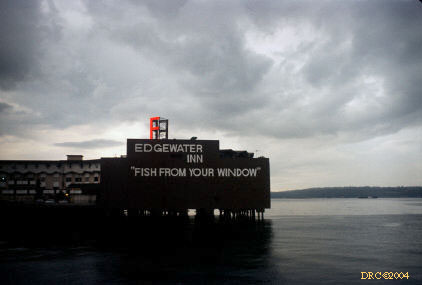
Earlier that day, my friends and I had staked out the Edgewater Inn in Seattle, which was well known at the time as the hotel of choice among visiting rock bands. Because you can fish out your window there, Seattle's Edgewater over the years has proved an irresistable draw for touring rock bands. You may have heard some of the stories about the place, forever immortalized in songs like Frank Zappa's "The Mudshark."

Perhaps you have heard the one particularly infamous tale involving a mudshark; a groupie; and the group Led Zeppelin.

Anyway, sure enough Uriah Heep showed up like clockwork at about three that afternoon. Lee Kerslake came in first. When me and my friends introduced ourselves, Lee was not only quick to return our greeting, but to invite us back after the show for a post-concert party. For a group of star struck sixteen year old rock fans like us, this was just too incredible for words.

In retrospect, I think Uriah Heep may have been as dumbstruck as we were to find they actually had devoted fans, after the critical drubbing they had become accustomed to for years.

So after a great concert where Uriah Heep proved they'd grown into their newfound status as headliners quite nicely (Thain in particular sounded amazing that night), we went back to the Edgewater. As promised, Lee showed up soon after with some beer and we headed back to the group's room for a long and memorable night of partying with our rock heroes.

Much of that night is a blur more than thirty years later.

What I do remember vividly was that Uriah Heep's "party contingent" consisted of Kerslake, Thain, and David Byron, while Ken Hensley and Mick Box chose to retire to their rooms to sleep. Thain spent most of the night rolling those newspaper sized joints you see in reggae videos.

At various points that night, we were throwing karate stars into the hotel room door; tossing lamps out the window into Puget Sound below; and we even caught a mudshark. I have one very distinct memory of Lee Kerslake sending me to the front desk for a salt shaker in the hopes that adding salt to the bathtub where the shark was being kept would help keep it alive.

The following year Uriah Heep released two records.

The Uriah Heep Live album fulfilled their contract with Mercury Records and basically documents the same tour we saw in a great show from Birmingham, England. This record faithfully captures all of the thunderous power of a Uriah Heep concert. But again, it is Gary Thain's bass playing that really stands out. The mix puts it much more out in front than on most concert recordings, and on songs like "July Morning," he is simply all over the place. Thain plays bass runs here that rival the solos of lead guitarist Mick Box.

Though live footage of Uriah Heep from this period is somewhat rare, I did find a great clip from that period (roughly 1973) from a show in Budokan, Japan. It can be viewed immediately below:


Later that year, Uriah Heep signed with Warner Bros. Records and released it's last great album Sweet Freedom. Although his drinking had reportedly become a problem by this time, David Byron is in fine form on vocals here on songs like "If I Had The Time" and "Stealin," which scored the band it's second bonafide radio hit. Here again, Uriah Heep combine heavier tracks like "Pilgrim," with the more refined sound of the title track and "One Day" (with those choir vocals again!).

The album's followup, Wonderworld was however not nearly as good, and bassist Gary Thain died soon after.

By the time of Return To Fantasy, an album where King Crimson/Roxy Music bassist John Wetton did his best to fill the gaping hole left by Thain's death, the magic was pretty much gone.

David Byron who was by this time a full on alcoholic would later try to front his own band Rough Diamond. Sadly, he too would soon be gone. Kerslake went on to become the original drummer for Ozzy Osbourne's Blizzard Of Ozz. He also had one more modest hit with a new version of Uriah Heep in the much more metallic sounding "comeback" Heep album Abominog.

These days, Box and Kerslake alone remain from the original glory days and actually enjoy a devoted cult sort of following fronting a new version of Uriah Heep.

Sunday, January 7, 2007

The Rockologist Gets Hot And Nasty With Black Oak Arkansas
Welcome to "The Rockologist," my new feature column for Blogcritics.

So who or what exactly is "The Rockologist" you may ask?
The Rockologist is the latent music wonk I've nurtured deep within myself ever since about the time I first time saw the Beatles on the Ed Sullivan Show. Note I said "wonk" and not the more derogatory label of "nerd."
You see because a nerd is a guy who lives with his Mom and never gets laid. A wonk on the other hand is a guy who simply soaks up every bit of knowledge on his particular subject like a sponge. A wonk is the guy who can give you precise dates, places, and names within his area of expertise. Simply put, a wonk is a guy who "wonks the wonk" (or in this case "wonks the rock").

So with "The Rockologist" I am embracing my inner music wonk. Just don't call me Al Gore okay?

What we are going to do here is go into the deepest corridors of what I like to call "rockology." Now you may have noticed that I've written a lot about the reissued recordings of so-called "classic rock" artists this past year. So just to disspell any rumors that may get started, your resident Rockologist here and now denies that he quit listening to new music somewhere around the time Kurt Cobain died.
Quite the opposite. The Rockologist is happy to report that he will be attending a My Morning Jacket concert this Monday night and that the last CD he bought was the latest release by the Decemberists (based on something I read here on Blogcritics I might add).
However, there were an unusually great number of those "remastered" versions of albums by what you would call "classic rock" artists last year. And a significant number of them were really good (the ELO and Cure reissues spring immediately to mind here).
So here's the thing. For those of us who grew up in the classic rock era, what is most frustrating is that the classic rock stations out there continue to feed us a steady diet of Zeppelin, Skynyrd, Floyd, Boston and Styx. All fine bands of course (well except maybe for Boston and Styx), but there are many equally great bands from that period who've largely become forgotten.
That's where "The Rockologist" comes in.
Some of these bands have been resurrected through the efforts of those fine folks putting out all those "Critical Review" DVDs you may have seen at the record store (assuming you live in one of the few towns who still have actual record stores). You know the DVDs I'm talking about. The ones where a bunch of aging rock critics discuss the finer points of somebody like say, T. Rex, Mott The Hoople, or Uriah Heep.

There's nothing quite like "getting deep with the Heep" if you know what I mean. And that will be the subject of a future installment here.
But for now, we are going to talk about Black Oak Arkansas. And in particular, we are going to talk about one Jim Dandy Mangrum.
To set this up, I kindly ask you direct your attention to this video:


Now I ask you, is this some amazing shit or what?
The first thing I've gotta point out is that were it not for Jim Dandy Mangrum could a guy like David Lee Roth ever have existed? With his bare chest, waist length hair, and crotch hugging spandex, Jim Dandy practically created the prototype for Diamond Dave and the rest of the glam-rock bad boys that "taught us how to love" in the eighties.

The second noteworthy thing about BOA however is the freaking band. The three-pronged guitar attack fronting these guys is on the surface pretty much your classic southern rock sort of deal. What set BOA apart however was the rhythm section, and in particular Tommy "Dork" Aldridge's amazing double bass drumming.
Black Oak Arkansas basically had one hit single in the seventies in the blues rave-up "Jim Dandy." Which is a cool enough little tune, but hardly representative of what these guys were actually about. What BOA was actually about--and what made them the hottest concert act on the planet for about five minutes during the seventies--was their incredible live performances.
The first time I saw BOA was at Seattle's Paramount Theatre at the concert recorded for their amazing Raunch And Roll album. Unavailable for years, the CD was finally reissued a few years back (by BOA themselves). It sounds as great now as it did that night I sat in the twelfth row at the Paramount.

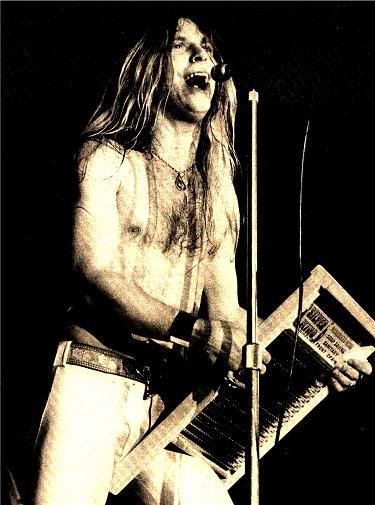
Even if the band wasn't so damned good (Aldridge in particular), BOA would be worth the price of admission just for Jim Dandy's hilariously sex-charged stage persona alone. Here you've got this okie-bred southern boy with a washboard of all things stuck between his legs. Better yet though, is the way he growls in a voice that sounds something like Tom Waits gargling on a mixture of Jack Daniels and crystal meth about how he's got a "Hot Rod."
Before the band reissued Raunch And Roll, I was honestly pissed when the only versions of these songs available was on the Atco/Rhino reissued Hot And Nasty: The Best Of Black Oak Arkansas album. The songs were there, but Dandy's hilariously croaked raps were all edited out.
I mean what good is a song like "Hot Rod" without the Jim Dandy setup of feeling good because "you're feeling good because you've got a lot of motor under your wheels"? What good is a song like "Hot And Nasty" when all the great "Nasty" parts about having your "having your sweat running smooth under your skin" were left on the cutting floor?
When stuff like this is delivered by a sexually crazed okie boy like Jim Dandy it's simply priceless on levels too numerous to mention.

And did I mention Tommy Aldridge's amazing double bass drumming?
As an eighteen year old teenager with my own chromosones raging fairly hard, the combination was nothing short of intoxicating. I actualy had one friend back then--a drummer--who to this day (as far as I know) buys a vinyl copy of Raunch And Roll whenever he can find one. The last time I went to his house--for a party about ten years ago--he had something like thirty copies of it in his record collection.
Black Oak Arkansas continue to play gigs today. Mostly at places like like the Buckhorn Tavern or the Indian Casino that books bands on the classic rock curcuit in your neighborhood. They don't have Aldridge anymore. Ozzy Osbourne snatched him up pronto when the two bands shared a bill at the California Jam in 1973. I've no idea who he's playing with these days.
The last time I saw BOA was about three years ago at the classic rock festival they put on every year here in Darrington, Washington. Which is basically where a lot of old hippies and bikers get together on a field in one of our logging communities, drink a lot of beer, and generally raise hell.

BOA shared the bill that day with The Ozark Mountain Daredevils and Brewer and Shipley of "One Toke Over The Line" fame. For Brewer And Shipley, it was part of their "New Tokes For Old Folks" tour.

So Jim Dandy was no longer the "Hot And Nasty" stud he was back in the day. In fact, he's gained something like a thousand pounds, so the spandex is no longer really an option.
But the band, with most of the original guitarists intact, sounded great.
For your own persual of all things Black Oak Arkansas, I recommend you check out Raunch And Roll for starters. There is also a great live segment from England on the DVD Black Oak Arkansas: The First Thirty Years.
Just steer away from that Best Of collection from Atco/Rhino. Black Oak were were never that great in the studio. It's all about the live stuff.

Thursday, January 4, 2007

So About Those UFO Sightings In Chicago...

When it comes to coverage by the national news media, UFO's (or Unidentified Flying Objects)--generally speaking at least--are not a story topping the agenda of your more credible news organizations. In fact, when it comes to such stories, the unwritten rule has always seemed to be that such reporting is best left to the supermarket tabloids.

This week however, was one where the mainstream media apparently never got that memo. Because unless I've missed something, three stories topped the mainstream news this week:

Gerald Ford's funeral.

Saddam Hussein's execution.

And the UFO sighted by numerous eyewitnesses at Chicago's O'Hare Airport.

According to the reports, several eyewitnesses including pilots and other credible personnel, watched the UFO hover over the airport before it shot straight up into the air at a very high rate of speed and disapeared into the clouds. If you missed it, you can view an interview with the Chicago Tribune reporter who broke the story here:


So here's a confession.

I've actually followed the subject of UFO's most of my life. I first got interested when as a pre-teen boy I saw something strange myself. Without going into all of the details, I saw what I would call a grey, football shaped object up in the sky while peering out the back window of my parents car during an afternoon drive in the country.

In the years since, I've read most of the literature dealing with UFO's out there. I even briefly wrote the Webwatch column for UFO Magazine recommending the best UFO websites to readers during the nineties UFO "boom years."

So like the roughly one half (or better) of all Americans who believe there actually may be something to all this flying saucer stuff, I've come to a few conclusions. Now before you reach over to cue the X-Files music, please note my hesitance to state what that "something" may actually be.

But I do believe "something" that is not birds or conventional aircraft is flying around out there, and has been for sometime. I also believe that most people probably don't give it a second thought. At least if you believe the surveys concluding that more than half of the population shares the view that UFOs are "Real."

Which is why I find many of the curcuimstances surrounding the Chicago UFO sighting reported this week so inexplicable. According to the Chicago Tribune report, both the airline and the FAA initially denied anybody saw anything. When further digging by the reporter--armed with a Freedom Of Information Act request no less--revealed otherwise, the FAA admitted they had been contacted about the sighting. Which they now dismiss as being due to odd weather conditions at the time.

Perhaps those "conditions" include the perfect "hole in the sky" that some witnesses described the object left after it tore through the cloud cover at O'Hare, and off into space that day.

Speaking of that day, the sighting occured on November 7. So why did the national news media wait until this week to report the story en masse? Incidentally, that kind of lag time is not a first when it comes to the media's timetable in reporting a mass UFO sighting over a major American city.

As I mentioned above, the nineties were kind of a "boom time" for UFOs. Between things like the X-Files on TV, and movies like Independence Day and Men In Black, UFOs and Aliens became as much a part of American Pop Culture in the nineties as Gangsta Rap and Monday Night Wrestling.

The most popular national late night radio show of the time--hosted by Art Bell--was itself devoted almost entirely to the subject of UFOs. Just between you and me--from lunchboxes to TV car ads, those little grey guys seemed to be just about everywhere.


So on March 13, 1997, a spectacular mass UFO sighting took place in the American Southwest. Though it has since come to be known as the "Phoenix Lights" sighting, the strange V-shaped formation of unidentified lights--which stretched across the entire night sky--was seen by hundreds of witnesses across the entire state of Arizona. It was also videotaped by dozens of them.

The videos can still be easily found with a Google search. But to save you the trouble you can check it out here.


The original "Phoenix Lights" event quickly became the buzz of UFOlogy through the Internet and shows like Art Bell. Still, as was the case with the Chicago sighting reported this week, it would not be covered by the mainstream media until several weeks later. The "Phoenix Lights" story eventually devolved into a media circus with city politicians donning alien costumes for the cameras, even as one (now former) councilwoman named Frances Barwood urged officials to conduct a serious investigation into the mass sighting.

The question now, as then, is simply this:

If there really isn't anything to all of this crazy UFO stuff, just why is it that so many folks in powerful positions act so crazy when it comes to the subject? You'd almost swear they were actually hiding something.

Or at the very least, it would seem they'd prefer that you and I didn't know about it.

Now you can go ahead and cue that X-Files music.

Saturday, December 23, 2006

Wolfgang's Vault Top Ten Streams For 2006: Not Your Usual Year-End List

For those of us who write about music, this time of year is all about one thing. And for those of you wondering, it isn't holiday parties or hopeful encounters underneath the mistletoe.
Nope.
The end of the year for us music scribes means one thing and one thing only. Time to do the year-end top ten list. Which brings me to my problem this year.
You see, for the life of me, I haven't been able to come up with a list of ten new CDs I heard this year that I felt were great enough to warrant inclusion on such a list.
Oh, don't get me wrong. I heard a lot of good music this year. I just didn't hear that much that I thought was truly great. That's as in great the same way some of the CDs I've put on such lists in past years still hold up.
Take the list I compiled last year for example:


My #2 choice was Neil Young's Prairie Wind, which I felt represented a return to form after disapointing recent efforts like Are You Passionate and Greendale. This year Neil Young gave us Living With War, his politically charged, and heavily amplified call to arms against Bush.
Living With War was certainly topical enough, and if you like the cranked to eleven sound of Neil shredding away on Old Black (which I do), it also has some really good music. But it's just not a great Neil Young album. Rust Never Sleeps is a great Neil Young album. Living With War, in my opinion at least, is simply a really good one.


My #1 choice for last year was Bruce Springsteen's Devils & Dust, which for my money contains the most vivid lyrical imagery to come from the pen of the Boss since Nebraska.
This year Bruce gave us We Shall Overcome: The Seeger Sessions, an album whose concept of folk-based cover songs had me skeptical going in. Happily, those same misgivings were just as quickly disspelled once I heard the joyous noise of these great songs (especially "O Mary Don't You Weep").

So Bruce makes my very short top three list this year.


He joins Bob Dylan's Modern Times which is my choice for best album of 2006, and possibly the icon's best overall release since the classic Blood On The Tracks.

Rounding out my very short top three this year is Johnny Cash's final (?) posthumous release in the American series, American V: A Hundred Highways, an album which finds The Man in Black coming to terms with his mortality in his final days.

So after going over all the music that I've written about this past year, I realized that in 2006 I wrote an unusually high number of reviews about reissues. Maybe it's just because there were so many of those "remastered versions" of classic albums this year.
I'd hardly consider myself an exclusively classic rock type of guy, but the evidence doesn't lie. From ELO to Alice Cooper to Jeff Beck, I wrote about a lot of repackaged oldies this year.


So that's when it hit me. As I considered compiling a Top Ten reissues list, I realized that the coolest thing I'd come across this year in music period was Wolfgang's Vault. Even better, breaking events just this week may also make it among the year's most topical music news stories.
On it's surface, Wolfgang's Vault is merely just about the coolest rock memorabilia site on the Internet, period. Especially if you are a fan of the late sixties and early seventies psychedelic rock era. Basically home to the collection of the late concert promoter Bill Graham, it houses rare, hard to find items like original artwork from the legendary Fillmore East and West. But as of November of this year, it also became home to something much bigger, and--if you are a seeker of rare music from that same period--something way, way cooler.
At the Concert Vault, which links from the main site, you can stream hundreds of previously unheard concerts from the same period from the top artists of the day. Right now. And they are pretty much all there, from the Airplane to Hendrix to Miles to Zeppelin.
Apparantly Bill Graham himself recorded just about everyone who ever played such venues as the Fillmore (East and West) and Winterland, and the files are now on the Internet for anyone to hear absolutely free.
At least for now anyway.
Earlier this week, representatives of several of the bands whose previously unavailable concerts can be heard there--bands like Zeppelin, Santana, and the Grateful Dead--filed suit to stop the free streams on the grounds that they are unauthorized.
Now if history tells us anything about "free music" on the Internet, it is that such unrestricted access is rarely legal, and that it even less rarely lasts. The difference here is simply that the streams themselves do not involve any type of ownership.
Why? Because they can only be played, rather than actually ripped or downloaded. Unlike the Peer To Peer sites of the past, the user risks nothing legally because ownership--in the form of "stealing" an artists work--cannot be claimed simply by hearing it.
Legal and moral issues aside, if your experience with Peer To Peer servers has been anything like mine, frying your hard drive with all of the spyware hidden in downloaded files isn't worth the risk anyway.
Still if history is any indicator, outside of an unlikely settlement being worked out, the goldmine of rare, historic performances now available free at The Concert Vault isn't likely to last.
Which means one thing. Get it while you can.
And remember, you are only "listening" to this amazing music, the same way you would on a radio. It's not possible to rip yourself a copy. So even if fear of arrest or a hard drive fried by spyware overload never scared you away before, your conscience can remain free here. There is nothing here to steal. But there is a motherlode of previously unreleased stuff to hear, with new shows being added every week.
These are the ten best performances I found at The Concert Vault:


1. Pink Floyd: 04/29/1970 Fillmore West
Described on the site as extending to the "outer reaches of exploration," this amazing set recorded before an absolutely rapt audience finds Pink Floyd at their most raw and experimental, and pre-Dark Side Of The Moon glossy best. It includes a rare, live performance of the complete Atom Heart Mother Suite that sounds nothing like the recorded studio version. Greatly extended versions of the psychedelic masterpieces "Saucerful Of Secrets" and "Careful With That Axe Eugene" likewise show an intensity only hinted at on the official live versions found on Ummagumma.


2. Bruce Springsteen & The E Street Band: 12/15/1978 Winterland
A legendary performer captured on the legendary Darkness tour, performing what hardcore fans already know to be one of his best shows ever. You get the full three hour plus performance here with surprisingly great sound quality. The highlights are numerous, but fans still talk about the amazing version of "Prove It All Night" preceded by a blistering several minute long guitar/piano intro here. "Backstreets," here includes an amazing middle part where you can hear the early, improvised genesis of the song that eventually became "Drive All Night."


3. Genesis: 10/22/1978 Hofheinz Pavilion
This was probably the last tour where Genesis were still doing the sort of multi-layered progressive rock that earned them their original cult-like following, before Phil Collins took them once and for all in the more commercial direction of the eighties model. The recording is stunning, as Genesis put on a musical clinic of prog-rock virtuosity. Highlights here include the intense duel drumming on "Dance On A Volcano/Los Endos," and a gorgeously layered version of "Cinema Show" that segues into a majestic sounding "Afterglow."


4. David Bowie: 03/23/1976 Nassau Coliseum
Between the futuristic soulman of the Diamond Dogs tour and the Berlin Trilogy with Brian Eno, Bowie adopted the cool European "Thin White Duke" persona for the Station To Station tour. This show finds one of Bowie's best bands barnstorming their way through hits from both Diamond Dogs and Station To Station as well as Ziggy Stardust era glam rock like "Suffragette City."


5. The Who: 04/06/1968 Fillmore East
There are a couple of amazing Who performances here, but I especially loved this pre Tommy show from the Fillmore because of the way the band plays so ferociously. Townshend sounds like Hendrix in places here, and Keith Moon plays with an intensity I didn't think even he was capable of. It often sounds like the wheels are about to come off the wagon here. But for all the punk-rock like abandon, the Who always maintain a sort of control amid the musical chaos here.


6. Cold Blood: 06/30/1971 Fillmore West
This pioneering San Francisco funk-rock outfit never quite got their due despite having the tightest rhythm and horn sections this side of Tower of Power, and the gutsiest female blues shouter this side of Janis Joplin in the pint sized Lydia Pense. There's your reasons why right there I guess. In an amazing performance here, the band plays so tight it hurts. But when Pense is singing her ass off, man does it hurt good.


7. Big Brother And The Holding Company Featuring Janis Joplin: 06/16/1968 Fillmore Auditorium
Speaking of Janis, this Cheap Thrills era performance with Big Brother features the rarely heard "Catch Me Daddy' and some great call and response between Janis and the rest of the boys. From there they segue their way right into the more familiar "Combination Of The Two," and a version of "I Need A Man To Love," that while not quite matching the version found on Cheap Thrills, still features the same great duel guitar interplay between Sam Andrew and James Gurley. Janis herself is in top form here.


8. Quicksilver Messenger Service: 11/07/1968 Fillmore West
With an absolutely pristine sounding recording, another one of the great, but largely forgotten San Francisco bands is caught here during the same string of performances where their live Happy Trails album was recorded. The version of "Mona/Maiden Of The Cancer Moon" here matches the psychedelic blues intensity of the one on Happy Trails nearly note for note. The rarely heard "Cowboys And Indians" and especially "Smokestack Lightning," meanwhile find guitarist John Cippolina playing the sort of raga runs on guitar that Jefferson Airplane's Jorma Kaukonen later made famous.


9. Traffic: 11/18/1970 Fillmore East
As always a mixture of understatement and improvisational exploration, this performance by Steve Winwood and Traffic finds Winwood sounding particularly strong on vocals. Meanwhile Chris Wood, Jim Capaldi and Blind Faith bassist Rick Grech stretch out musically with the jazzier songs of the then still new John Barleycorn Must Die album. Hands down, the best Traffic show I've ever heard.


10. Neil Young 03/23/1975 Kezar Stadium
Of anything you'll find at the Vault, this one is definitely the wild card. The sound quality is not that great. But as an historic meeting of giants, you'd be hard pressed to beat this. How about Neil Young and Bob Dylan together, backed by members of The Band and the Stray Gators? The setlist? Well there's "The Weight" for starters. Then there's a seque of Neil's "Helpless" into Dylan's "Knocking On Heavens Door" with the curious chorus of "knock, knock, knocking on the dragon's door."


Just whose dragon? Your guess is as good as mine.

Saturday, December 16, 2006


Nothing Says Christmas Like That Murderous Bastard Phil Spector And The Wall Of Sound

Music Review: Phil Spector - A Christmas Gift For You From Phil Spector

For several years now, me and my buddies have celebrated Christmas by having a modest little get together where we exchange gag gifts and enjoy ourselves a little Christmas cheer. Now it's nothing too fancy, mind you. I usually spring for an appetizer plate--cold shrimp with cocktail sauce is the perennial favorite--and maybe a twelve pack of beer. The guys will usually bring something to drink as well.

Anyway, the maybe three or four of us who gather in my living room will draw numbers to exchange goofy gifts with no more than a twenty dollar price tag tops. CDs and pro-wrestling videos have traditionally been the most popular gift choices. Occasionally somebody will get a little more creative such as in 2004, when I wound up with a case of Busch beer and a can of Bush beans (from one of my Republican friends).

I may just have to find a stuffed donkey for him this year.

Like I said, not a big deal. Nonetheless, I look very forward to these little gatherings each and every year at Christmas time. My favorite part about this my friends will also tell you is when I get to play Christmas DJ. I love picking the Christmas music out. My typical repetoire will consist of everything from The Beach Boys' "Merry Christmas Baby" to Springsteen's "Santa Claus Is Comin To Town," all leading up to the main event--Phil Spector's Christmas Album.

Phil Spector's A Christmas Gift For You is in my opinion, hands down, the greatest Christmas record ever made. What could be more perfect at Christmas time then the timeless innocence of the Ronettes doing "Frosty The Snowman" and "I Saw Mommy Kissing Santa Claus"? Or the Crystals singing "Rudolph The Red Nosed Reindeer" and "Santa Claus Is Comin To Town," (in the very same arrangement still played by Springsteen in his great version with the E Street Band)?

Unfortunately, as great as this record is, Spector's Christmas album has become a tougher sell these past few years since he became the prime suspect in a certain Hollywood murder case you may have heard about.

To be sure, Phil Spector has always had a certain reputation for craziness. A meticulous perfectionist, Spector has been known to drive his studio musicians crazy spending hundreds of hours to get something like the sound of a tambourine just right. Some claim his involvement in the Beatles Let It Be hepled put the final nails in that group's coffin (and led to the revised "Naked" version a few years back). Then of course there was the time he's said to have threatened certain members of the Ramones at gunpoint during the recording of End Of The Century.

To know him may be to love him as the song says, but Phil Spector has become known as much for his reclusiveness and erratic behaviour over the years, as he has for the brilliant records he has produced.

But man, what records.

Phil Spector is one of a very small handful of record producers who, when you hear something he has produced--especially on his classic early recordings--you recognize it as much as belonging to him as the artist. Phil Spector's greatest creations--from the Ronettes "Walking In The Rain" to the Righteous Brothers "You've Lost That Lovin' Feelin" to Ike and Tina Turner's "River Deep, Mountain High" are characterized by a huge sweeping swirl of bells and strings that wash over you like being in the middle of a tornado. The drums alone on songs like "Be My Baby" and "Baby I Love You" are instantly recognizable with their signature cadence of boom...boom, boom...crash!

It's no wonder this has come to be uniquely regarded as the "Wall Of Sound" over the years. Recorded in glorious sounding mono, there is nothing in all of music quite like it.

The other thing Phil Spector does is coax magical performances from his vocalists--especially the female ones he is best known for--that at their best, capture all of the wonder and innocence of teenage love. The greatest of these was arguably Tina Turner on "River Deep Mountain High." His work with Darlene Love and The Crystals also produced some amazing records. But his greatest partnership was with Ronettes and the woman who became his wife, Ronnnie Spector. "Be My Baby," "Baby I Love You," and especially "Walking In The Rain" capture a moment in sound and in time that all of the most modern studio technology could never reproduce again.

A Christmas Gift For You contains thirteen performances, all captured during that incredible early sixties period when Spector was producing these amazing records. You already know all of the songs, as they have all become tried and true radio staples at Christmas time over the years. Song for song, the Wall of Sound production--with all of it's bells, whistles, and strings--captures all the magic and wonder of Christmas like very little music I can think of. When you hear these songs, it's like being instantly transported to a kinder, simpler time. It really does feel like Christmas.

In addition to the Ronettes and Crystals classics already mentioned, the standouts here include Darlene Love's "Christmas (Baby Please Home)" and a version of "White Christmas" so gorgeous you'll be checking your window for snowflakes. On Bob B. Soxx And The Blue Jeans "The Bells of Saint Mary," the bells and the castanets ring gloriously amid a swirl of gospel charged backing vocals.

So the thing is, Phil Spector's recent legal troubles aside, this record just doesn't sound any different to me. For my money, it's still the single greatest Christmas record ever made. And tougher sell that it may be these days, it will definitely be on my CD player when the guys and I get together for some Christmas cheer next weekend.

For me, Christmas wouldn't be the same without it.

Sunday, December 10, 2006


Big Mac's US DVD: Theres Family, Theres Religion, And Theres The Beatles

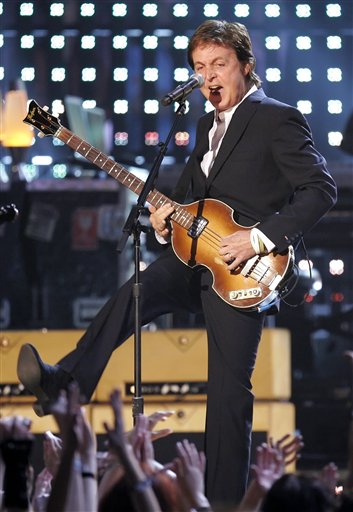
Music DVD Review: Paul McCartney - The Space Between US

There is a moment on this great DVD that sums up the way many of us who grew up with Paul McCartney and the Beatles feel. As a family spanning three generations prepares to go to the McCartney concert, "Dad" comments on how McCartney's music has been an influence on his life matched only by that of his family and his religion.

And that's how it pretty much is for those of us who grew up with the Beatles. My own life experience is defined in much the same way as that of "Dad" on this DVD. From the moment I saw the Beatles on the Ed Sullivan show at the tender age of seven, their music had such a profound effect on me that it would impact me for the rest of my life. It continues to do so to this day.

It's often been said that the music you grew up with becomes the soundtrack of your life. But in the case of the Beatles, this rings truer than perhaps with any music ever made. The Beatles music literally was that soundtrack for anybody who grew up in the sixties. It not only provided the backdrop to the events of that tumultuous decade, but in many ways it defined them. For myself growing up at that time, the Beatles music defined who I would become in my adult life every bit as much as my belief in God and family did.

As much as I love people like Bob Dylan and Bruce Springsteen for example, and as much as I both respect and revere the contribution their songs have made to modern culture, I don't think there is anyone living or dead who can lay claim to an impact matching that of the Beatles.

So "Dad" was definitely onto something in his assessment as far as I am concerned.

But the other thing about that is the songs themselves are so timeless that they span generations. Watching this DVD, with it's many crowd shots this becomes especially apparent. You see middle-aged couples hugging each other, and kids singing along who know every single word to the songs just as surely as their Moms and Dads do.

With both John Lennon and George Harrison now gone, Paul McCartney is really our last link to the promise that the music of the Beatles gave us. And that is not to disrespect Ringo Starr--because lets face it, the guy's backbeat is simply unmatched in music. But it was the songs, mostly written by McCartney and John Lennon, that convinced us that the world could really be a better place. Thank God that Paul McCartney is performing so many of them live now.

This is quite simply one great DVD.

When I saw the "US Tour" show in Seattle last year, hearing these songs--many of which I honestly never expected to see ever performed live--literally brought tears to my eyes. They took me back to when I first heard them in a way I simply did not expect. Watching this DVD, and seeing the similar reactions of many in the audience--hugging, kissing, and crying with each other to the music--brought those memories flooding right back.

Of course you've got the hits. From "Magical Mystery Tour," to "Drive My Car," to "Eleanor Rigby," they are all meticulously reproduced here. But what made the US tour truly special was the more obscure material McCartney brought out. Who could have imagined for example, ever hearing something like "I'll Get You" (first released as the B-side to the single version of "She Loves You") performed on a concert stage in 2006? Or how about forgotten chestnuts like "Till There Was You," "Please Please Me" and "Fixing A Hole"? Those great songs and more are all here.

The other thing I most remember from seeing McCartney live on the US tour last year was the incredible lighting and staging. When Paul takes the stage to "Magical Mystery Tour" here, the lights generated by the hundreds of LCD screens behind him are simply stunning.

Since much of this DVD was shot in Los Angeles, it's also interesting to see how celebrities from Jay Z and Beyonce to Bono and Steven Tyler line up to meet and greet Paul backstage in the same way every day fans like you and I would. During "Helter Skelter" you can even spot Jack Nicholson in the crowd throwing his hands in the air like he just don't care.

There are also personal insights on the impact of Paul McCartney and the Beatles offered up by notables ranging from Pearl Jam's Eddie Vedder to President Bill Clinton (who comes across as a major fan). If I have any complaint at all about this DVD, it is that "Hey Jude" and "Let It Be," two of the most powerful songs McCartney performs in concert, are basically cut short by the behind the scenes vignettes.

But that's small potatoes in the greater scheme of things. Simply put, this is a great DVD.

You can view a trailer from it by going here

Better yet, just go get it.