Saturday, February 24, 2007

Prelude To "Meeting Miss Moo":
The History, The Music...The Doobies
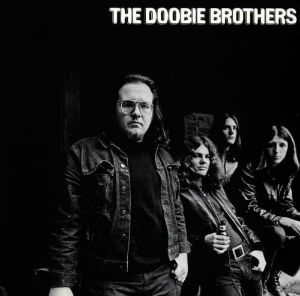
This weekend I plan to attend a reunion, along with several of my old classmates, with my high school journalism teacher from way back in the seventies. I haven't seen Miss Mootafes (who miraculously is still alive) in something like thirty five years, and I'm actually very excited about the meeting.

You see, Miss Mootafes (who we affectionately used to call "Miss Moo") was one of the first people I can remember that had a significant influence on my decision to pursue writing, encouraging me that I actually had what she called a "gift." The thing is though, in addition to being the best damned teacher I remember from high school, she also had to be something of a saint to have put up with my type of shenanigans. Because "gifted" as this particular student may have been, I was also somewhat incorrigible and quite prone to getting myself in trouble.

I ran with the group of kids anyone who went to high school in the seventies will remember as the "rockers." We were that long-haired, loutish bunch who blended with the stoner crowd, but seperated ourselves by the music we listened to. Where the stoner kids preferred the spacier sounds of Pink Floyd and the Grateful Dead, rockers were all about the volume championed by bands like Zeppelin, Sabbath, and Alice Cooper. For those in need of a reference point, I would highly recommend renting a DVD of the scarily accurate film, Dazed And Confused.



So on a typical Friday night, as a bunch of us would pile into our buddy's 65 Mustang for the weekend cruise, it was bands like this that were in heavy rotation on the 8-track tape deck. Every once in awhile however, the tape broke and you had to rely on the AM radio.

This is where the Doobie Brothers come in.


During the early seventies while Tom Johnston was still the engine driving the creative bus, there was simply not a rock band on earth whose songs played better on AM than the Doobie Brothers. In the seventies, when the 8-track tape broke, the Doobies were golden.

For us rocker kids, the Doobie Brothers were kind of like that perfect middle ground. While they were never as loud and adventurous as Zeppelin, or as bizarre (for the time) as Alice, they had perfectly servicable guitar riffs. These were mostly played by Johnston and fellow guitar slinger Patrick Simmons. Plus they had a biker's sort of edge about them, which gave them the necessary sort of outlaw cred they needed--despite AM radio being their primary medium.

The other thing about the Doobies was that despite their songs being hooky enough to get them all over the AM band, they were never as sappy as the bands they shared the dial with. Where the soft AM rock of Bread and Three Dog Night catered to the chicks, and the formerly great Chicago Transit Authority had devolved into something my friends called "Shit-cago," the Doobies songs like "Runnin Down The Highway" and the great "China Grove" just plain kicked ass.


Disc one of this great new hits compilation from Rhino is basically all about those days in the early seventies, commonly refered to by Doobies fans as the "Tom Johnston era."
The Doobies had so many great, riff fueled songs back then you practically can't count them. But they are all here. In addition to "China Grove" and "Runnin Down The Highway," you've got the single that for many started it all (and remains an anthem today), "Listen To The Music." From there we have "Jesus Is Just Alright," a Byrds cover that the Doobies rocked up a little and made their own to the point that few even remember the original.

Showing themselves as no mere one riff pony, the Doobies musical diversity is displayed most prominently in their biggest hit ever (at least from this era), "Black Water," a tune so down home New Orleans in it's flavor that it could just have easily have come from someone like Dr. John himself. On one of their most under-rated songs, "I Cheat The Hangman", they begin by wrapping themselves around a haunting lyric with eerily similar harmonies, then end with a wallop of frenetic crash and burn guitars. The rush is as heady as that "wacky tobacky" celebrated in their choice of a band name.


By the end of disc one however, things start to go a little south--at least for diehard fans of the rock oriented "Johnston era." By the time of the album Takin It To The Streets, the musical winds of this band were clearly shifting, as was the identidy of man steering the creative boat.

Micheal McDonald brought not only a jazzier direction to the Doobie Brothers--with slickly produced horns and charts dominating where the riff had once been king--he also brought his voice front and center. Where Tom Johnston's vocals displayed a cleaner version of the shrill, high end typical of so many of the rock vocalists of that era, McDonald's deep, resonant voice had more in common with Philly R&B.

Although it was a rude awakening for many of the Doobies fans back then (and still is for some), many of the songs of the so-called "McDonald era" hold up surprisingly well here, especially those at the end of disc one. The craft and musicianship of songs like the title track of Takin It To The Streets are of course undeniable. "It Keeps You Running" also still has a very nice haunting sort of quality to it all these years later.

Of course by the time of the Grammy blockbuster Minute By Minute all bets were off as the Doobies pretty much abandoned all connections to their rock past, and fully embraced commercial pop. A pretty convincing argument can be made that the McDonald led Doobies of this era would pave the way for such later horrors as Christopher Cross. This was also the time many longtime fans--myself included--pretty much got off the bus.


Not long after, with albums like One Step Closer, that "Long Train Comin" of the Doobie Brothers was headed for it's final stop. It is these songs of the so-called "McDonald era"--as well as the eventual reunion with Johnston--that make up the second disc of this collection.

For Doobies completists, you simply can't beat this collection for having it all neatly summed up in a nice two disc package. And even for those who favor the earlier stuff as I do, the second disc provides a great perspective to how this band evolved musically, even as they eventually sold their rock and roll hearts out to the greener pastures of pop commercialism.

But when I drive out to meet "Miss Moo"--that dear old seventies high school journalism teacher of mine--this weekend, I definitely know which disc I'll have on the CD player.
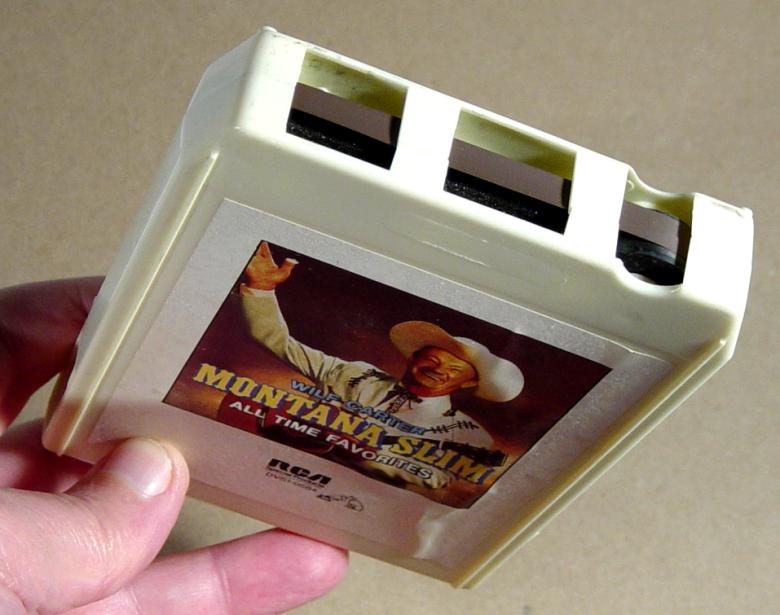

If only they still had 8-Tracks...

Stay tuned for my actual meeting with "Miss Moo".
Rediscovering Dylan's "Don't Look Back"


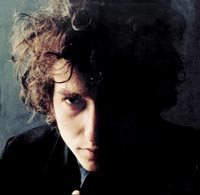
What strikes you most immediately about this newly repackaged version of D.A. Pennebaker's landmark documentary film on Bob Dylan's 1965 tour of England is just how cool the package actually is. It comes in a gorgeous box which folds out into a gatefold of sorts, housing two DVDs with graphics that look like little film cannisters. It also has a couple of pockets containing two of the great little extras that come with this set.

First, there's a cute little cigarette lighter sized "flipbook" of the original "Subterranean Homesick Blues" film. This recreates the film by flipping through it's pages in "old school" animation style. The larger side pocket however contains the real find here--a paperback book containing tons of photos and stills from the film, along with it's complete transcript. So for those of you Dylan fans more prone to analyzing the man's every word, you now have the ability to follow the dialog even as you watch the film.


But it gets even better.

A second one hour DVD contains rare, never before seen footage (including many scenes taken from the original negatives) that never made the final cut of the film. This includes many near complete live performances of songs from the '65 tour. If ever there was a complaint about the original Don't Look Back film (not that there are or ever were too many complaints about it), it was the frustrating cuts away from these pivotal performances.

The original Don't Look Back is of course a landmark in the way it so uniquely captures one of the sixties generation's truest icons at what can only be described as an iconoclastic moment in time. Only one other rock documentary film from the same period--the Rolling Stones Gimmie Shelter--documents history no one seemed aware at the time was even being made, as raw and nakedly as this film does (and in the Stones' case, ever so darkly).

In the decades since, several films have of course been made or otherwise come to light which reveal more about the notoriously guarded Dylan. Most notably, there is of course Martin Scorsese's No Direction Home, a film which remarkably verifies much of what had been previously regarded by many as myth (somebody really did cry "Judas" when Dylan went electric). More recently, the Dylan Speaks DVD of an infamous San Francisco press conference reveals Dylan letting his notorious guard down in some rare moments of candor (and even humor).


Both make great companion pieces to this film, but neither top it for uniquely capturing a specific moment in history. The still young Dylan is shown here to be what some view as an arrogant prick. What I've always preferred to think it shows is an artist just begining to realize who, or more importantly what, he actually may really be, and doing his best to come to terms with it.

Some of these moments reveal unique things about Dylan the artist. Here, he seems most comfortable in his own skin, seated at an old fashioned typewriter in a hotel room surrounded by friends and confidants like Joan Baez.

Other moments are genuinely humorous. Such as when the Animals obviously gushing Alan Price still manages to tell Dylan that his so-called British counterpart Donovan is a better guitar player (Dylan's reaction is equally priceless). For those interested in learning how the rock music business could actually be successfully run by what most believe to be hippies and beatniks during it's golden age, the backroom dealings of Dylan's infamous manager Albert Grossman are essential viewing.

Among the more telling of the other extras you'll find in this deluxe edition is the "alternate take" of the "Subterranean Homesick Blues" film -- which is arguably the very first true rock video. We all know the world famous scenes of Dylan flipping cards in a back-alley sort of setting. The alternate version follows much the same script, but is shot in a park. As Dylan flips through the cards displaying those unforgettable lyrics, Allen Ginsburg completely changes his clothes in the background. Which in my opinion, for whatever reason, I find to be just priceless.


Even if you've already seen the original version of this landmark film, extras such as these alone warrant a second look. As for any serious student of history--be it rock, cultural, or otherwise--my only question is what are you waiting for?

Don't Look Back - 65 Tour Deluxe Edition is nothing less than an essential purchase for any serious Dylanologist, Rockologist--hell, any "ologist" period. It comes out next week.

Saturday, February 17, 2007

The Rockologist On Embracing ABBA And Other Guilty Pleasures


Being the textbook sort of musical snob I like to think of myself as, I have a hard time admitting to some of the more decidedly "un-hip" sides of my music palette. At least in public anyway.

Some would call my continuing fondness for overblown, pretentious seventies progressive rock bands like Yes, Marillion, and Peter Gabriel era Genesis a flaw in my taste for example. Hell, for that matter they would probably nail me for the fact that in this past year alone I've written about a disproportionate number of seventies classic rock bands period.

And what about that Springsteen guy, some may find themselves asking. You know, the guy whose continuing "relevance" was a subject of some debate recently over at Blogcritics Magazine? After all, isn't Springsteen--the guy whose songs champion the values of the working class--a bloated millionaire liberal himself?

Well, why some might find themselves a little ashamed to admit to enjoying artists such as these, I myself choose to wave that fact as a flag of some honor. But for me, there is no guiltier pleasure in all of music than that of the perfectly constructed three minute or so pop song. I here and now confess that I am an absolute sucker for this type of sugary sweet ear candy.

You know the sort of songs I'm talking about. Many of them by one hit wonders such as The Raspberries ("Go All The Way"), and The Outsiders ("Time Won't Let Me") on the rock side, or a guy like Lou Christie ("Lightnin' Strikes," "Rhapsody On The Rain") on the more pop sounding side. Okay, so Lou Christie had more than one hit (actually so did the Raspberries).

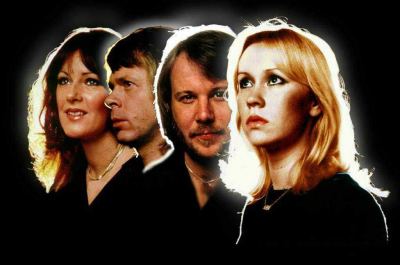
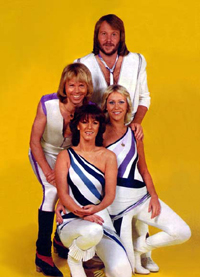
Anyway, for me these sort of perfect little pop tunes can represent every bit the sort of audio bliss that something as meticulously constructed and put to tape as say, Born To Run or Pet Sounds does. And over the past thirty years or so, nobody but nobody has made a greater string of these largely unheralded little pop masterpieces than Abba. That's right, I said Abba.


So for this edition of The Rockologist, I am going to remove that particular hat, and replace it with that of the Popologist. Let's talk about Abba for a few minutes shall we?

First of all, what a lot of people don't realize about Abba is that they have more than a few fans amongst the more "respectable" members of the rock community. I remember meeting Nick Lowe for example backstage in the seventies at a concert, where I noticed he was wearing an Abba button. Lowe at the time was one of the most sought after producers in music, in addition to crafting his own little pop gems such as those found on his album Pure Pop For Now People. So when I remarked about his Abba button, Lowe gushed about how he was then producing an album for Elvis Costello and that the sound he was looking for would be to make an "Elvis Costello Abba album." That album tuned out to be Costello's brilliant third album, the pop masterpiece Armed Forces.

What Abba did so flawlessly for most of the seventies was crank out hit after hit after hit in the form of these beautifully crafted great pop singles. Many of them you know of course--there's "Dancing Queen," "Take A Chance On Me," "Mamma Mia" and all the rest. A lot of these great songs owe more than a little to Phil Spector, such as "SOS" with it's swirling production resembling nothing so much as it's own "wall of sound."

Other songs you may not know as well, as not at all of them were near the big hits in America that they were in Europe. Take "Honey, Honey" for example. Notice how, in the video for the song, Agnetha and Annifrid (or "Frida" as those of us who love her know her), sing the lyrics in such an innocent sort of way, even as they coyly sway their hips in what is damn near a "come hither" sort of suggestion.

The song itself cleverly disguises itself as a sweet sort of little "I love you," while still managing to mask it's more erotic intent. On the one hand theres a line like "I'm gonna stick to you boy, you'll never get rid of me," while on the other there's "Honey to say the least, you're a doggone beast." So you tell me what they are really singing about here.


Simply put, Abba's best songs were about sex. But they were so cleverly packaged as sweet, innocent little pop songs--with Bjorn, Benny, Agnetha, and Frida themselves the very embodiment of such wholesome innocence--that the majority of the world never got it, even as they gobbled up this ear candy to the tune of something like a billion records sold. Again, take another song like "Knowing Me Knowing You." Now you tell me what this song is really about.


Well okay. Maybe "Knowing Me Knowing You" isn't about sex. But have you ever heard a song about breaking up sung in such an erotic way? The way Agnetha sings the backup vocal as a breathy sort of whisper makes you want to skip past the breakup altogther and get straight to the makeup part.

If it sounds I'm fixating on the sexuality of Abba's two female singers here, I actually have a confession to make. In my twenties, and supposedly all grown up and past such things, I actually had something of a teenybopper's crush on Frida. You think I'm kidding? Try this on for size.

When Abba finally toured America in what I want to say was about 1979, I scored third row tickets and took the girl I was seeing at the time to the show. Well, when Frida would make her way over to our side of the stage, she kept making eye contact with me. This actually caused me to squirm in a way not at all unlike that of a teenage girl at a Clay Aiken (or back then, Shaun Cassidy) concert. As I went on and on about how "Frida was looking at me," my date's anger rose just as steadily. I never saw her again after that night.


So these days Abba finally appear to be getting some respect. Touring Abba tribute bands like Bjorn Again do pretty big business on the concert curcuit, and the musical "Mamma Mia," based on Abba's songs, has been a box office smash all over the world.

But more importantly, the bands songs and the way they were produced are also finally getting their rightful due. People finally seem to have come around to the fact that Bjorn and Benny share as much with people like Brian Wilson, John Phillips, and Phil Spector as they do with Barry Gibb and the other disco songsmiths they were lumped into a category with back in the seventies.

So go ahead and dust off that copy of Abba Gold you've been keeping in the closet and give it a spin. Go ahead and admit it. You love it.

It's okay. Honest.

Friday, February 9, 2007

John Mellencamp: The "Little Bastard" Takes Us Down "Freedom's Road"

CD Review: John Mellencamp-
Freedom's Road


Poor old Johnny Cougar.

You see that's what they used to call him way back in the day when he was first managed by Mainman's Tony DeFries, whose other big name client at the time was a guy named David Bowie. Cougar's problem at the time was respect, or more specifically the lack thereof.

The way around the problem? Dump the manager. Change your name. Change it several times actually, first shortening the Johnny to John, than adding your birthname of Mellencamp, then finally dumping the Cougar moniker altogether.


Whatever works.

Yet even with the numerous name changes, respect would be a long, hard fought battle for John Mellencamp. The biggest problem dogging him was the constant comparisons to Bruce Springsteen, and the perception (at the time) that Mellencamp was little more than the poor man's Boss. I'll even confess that for the longest time, I was one of those who snickeringly referred to John Mellencamp as "the Employee."

Whatever works.

That all changed with the release of Scarecrow in 1985, an album even I begrudgingly had to confess at the time painted a more accurate portrait of the problems facing working class America--or more specifically in this case, the American farmer--than anything on Springsteen's then current Born In The U.S.A.. The songs weren't half bad either.

Now before I'm engulfed by the howls of protest I already hear coming from my fellow Boss fans, I'll also admit that Springsteen's message was widely misunderstood (and misappropriated by certain opportunistic politicians) at the time. But what do you expect when your wrap your album sleeve in an American flag smack dab in the middle of the Reagan era? The thing that makes Scarecrow the better record for my money is it's honesty and straight forwardness. There's no mistaking what the title track there was all about. None whatsoever.

So with Scarecrow, Mellencamp was finally taken seriously as an artist. And for awhile there, he took the ball and ran with it. Scarecrow's followup, the mountain-folk (okay, hillbilly) inspired The Lonesome Jubilee added an Appalachian flavor to the mix, brimming with fiddles and accordians a full twenty years before Springsteen explored similiar instrumentation on The Seeger Sessions.

Unfortunately, Mellencamp's catalog gets very spotty after that, with the last really great album being Human Wheels in the early nineties. Which, unfortunately sold less than half what Scarecrow did.

Which brings us to the present and John Mellencamp's new record, Freedom's Road. And damned if Mellencamp hasn't gone and done the exact same thing Bruce did with Born In The USA. By allowing the real message of this records most visible song, "Our Country," to be obfuscated by linking it to a damn car advertisement, Mellencamp paints himself into a picture straight out of a Toby Keith redneck tailgate party.

The thing is, do lyrics like "theres room enough here for science to live, and room enough here for religion to forgive," and "poverty will be just another ugly thing, and bigotry is seen as just another fiend" sound like they were written by a George Bush worshipping, gun-toting neo-conservative to you? I didn't think so. Just to be clear, those are just some of the lyrics you won't hear on that damned commercial.

It's too bad, because this is also Mellencamp's catchiest melody since "Smalltown" and taken on its own, outside of it's commercial use, the song evokes similiar images of rural populism. I understand an artist like Mellencamp has to do what he's gotta do these days to get his song heard. Unfortunately, the damage has already been done there.

The good news is aside from it's questionable marketing, Freedom's Road is John Mellencamp's most consistent record since Human Wheels, and his most direct and straight forward--both lyrically and musically--since Scarecrow. Like those records, the songs are pretty damn good too.

This is basic, rootsy Americana style rock and roll like Mellencamp hasn't done in what seems like ages. With the guitars front and center in the mix throughout the record, they chime like bells when necessary, but also rumble with a Link Wray sense of urgency when the lyrics turn toward the darker subjects here.

Because make no mistake, this "Freedom's Road" is paved with "Ghost Towns Along The Highway" where "no one wants to live here anymore." There's even a "Rural Route," the scene of an unspeakable crime which prompts "an amber alert all over the nation" and "someone predicts a young girls death." But for all of those darker side streets found on Freedom's Road, the hope of America never lies too far beneath.

In the album's opening track, Mellencamp yearns for a "Someday, I don't when..." and then never really even answers the inherent question. But the contrasts are clear. On the one hand this is "the road of madness and trouble, paved with intolerance, ignorance and fear," yet Mellencamp is still able to "look at your face, you look just like me" and conclude "hey brother, I'm not your enemy."

If there is an overall theme to this album, it is in fact that tolerance is an American family value. In fact, Mellencamp could just have well titled the album "Tolerance." He puts it simply and succinctly on the track "The Americans" with it's refrain of "I'm An American, I respect you and your point of view. I'm An American. I wish you luck with whatever you do."

Not to put too fine a point on it, but on "Jim Crow," he enlists America's favorite folkie liberal Joan Baez to drive it home.

If Bruce Springsteen represents the conscience of America to many, John Mellencamp is a prime candidate as it's illegitimate little bastard son. So great as this record is (and it is a very early candidate for best of the year in my view), I just cant stop thinking of that damned car ad.

Yes, poor old Johnny Cougar.

His best record since Scarecrow could well end up being his least politically understood since that of another certain patriotic rock star.

Saturday, January 20, 2007


R.I.P. Scott "Bam Bam" Bigelow 1961 - 2007
Professional wrestling lost one of the best "big men" in it's history this past Friday January 19, 2006 as Scott "Bam Bam" Bigelow was found dead at the age of 45 by his girlfriend. The cause of death was unknown at the time.
I found a nice tribute video to Bam Bam from the folks at Fight Network. It can be viewed immediately below.


"The Beast From The East," Bam Bam Bigelow was known for his massive size and trademark tatooed forehead which bore red and yellow flames which matched his ring attire. Bigelow was also something of a rarity in the world of professional wrestling. A big man who could stand toe to toe in the ring with such equally massive combatants as Andre The Giant and The Undertaker, Bigelow also moved with the same agility of much smaller wrestlers like Rey Mysterio and Sean "X-Pac" Waltman.

Before retiring in 2002, Bam Bam enjoyed a long and successful career. He wrestled in all of the "big three" wrestling promotions -- WWE (World Wrestling Entertainment); WCW (World Championship Wrestling); and ECW (Extreme Championship Wrestling), as well as overseas in places like Japan, where he worked successful programs with other big men like Big Van Vader in such promotions as New Japan Wrestling.

His biggest years however were in the nineties with the then World Wrestling Federation. In Vince McMahon's WWF, he most often worked as a despised wrestling "heel" (the wrestling vernacular for "bad guy"). During his WWF tenure, Bigelow was managed by equally colorful characters like Sir Oliver Humperdink, a short, fat little man with a penchant for big cigars and loud hawaiian shirts; and Luna Vachon, the psychotic female with flamed tattoos which matched Bigelow's own.


Bigelow worked matches with most of the biggest WWF names such as Bret "Hitman" Hart (who praised his wrestling ability as being remarkable for such a big man), The Undertaker, and Hulk Hogan. In these matches, Bigelow would run the ropes with the agility of a man half his size, doing somersaults and flying off of the ropes. Bigelow's arsenal of wrestling moves even included a textbook moonsault, a move popularized by smaller wrestlers of the Lucha Libre discipline, and one which most wrestlers his size would not even dare to attempt.

His most famous match was on April 2, 1995 before a world wide pay-per-view audience at Wrestlemania 11, where he headlined a main event against NFL star Lawrence "LT" Taylor. Largely because of the pro-football connection, the match garnered massive mainstream media coverage. Bigelow, who worked the match playing the heel role he was most accustomed to, lost to "LT".

In another of his more noteworthy matches--this time for ECW--Bigelow created one of the most visually stunning images ever seen on a wrestling TV show, slamming the pint-sized Spike Dudley clear through the ring and onto the floor. The visual effect has since been duplicated many times, but never with quite the same impact.


Bigelow's death at the young age of 45 is the latest of what has been a disturbingly common string of wrestlers to die so young in recent years. Many of these deaths, such as those of Brian Pillman and Rick Rude, are widely believed to be at least partially the result of performance enhancing and pain relieving drugs. Many wrestlers use such drugs to keep up with the demanding schedules and physical punishment their bodies are forced to endure. Recently, World Wrestling Entertainment--far and away the world's biggest wrestling promotion--adopted a "wellness policy" in an effort to prevent such premature death among it's athletes. This policy followed the passing of one of it's biggest stars, Eddie Guerrero about a year ago. The causes of Scott "Bam Bam" Bigelow's death this past Friday remain to be determined.

Scott "Bam Bam" Bigelow, dead at age 45, will be missed by wrestling fans from America to Japan, and throughout the world.
Take Me To A Circus Tent: The Jefferson Airplane Flight Manual

"The object of this book was not to reinvent the wheel, or in this case reinvent the Plane," author Craig Fenton explained to me earlier this week, describing his remarkable new book on the Jefferson Airplane.

"The aim was rather to help the spread the word, and to keep the torch going of one of the greatest bands ever."

Amen Brother.

Make no mistake.


Craig Fenton' s Take Me To A Circus Tent: The Jefferson Airplane Flight Manual is not just any rock book. It is in fact, the final, definitive word on the music of the band which most defined the so-called psychedelic acid-rock "San Francisco" sound of the late sixties (the very sound which would define an entire generation).

The fact is, this may be the most extensive, meticulously researched account of the music of any rock and roll band ever. Period. From a purely historical, and especially from a musical standpoint, Take Me To A Circus Tent delves as deeply into the sixties phenomenon that was the Jefferson Airplane as any rock and roll book ever has.

But let's get one thing straight right up front. This is a book which focuses strictly on the music.

If you are looking for one of those sex, drugs, and rock and roll exposes, you'd best look elsewhere. You are not going to find any tales of band members lying face down in a pool of their own vomit. Nor will you find the sort of acid-fueled sex-orgies which have characterized the written accounts of other rock stars from the sixties, fallen and otherwise.

Not that Craig Fenton didn't have his chance however. In the extensive research that went into this book, Fenton was given what amounted to an all-access pass, resulting in rare footage such as this, a great clip from the Dick Cavett show in 1969 of the Airplane performing "Somebody To Love," with David Crosby sitting in:


There are complete interviews (and opportunities to dish the dirt) with no less than 32 Jefferson Airplane insiders contained within the 543 pages of this book. These include everybody from original members Paul Kantner and Marty Balin (who says that Fenton "knows so much about the Jefferson Airplane family I had to ask him the questions"), to guys who were there like Moby Grape's Jerry Miller and Big Brother And The Holding Company's Peter Albin (who remembers the late JA drummer Spencer Dryden).

These interviews make up the latter half of the book. For the first part, Fenton exhaustively and extensively recounts the complete history of every single song written, recorded or performed by the Jefferson Airplane, as well as it off-shoots such as Hot Tuna and the various Jefferson Starship aggregations.

The result is the sort of scholarly work that could have only come from the pen of a true music obsessive. Craig Fenton is basically an Airplane archivist. From his roots as a fan who discovered the Airplane after hearing "The Ballad Of You Me & Pooneil" on progressive rock station WNEW in the sixties, to his own career in rock radio, he has meticulously documented the evolution --the flight path if you will-- of the Jefferson Airplane.

In Take Me To A Circus Tent, no less than 121 Jefferson Airplane shows are broken down song by song. There are also some 93 photos, many of which have never been seen before. But we are not just talking about photos and setlists here. Fenton breaks down everything from the first and final performances of individual songs; who played what and when; to songs never before officially documented at all.

On page 149 for example, we learn of an incredible show performed in San Bernadino where the songs "Wooden Ships," and "Volunteers" were performed for the very first time. Later, we learn of a show in 1969 at San Francisco's Golden Gate Park days later where "Good Shepherd" is debuted, but sung by Grace Slick, rather than the version sung by Jorma Kaukonen on the Volunteers album.

That's the type of detail we are talking about here.

However, Take me To A Circus Tent is by no means complete. How could it be?
By his own yardstick, Craig Fenton refused to include any information on shows or performances that he could not confirm either through interviews or tapes from his own rather extensive archives.

For example, I had no luck finding my own point of reference to a 1969 show in Honolulu, Hawaii where I had my first exposure to the powers of Jefferson Airplane's live performances myself. As a thirteen year old attending that show at Honolulu's Civic Auditorium, I met the band on a day that also saw one of Hot Tuna's earliest performances opening for JA. Paul Kantner was also busted for marijuana posession that very day in Honolulu near Diamond Head.

Still, this book is about as complete as rock books get.

Word to the wise though. It is also laid out as something of a master thesis. This is definitely a book intended more to be painstakingly analyzed then it is to be read from cover to cover.

Regardless, I would consider Take Me To A Circus Tent: The Jeferson Airplane Flight Manual your personal reference guide to one of the greatest rock bands ever.
As rock and roll books go, this truly is as complete as it gets.


<

Saturday, January 13, 2007

The Rockologist Gets Real Deep With Uriah Heep


Uriah Heep was one of those bands I discovered completely by accident growing up as a teenager in the seventies.

Like everybody else back then, I had heard "Easy Livin," which up to that point in time had been Heep's one song to receive any airplay on American album rock radio. The song was from Demons And Wizards, an album which was selling well for the band despite getting largely terrible reviews.

"Easy Livin" was itself a pretty decent little workingman's sort of rock tune that sounded good enough sandwiched in between say, "I Just Wanna Make Love To You" by Foghat and "Thirty Days In The Hole" by Humble Pie on the local FM rock station.

Prior to Demons And Wizards, Uriah Heep's records had included one recorded with a symphony orchestra (Salisbury) and another more known for the mirror on it's cover than for the music inside (Look At Yourself). Uriah Heep were also going through band members the way other bands of the day went through cigarette rollling papers.

For Demons And Wizards, founding Heepsters Mick Box (guitar) and principal songwriter Ken Hensley (keyboards) had added drummer Lee Kerslake and bassist extraordinaire Gary Thain to the lineup, which by now also included vocalist David Byron. It was this lineup they finally settled on for the next four albums, which would prove to be both Uriah Heep's commercial and creative peak period.

So anyway, like everybody else back then, I had read the unanimously bad reviews of Uriah Heep's albums.
This was a band that rock critics loved to hate like no other since the universally despised Grand Funk Railroad. In what may well be one of the most scathing album reviews I've ever read, one guy writing about Demons And Wizards didn't even stop with the music. After trashing the album, the critic punctuated his verbal arrows by going after the band's looks, calling them "ugly as muttonchop mongrels."

Ouch!

But that's how it was with Uriah Heep back then. The original "no respect" band, they still managed to eventually sell a buttload of records and develop a reputation for high energy--even if occasionally somewhat sloppy--live shows that made them one of the world's top concert draws by the mid-seventies.

With their history of critical disrespect, combined with a legendary reputaion for excess both on and offstage (one that would eventually claim the lives of two original band members), it's long since been suggested that Uriah Heep were the actual real-life inspiration for the brilliant rock "mockumentary" film This Is Spinal Tap.

Having partied with these guys myself, I don't doubt that rumor for one second. But we'll get back to that in due course.

First, some quick history...

Before breaking through big with the Demons And Wizards album, Uriah Heep basically cut it's musical teeth by touring as a support act behind such mid-level concert acts of the day as Manfred Mann and The James Gang. It was on one such tour, on a bill sandwiched between the headlining Savoy Brown and somebody called Miller Anderson's Headlock that I saw Uriah Heep live for the very first time.

This was one of those concerts that I happened to be at only because I'd secured free tickets through my after-school job as an intern at Seattle's rock station at the time, KOL.

Like most high school internships, I didn't get paid for my duties answering request lines and filing albums in the music library. But I didn't care. For me, getting free tickets to shows; hanging out with legendary Seattle DJs like Burl Barer (who used to call me "little hippie" because of my long hair); and being able to brag to friends that I "worked" at a place like KOL was payment enough.

So as much as I had looked forward to seeing Kim Simmonds and Savoy Brown play "Tell Mama" and the rest of their blues-rock repetoire, Uriah Heep's forty minute opening set just blew me away. The sound was pretty much your classic (as in heavy on the keyboards) sort of Deep Purple influenced heavy metal.

But there was something different about these guys.

The singer was a peacock strutting dandy boy straight out of the Rod Stewart school of glam rock, dressed in outlandish bright red, who prowled the stage like he owned the place. The guitar player meanwhile punctuated the heavy keyboard riffs with shrill leads played while running his axe all up and down the mikestand. The drummer beat the living hell out of his kit like his life depended on being heard above the rest of the din.

And the bass player? Gary Thain was a visual freakshow who I was convinced at the time was the single greatest bassist I had ever seen or heard.


By the time Uriah Heep's forty minute opening set was over, I had all but forgotten the headliner Savoy Brown, and become a born-again Uriah Heep fan. Six months after that opening set at the 3000 seat Paramount Theatre, they would be back headlining the 6000 seat Seattle Center Arena.

Which they sold out by the way.

Uriah Heep would also have a new album under their belts by that time called The Magicians Birthday. Clearly designed as not only a followup, but a companion piece to the breakthrough Demons And Wizards, the album also mined the same sort of dungeons and dragons lyrical territory as it's predecessor did--kind of like Black Sabbath minus all that nasty dark and evil stuff. Both albums also featured artwork by Roger Dean, best known at the time for doing all the cover art for Yes.

The combination for me was irresistable. As a teenager I can remember countless nights listening to both albums and trying to decipher the meaning of the fantasy laden lyrics. There was nothing quite like "getting deep with the Heep." The other thing about the two records was that for all the heavy metal thunder Uriah Heep displayed in concert, there was a refined sort of quality to the albums.

For every blistering rocker like "Easy Livin" or "Traveller In Time," Demons And Wizards also featured songs like "Paradise/The Spell" which featured a gorgeous middle section powered by hawaiian sounding guitar parts and an angelic sounding vocal choir. For The Magicians Birthday's part, the title track was a tour de force which went from a kazoo humming the "Happy Birthday" song to a thunderous duel between Kerslake's drums and Mick Box's distorted, fuzzed-out guitar. Through it all, Gary Thain played some of the most intricate bass parts I had ever heard on a rock and roll album.

So, true story here...

By the time Uriah Heep returned to Seattle for it's first sold out show as a headliner, I was not only well immersed in their records--I was also determined to meet what was by now my favorite band. And guess what? I succeeded.

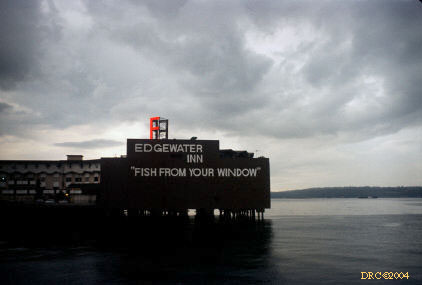
Earlier that day, my friends and I had staked out the Edgewater Inn in Seattle, which was well known at the time as the hotel of choice among visiting rock bands. Because you can fish out your window there, Seattle's Edgewater over the years has proved an irresistable draw for touring rock bands. You may have heard some of the stories about the place, forever immortalized in songs like Frank Zappa's "The Mudshark."

Perhaps you have heard the one particularly infamous tale involving a mudshark; a groupie; and the group Led Zeppelin.

Anyway, sure enough Uriah Heep showed up like clockwork at about three that afternoon. Lee Kerslake came in first. When me and my friends introduced ourselves, Lee was not only quick to return our greeting, but to invite us back after the show for a post-concert party. For a group of star struck sixteen year old rock fans like us, this was just too incredible for words.

In retrospect, I think Uriah Heep may have been as dumbstruck as we were to find they actually had devoted fans, after the critical drubbing they had become accustomed to for years.

So after a great concert where Uriah Heep proved they'd grown into their newfound status as headliners quite nicely (Thain in particular sounded amazing that night), we went back to the Edgewater. As promised, Lee showed up soon after with some beer and we headed back to the group's room for a long and memorable night of partying with our rock heroes.

Much of that night is a blur more than thirty years later.

What I do remember vividly was that Uriah Heep's "party contingent" consisted of Kerslake, Thain, and David Byron, while Ken Hensley and Mick Box chose to retire to their rooms to sleep. Thain spent most of the night rolling those newspaper sized joints you see in reggae videos.

At various points that night, we were throwing karate stars into the hotel room door; tossing lamps out the window into Puget Sound below; and we even caught a mudshark. I have one very distinct memory of Lee Kerslake sending me to the front desk for a salt shaker in the hopes that adding salt to the bathtub where the shark was being kept would help keep it alive.

The following year Uriah Heep released two records.

The Uriah Heep Live album fulfilled their contract with Mercury Records and basically documents the same tour we saw in a great show from Birmingham, England. This record faithfully captures all of the thunderous power of a Uriah Heep concert. But again, it is Gary Thain's bass playing that really stands out. The mix puts it much more out in front than on most concert recordings, and on songs like "July Morning," he is simply all over the place. Thain plays bass runs here that rival the solos of lead guitarist Mick Box.

Though live footage of Uriah Heep from this period is somewhat rare, I did find a great clip from that period (roughly 1973) from a show in Budokan, Japan. It can be viewed immediately below:


Later that year, Uriah Heep signed with Warner Bros. Records and released it's last great album Sweet Freedom. Although his drinking had reportedly become a problem by this time, David Byron is in fine form on vocals here on songs like "If I Had The Time" and "Stealin," which scored the band it's second bonafide radio hit. Here again, Uriah Heep combine heavier tracks like "Pilgrim," with the more refined sound of the title track and "One Day" (with those choir vocals again!).

The album's followup, Wonderworld was however not nearly as good, and bassist Gary Thain died soon after.

By the time of Return To Fantasy, an album where King Crimson/Roxy Music bassist John Wetton did his best to fill the gaping hole left by Thain's death, the magic was pretty much gone.

David Byron who was by this time a full on alcoholic would later try to front his own band Rough Diamond. Sadly, he too would soon be gone. Kerslake went on to become the original drummer for Ozzy Osbourne's Blizzard Of Ozz. He also had one more modest hit with a new version of Uriah Heep in the much more metallic sounding "comeback" Heep album Abominog.

These days, Box and Kerslake alone remain from the original glory days and actually enjoy a devoted cult sort of following fronting a new version of Uriah Heep.