Saturday, April 28, 2007

Stooges: At 60, Can The Ig-Man Still Go The Distance?

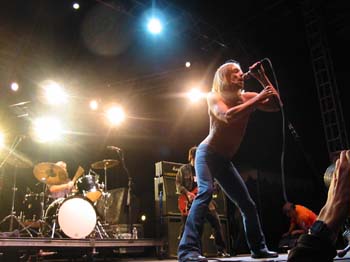
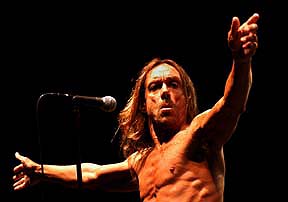
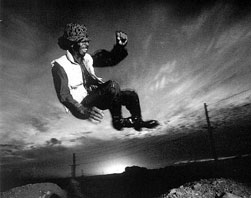
Concert Review: Iggy And The Stooges At WAMU Theatre, Seattle, WA 04/27/07

Counting this weekend's show with the Stooges, I have seen Iggy Pop live a grand total of three times. The first time I saw the Ig-man was back in the seventies on the Lust For Life tour he did where David Bowie played keyboards in the band.

I confess that I went partially out of curiosity because of Iggy's reputation for doing things like cutting his chest open with glass onstage. But I mainly came to see Bowie. And within the first few minutes of that performance, I all but forgot Bowie was even there.

Iggy didn't just have a riveting stage presense--he was like a man posessed. From flinging himself face first into the crowd (this was years before stage diving became an art at grunge shows) to jamming an overhead spotlight into his face, Iggy was an absolute madman. As live performances go, it was unforgettable.

A few years later I went to an Iggy show where he incited a riot by inviting the audience onstage--who promptly tipped over the PA columns and people got hurt. Iggy was unable to perform in the city of Seattle for a number of years afterwards as a direct result of that show. Once again though, it was something you didn't soon forget.

So I was obviously stoked to see Iggy performing for the first time in thirty years with his original band The Stooges. Stoked yes, but also just a tad bit apprehensive. Iggy's pushing sixty years old these days. He may still have that famously ripped physique that allows him to do his entire show in his trademark bare chest and ass hugging tight jeans. But lets face it. He set the bar pretty high with those shows back in the seventies, where he essentially put his life at risk on a nightly basis for the sake of his art.

So at sixty could the Ig-man still go the distance? Amazingly, the answer was yes.

Despite the fact that Seattle's sparkling new WAMU Theatre wasn't exactly the best venue to recapture the anything goes atmosphere of rock's golden years (you weren't even allowed to duck outside for a smoke), Iggy And The Stooges rocked the stuffy new building to it's rafters.

The strangest thing about this show was how unbelievably tight the Stooges sounded. As fun as those Iggy shows I saw back in the seventies were, they were also always notoriously sloppy affairs--such as the one captured on the classic live Metallic K.O. album where you can clearly hear the bottles being thrown at the stage landing at the bands feet. On this night however, they sounded great.

And then there was Iggy himself. Looking ripped and surprisingly healthy given all the abuse he has subjected his body to over the years, Iggy flung himself all over the stage and dove himself into the crowd just like the good old days. Wisely sticking to the Stooges material (and avoiding latter day solo embarrasments like that "Candy, Candy" song), the Stooges ripped through the classics. And they were all there, from "I Wanna Be Your Dog" to "TV Eye" to "No Fun."

Iggy also once again invited the audience up onstage to join him, and at one point there were so many people up there you couldn't see a single member of the band. Happily, this sort of controlled chaos didn't wind up the same way it did the last time around here in Seattle. Afterwards, Iggy thanked those who got up there as members of "smelly Seattle." It was too priceless for words.

It's both tempting and easy to be skeptical of the aging "Godfather of Punk's" ability to live up to the standard he set all those years ago nowadays. But Iggy And The Stooges not only delivered the goods on this night--for once the band sounded every bit as tight as they did energized.

If Iggy And The Stooges play anywhere near you, don't miss it.

Friday, April 20, 2007


40,ooo Hits: Who Woulda Thunk it?

So in all honesty, this particular bit of braggadocio is perhaps just a bit premature (by a couple of days by my own estimation).

But if current stats for this blog continue to hold, we should see our 40,000 visitor by around next Wednesday or so. Currently, we are at 39,000 plus change and the daily hit rate has been hovering at about 250 a day for the past month.

So at the risk of breaking my hand patting my own back, I have to say this is quite an acheivement--and one I never, ever expected to see when I started blogging some eighteen months ago.

So perhaps a little history is in order.
I started The World Wide Glen: Welcome To My Thoughtmare back in October of 2005 when I simply discovered it was something I not only could do, but could do fairly well. Despite my past as a rock journalist, I had long since put that particular muse on the back burner as I attempted to put my own life back into order.

Which is why in those early days--working at a job I absolutely hated and wondering why I was so fricking depressed all the time--I wrote mainly about personal things back then. I spent a lot of time remembering past glories, like my days as the Shockmaster, and wondering--to be quite honest--just what the hell had happened, and why that particular party train had come to such an abrupt halt.


Some of my friends got a kick out of it, and indeed they ask me today, why I dont continue to bare my soul for all the world to see on this Blog O' Mine.

Well, the answer for one thing is that most people aren't terribly interested in reading about the dirty laundry of someone they don't even know.

But beyond that, a couple of funny things happened along the way. First and foremost, I joined up with the sinister cabal of Blogcritics and discovered that their massive audience of over 100,000 visitors a day would bring more than a few residual hits to my own site when reviews and articles of mine were published there.

But more importantly, I rediscovered my own writing muse, which had lain dormant for years--for reasons I won't go into entirely here.
So back when I used to meticulously calculate who was actually visiting the World Wide Glen, I marveled when we reached first 5,000, then 10,000 hits in about eight months. Then around last August, that number began to explode. One of the first things--besides Blogcritics of course--which caused those numbers to jump was when I published a particularly sexy photo of Sopranos starlet Jamie Lynn Sigler, which in a shameless attempt to drive those hits ever upward I will republish here.

But the other weird thing that started happening was that people started to notice what I was writing about. When I wrote about the demise of the record store on Blogcritics, I was contacted and interviewed by no less than ABC news about it. I'm not sure if the link still works, but if it does you can view the interview they did with me here.

Then I did this article for Blogcritics about Howard Stern pretty much on a lark.

The article called Sirius-ly Funny: Now I Remember Why I Miss Howard Stern got noticed by Stern himself and was read on the air by the man himself, and linked to his website.

So this was a true turning point for The World Wide Glen. One, which by this time I had begun to regard as a possible way out of a life I was dissatisfied with to say the very least.
This was last fall.
Which I have to be honest and say represented a particularly low point. I was working in one of those temp jobs which paid so low and represented so little a chance at getting anywhere, that the blog was really all I had in the way of a chance of getting noticed.
This will forever be remembered by yours truly as the broke and under-appreciated as hell years. Hell, I guess even the best of us have to be occassionally humbled and I can guarantee you that particular lesson was not lost here.
Thankfully things have since changed for the better.
Remember those 5000 hits I told you about that it took me about six months to get? Well, I've surpassed that this month alone.
As for my regular, day to day employment situation? Well, through what I absolutely believe was an answer to prayer, I have "come home" to a sales job in the music business where I am basically able to call my own shots as long as the job gets done.

What more could a guy like me ask for at this stage of my life? To Almighty God I give all due praise here by the way just in case the big guy himself is reading. Meanwhile, I am able to indulge my rediscovered writing muse right here.

As for that novel I've been working on since eternity itself? Well, stay tuned is all I can say, but the signs are better for it seeing the light of day are better than they've been in years.

So tonight I celebrate my 40,000 hit for what I've often referred to as my "stupid little blog."

Who woulda thunk it?
Coincidentally, a guy whose magazine I used to write for--a former close friend actually--is tonight celebrating the relaunch of that magazine just a few blocks from my house.
There's a ton of history there, as friends reading this of course already know. Without going into that history here, I'll only say that I wish him the best on his relaunch (as I always have).
But ya know what?
For me, life is pretty damn good. And I've got 40,000 hits.
Joke em' if they can't take a fuck.


Sunday, April 15, 2007

Music Review: The Doors - The Soft Parade (Remastered With Bonus Tracks)

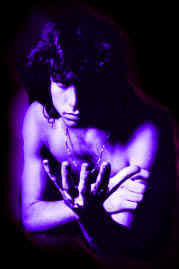
Although I think most Doors fans will probably disagree with me, The Soft Parade was always my favorite of their six studio albums. Back when it was originally released in what I want to say was 1969, the album received an almost universal drubbing from the critics. To be fair, between big Jimbo wagging his willie for all the world to see at that infamous Miami concert, and a growing perception within the rock community that the Doors time had passed, there was already a pretty sizable backlash in motion.

But to me the album just never quite got it's due. Panned by the critics back then, it doesn't get a whole lot more respect even today. The most common take on The Soft Parade seems to be that it feels like a watered down version of earlier Doors albums. Too many strings for one thing. And then there are the cornier sounding tracks like "Do It" and "Easy Ride" that just sound really out of place on a Doors album.

Valid criticisms all, and for the most part certainly true enough.

But the album also has more than it's share of true gems, with a few of the songs being bonafide Doors classics. I would put "Touch Me" for example right up there with the very best Doors singles. It's got a great keyboard based hook, and also builds tension throughout the song before climaxing in the famous "Stronger Than Dirt" finale.

Likewise, once you get past it's strings and generally overproduced feel, "Wishful Sinful" is one of the prettiest sounding songs in the entire Doors canon. It also contains what may be Jim Morrison's last really pure sounding vocal, before all the booze turned his voice into that gruff sounding croak you hear on L.A. Woman. And what about "Wild Child"? If that isn't the gnarliest sounding Robbie Kreiger guitar riff you've ever heard from a band usually dominated by Ray Manzarek's keyboards, then I just don't know what is.

The eight minute opus that is the title track of this album is a textbook example of Morrison at his over the top, poetically excessive best. Don't ask me what all the nonsense about seminary schools and whipping the horses eyes that Morrison sings about here actually means. All I know is it just sounds pretty damned cool, especially towards the end where Morrison's vocals are double tracked to create the audio illusion of two Morrisons trying to out gun each other.

So this new remastered version is actually part of an entire catalog reissue where the new versions match those put out on last year's Perception box set. The artwork on the sleeve recreates the gatefold of the original, while adding several new photos and extensive new liner notes written by music scribe David Fricke and Bruce Botnick. The bonus tracks include a couple of alternate takes of "Touch Me" and previously unheard tracks like "Whiskey, Mystics, And Men."

Perhaps I am in the minority in my high regard for The Soft Parade. Maybe it's because of the fact that as the spry young lad I was when I first heard it, this album made me realize for the first time that there was more to The Doors than just "Light My Fire."

Whatever the case, The Soft Parade holds up as well for me as anything the band ever did during it's all too brief existence.

Saturday, April 14, 2007


Oh My God! They Killed ECW! You Bastards!

So call me a pessimist. But with this past week's broadcast of ECW on the Sci-Fi Channel, I think it is safe to say that the burial of the once proud Extreme Championship Wrestling franchise is now complete. Like he did when he purchased the dying World Championship Wrestling (WCW) several years ago, Vince McMahon has killed another wrestling promotion dead.

What really sucks is that the idea of permanently reviving the ECW brand was one which held so much promise less than a year ago. It all sounded so good on paper. The company (in this case, Vincent Kennedy McMahon's World Wrestling Entertainment) had already tested the waters with two highly successful ECW "reunion" Pay-Per-View broadcasts--the 2005 and 2006 One Night Stand PPV's, drawing both good buyrates and positive reaction. The revived ECW brand would also be built around the already wildly popular Rob Van Dam as champion, with the creative end (as in storylines determining who wins and loses matches) to be handled by Paul Heyman--the "evil genius" behind the original ECW.

But then not one month into the relaunch of the ECW brand on the Sci-Fi channel, Rob Van Dam was busted for pot posession (along with fellow "ECW original" Sabu). And with that, the wheels began to come off of the wagon. First Rob Van Dam was stripped of the ECW title. Well okay, he "lost" it to WWE star The Big Show, but you know what I mean.

Then WWE stars began showing up on the ECW broadcasts with frightening regularity, thereby robbing ECW of any chance it had to establish any sort of unique identidy of its own as an individual brand. Not long after that, Heyman himself was sent packing in a dispute over creative direction. Meanwhile, as WWE continued to import it's "D list" of stars over to ECW--guys like Test and Hardcore Holly--original ECW stars like Van Dam (who was apparently never really forgiven for his pot bust) continued to be buried, despite their popularity.
So why do I bemoan the way that ECW is being ruined--correction, has been ruined--the way I do? Well, you've just got to understand something. ECW, the way it was originally presented in the nineties, represented the last dying gasps of the old school of wrestling that in spite of it's outlandishness, had the sort of faux realism about it that made you believe. At the same time, ECW took this approach to entirely new and unheard of (at least in America) levels of staged violence. In other words, ECW was special.

The very first time I saw ECW for myself, I stumbled upon it completely by accident. Home alone and channel surfing on a Friday night, I came across an ECW broadcast on some obscure sports channel. I only caught the last few minutes of the show, where I was introduced to Tommy Dreamer, who was having a match where members of the audience were actually handing him up weapons to use against his opponent. Steel Chairs. Cans Of Beer. You name it. One guy even gave Dreamer a chesse grater, which he promptly grinded into his opponent's head. The match ended with a cinder block of cement being placed on Dreamer's crotch, which his opponent then hit with what I believe I remember to be a sledge hammer. I couldn't believe what I was seeing on a cable sports channel--which I can assure you was not ESPN or Fox Sports.

After telling all of my friends about this wild new cable wrestling show, when we tuned in the following week the network had already yanked it off the air. However, I soon learned that this Extreme Championship Wrestling promotion was already planning it's first Pay Per View, 1995's Barely Legal--which I wasted no time in ordering.

With an apartment full of beer swilling guys with ridiculously high expectations based on my own non-stop hype of watching something like ten minutes of this obscure wrestling show on TV, ECW's Barely Legal actually exceeded it. You want to talk about Wrestlemania? Forget it. At the time we witnessed it, ECW's Barely Legal was the single best wrestling show any of us had ever seen. It remains to this day, one of the greatest wrestling pay per views ever.

The "holy shit" moments literally came one after another. There was "The Sandman" coming through the rafters into the crowd to start his match smoking cigarettes, swilling beer from a can, and then smashing said can into his forehead until it bled. And then there was the bloody mess of the "three-way dance" between Dreamer, Stevie Richards, and hardcore icon Terry Funk. That match alone had ladders, chairs, and barbed wire, which ECW color commentator Joey Styles called spot by spot with his trademark exclamations of "Oh My God!".

Seriously, this all may seem quite passe to the modern day wrestling fan now. But at the time, it was absolutely nuts. The undercard also featured some great technical wrestling matches, including high flying Japanese stars like Taka Michinoku.

So anyway, when WWE revived ECW with 2005's One Night Stand Pay Per View, the thing that made it so special was the way they were able to recapture that unique moment in time. Guys like The Dudley Boys (who had since gone on to stardom in WWE) revived their old ECW characters. Hell, they even brought back the bingo hall concept of the "ECW arena."

When they repeated One Night Stand in 2006--headlined by a match between Van Dam and WWE champion John Cena--it had somewhat less of that special feel. Still, the images from that show of the ECW faithful booing Cena right out of the building--tossing his shirt back at him repeatedly when he threw it into the crowd, and threatening with signs to riot if he won--remain absolutely priceless.

In its present day form, as witnessed on last week's broadcast on the Sci-Fi Channel, all pretenses of ECW being a unique brand with a rich history all its own have been dropped completely. The old ECW guys are promoted as the "Originals" and on this particular show, they all lost their matches to members of the "New Breed," a Vince McMahon creation whose sole purpose seems to be to bury whatever legacy ECW once had. McMahon himself was repeatedly referred to as the "boss"--further eliminating any illusion of ECW being it's own unique entity--as the Donald Trump "Shaved Head Match" storyline from WWE's Wrestlemania was made the prime focus on the ECW broadcast.

Meanwhile, the one new guy they have promoted in ECW who seems to be catching on with the fans mysteriously continues to be buried. C.M. Punk, a former shoot fighter whose combination of natural charisma and stiff, hardcore fighting style has drawn huge babyface heat and chants of "C-M-Punk" (shades of Rob Van Dam) at live events--despite the lack of any serious, apparent push--is by any stretch the next potential wrestling superstar.


So despite the overwhelmingly positive fan reaction, on last week's ECW broadcast, they turned him "heel," aligning him with the yawn machine that is the ECW "New Breed" of guys seemingly designed to further bury guys like Van Dam, Dreamer, Sabu, and the Sandman. You could almost hear the air go out of the room.

Speaking of those "ECW original" guys though, the inside gossip says they wont be around for much longer anyway. Dreamer, Sandman, and Sabu are for all intents and purposes done anyway. Dreamer and Sabu's bodies are so banged up from years of the abuse they've taken giving the fans what they want that it's a miracle they've gone this long. As for Sandman, well let us just say that he is the Sandman, and smile on the fact that a beer, a cigarette, and a singapore cane took him this far.

Far more shrouded in mystery is the case of Rob Van Dam. Obviously, Van Dam is still very much at the top of his gane as an athlete. The guy can still do the high spots and drop kicks (despite his reputation for occassionally potatoing guys) like few else can. Most importantly, the fans still absolutely love him. The big question mark is will Van Dam renew his contract (which apparently has lapsed) with WWE, despite the treatment he has received over this past year? Smart money right now says probably not.

So will I continue to watch ECW anyway? Probably. Because when it comes to professional wrestling you can just say my name will always be Mark.

But with the present direction ECW is going, I give them another year tops.

Saturday, April 7, 2007

Sly And The Family Stone Catalog Remastered (Review)

The Begining: A Whole New Thing; Dance To The Music; Life


The handling of Sly And The Family Stone's back catalog over the years has long been a source of heated debate among music fans. The impact of this ground breaking band has never been in doubt however. When the final history of rock and roll is written, Sly And The Family Stone's place in the books is just about as sure a thing as it gets.

From the time they first emerged out of San Francisco in 1967, Sly And The Family Stone began a music revolution that would go on to break down just about every barrier imaginable--be it musical, racial, or even gender based. Over time, Sly And The Family Stone would go on to redefine not just R&B music, but rock and roll as a whole.


Their influence would be felt for decades, and it continues to be felt today on an entire myriad of levels. From the seventies forward, Sly And The Family Stone became the template for artists as diverse as Earth Wind & Fire and George Clinton's various incarnations of P-Funk. The "bass-popping" style--introduced to the world by bassist Larry Graham--would later be adopted as the standard for countless funk and jazz artists from Bootsy Collins to Stanley Clarke.

In the eighties, the multi racial and gender busting makeup--not to mention the sound itself--of Prince's various groups from the Revolution on, could be traced directly to Sly And The Family Stone. As a source for today's sampled hip hop records, Sly And The Family Stone's only real rival is James Brown himself.

So it was only a matter of time before somebody took upon themselves the formidable task of remastering Sly's back catalog, to finally give this monumental work the proper treatment it so richly deserves.

Sony Legacy's remastered reissues of these landmark recordings are currently scheduled for release on April 24 (although this date has already been moved several times). Each of Sly's original seven album releases will be reissued in newly remastered form, with all of these featuring brand new liner notes, and several never before released bonus tracks. A new multi-disc anthology is also scheduled.

On their debut album, 1967's prophetically titled A Whole New Thing, it becomes apparent from the first few notes of the opening track "Underdog" that this album heralded exactly the "Whole New Thing" it spoke of. Incorporating elements of the sixties psychedelic rock the Bay Area was best known for at the time, Sly and The Family Stone would also foreshadow the big horn based funk of latter day Bay bands like Tower Of Power.

Underlying the stealthy horns however, was the razor tight rhythm section of bassist Graham and drummer Greg Errico. Balancing out the feel good funk-rock, were more blues based jams like "Let Me Hear It From You" (where you can also hear early echoes of Prince tracks like "Darling Nikki"). The bonus tracks here include alt versions of both "Underdog" and "Let Me Hear it From You," as well as several previously unreleased tracks.

By the time of the followup album, Dance To The Music, what was previously San Francisco's worst kept secret were well on their way to becoming a national sensation. The title track became a national top ten single, based on an irresistable hook, but more importantly on the band flexing their musical chops more than ever.

While the horn arrangement is front and center on this classic track, Larry Graham's bass is more prevalent than ever and the band's multi-gender makeup is emphasized in the vocal trade off's between Sly and Sister Rosie. On "Higher," the band offer a preview of the later updated version they would make famous at the Woodstock festival. The reissued version again includes alt versions of these two key tracks, along with several previously unreleased tracks, including a cover of Otis Redding's "I Can't Turn You Loose."

On Sly's third album, Life, released in late 1968, the band further expanded it's sound into rock territory. On tracks like "Dynamite," and "Chicken" there is more of an emphasis on guitar (with a textbook example of what has often been called the "chicken scratch" sound on the latter track). The band also began to expand itself lyrically on this album with tracks like "Jane Is A Groupee" providing a look into the trappings of rock stardom in the sixties, and "Plastic Jim" showing signs of a yet to be fully developed political and social consciousness.

Most importantly, on Life, Sly And The Family Stone were playing more as a unified band than ever. This album in many ways comes closest to capturing the energy of the live performances they were soon to become famous for. Bonus tracks here include an alt version of "Dynamite" and a previously unreleased instrumental called "Sorrow."

So with these three pivotal records--all originally released in just under two years--the world was formally introduced to Sly And The Family Stone, and a firm foundation for one of the greatest bands in modern music history was established.

Nothing however could have predicted the explosion yet to come with Sly And The Family Stone's next two releases.


The Middle: Stand!; There's A Riot Goin' On

By 1969's Woodstock Festival, Sly And The Family Stone's reputation for incendiary live performances had grown to the point where they were regarded by many as the greatest live act on the planet. If there was any doubt whatsoever of this however, it was completely shattered by the band's historic performance at Woodstock.

Looking past Woodstock's images of stoned out hippies dancing naked in the mud that have become forever ingrained into the consciousness of a generation, there are really only a handful of images of the actual musical performances that took place there which have become likewise etched into memory.

Of these, only three were truly star making turns. Santana's electrifying rain chant during "Soul Sacrifice;" Ten Years After's Alvin Lee's blistering, teeth-clenched guitar soloing on "I'm Going Home"; and Sly And The Family Stone's unforgettable, call and response during the medley of "Dance To The Music" and "I Want To Take You Higher." The energy of this performance was absolutely off the charts, and the image of Sly throwing the peace sign in the air with fringe flying, is arguably the most lasting musical snapshot of that historic event.

It was a landmark performance whose way had been thoroughly paved by a landmark album, 1969's Stand!. While many music historians justifyably will point to There's A Riot Goin' On as Sly And The Family Stone's greatest work, my own vote goes to Stand! hands down. Either way you choose to slice it, these two albums represent the creative and artistic peak of Sly And The Family Stone.

But for my money, Stand! is where everything absolutely came together. From the first notes of the opening track, this album just flat out kicks ass and takes names. On a musical level, the band plays as tightly as any musical unit had ever done up to this point and establishes the standard for every single self-respecting funk band which would follow. Not to mention quite a few rock bands as well.

The album's original seven tracks include at least four hit singles: "Everyday People"; "Sing A Simple Song"; "You Can Make It If You Try"; and of course, the band's signature song made famous by it's Woodstock performance, "I Want To Take You Higher." The band was also by now fully incorporating the politics of both the civil rights and anti-war movements into it's lyrics via both "Everyday People" and the racially charged call to empowerment of "Don't Call Me Nigger Whitey."

Rounding out the album, the thirteen plus minutes of the instrumental "Sex Machine" begin with a slowly percolating wah-wah guitar that slowly builds in tension before finally exploding into a cacophonous wall of sound of crashing drums and screaming horns. The final effect is a virtual eargasm of sound (hence the title perhaps).

For my money, Stand! is just about as good as it gets on a purely musical level. On the reissue, the single versions of the title track, "Higher", and "You Can Make It If You Try" are included along with two previously unreleased tracks.

In between Stand! and Riot, Sly And The Family Stone released two more big hit singles in the form of "Hot Fun In The Summertime" and "Thank You (Falettinme Be Mice Elf Agin). So I guess we know now where Prince gets his penchant for oddly spelled song titles from.

There's A Riot Goin On was widely regarded at the time as Sly And The Family Stone's big "political statement" album (and the American flag imagery of the album art did little to dispell this notion).

And while the album was his most experimental to date, the sad truth was that the stardom of Stand! had already begun to take a personal toll on Sly Stone himself. On tracks like "Luv N' Haight" the band perks along sounding as tight as ever, but there is a disjointed feel to this album that stands in stark contrast to the undeniable musical unity of Stand!.

Riot does have it's share of political themes such as on "Africa Talks To You (The Asphalt Jungle)". And there are a number of musically interesting things on the album, even if most of them seem to come in fragments, something which could never have even been imagined on the tightness that is the Stand! album. The song "Poet" for instance features an interesting bass and keyboard based riff that I would bet you dollars to donuts inspired Chaka Khan and Rufus' "Tell Me Something Good."

The reissued version of Riot's bonus tracks are mainly untitled instrumentals, which perhaps represent Sly's apparently scattered state of mind at the time.

For my money, Riot is probably Sly's most interesting and musically intriguing album all these years later. It is most certainly the one which most stands out as having the sort of depth which is benefited best by repeated listenings. Riot's lone hit single, "Family Affair" also stands up nicely next to other hits like "Everyday People."

But it lands nowhere near the knockout punch of it's predecessor Stand!.

It was also quite clear that the drugs had begun to take effect.


The End: Fresh; Small Talk

The seventies were not nearly as good to Sly and The Family Stone, and particularly to Sly himself, as the sixties had been.

The legacy of course continued to live well on in the form of bands like Earth Wind & Fire and Parliament-Funkadelic. But as for Sly And The Family Stone itself, by the early seventies the wheels were pretty clearly begining to come off of the wagon.

A couple of years had lapsed between the release of There's A Riot Goin' On and 1973's Fresh. And despite it's cover art of an apparently exuberant Sly jumping for joy, there was clearly trouble in paradise. Most distressingly, Sly and The Family Stone's reputation as rock's greatest live band had been replaced by Sly's new-found reputation for showing up late or not at all to scheduled performances.

In all of music at the time, this was a reputation for no-showing scheduled concerts rivaled only by country music's famously late George "No Show" Jones. I actually have my own rather bizarre experience with this to relate.

As a then fourteen year old music freak, I had already seen many of my heroes--from the Airplane to Jimi Hendrix to Janis Joplin--in concert, and desperately wanted to see Sly. So I was downtown on the day of Sly's show at the Paramount without a ticket and trying to figure out a way in, when I ran across this rehab group for heroin addicts called "Methadone Now". After a brief discussion with the guy in charge, I learned they would have a booth in the lobby of the concert soliciting donations and that if I wanted to work the booth, I could get in for free.


Imagine my luck.

The problem was I never told my parents. So after working the booth during the opening act (a stand up comedian of all things), I patiently waited for Sly to show up. And waited. And waited. And waited.


By this time it was well past midnight with no sign of Sly, and my parents (who you remember I failed to inform where I was) had understandably become concerned. So they called a friend of mine who informed them I was downtown working a drug rehab booth at the Paramount.
So, at about 12:30 AM, I was escorted out of the Paramount by a uniformed police officer. And I can honestly say I was never so embarrassed in my life. From what I understand, Sly finally showed up about an hour later and did a thirty minute set with no encore.
So much for my last chance to see the great Sly Stone.


Listening to the album Fresh now as I write this, I can tell you that the album has it's moments like on the song "Skin I'm In." The band sounds as good as ever. But the songs themselves have nothing remotely approaching the creative and energetic spark of something like "I Want To Take You Higher." The bonus tracks included on the remastered version consist mainly of alt versions of songs who even in their original versions constitute the dying gasps of a once genius-level songwriter.

The cover of Sly's last official album Small Talk rather famously features Sly and his wife (at least I'm assuming) holding up his baby boy. Supposedly by this time Sly had somewhat rehabilatated himself. The music on this album however does not evidence this at all. Rather, it is more of the experimental meanderings which began (interestingly) with There's A Riot Going On and climaxed (much less so) with the relative mess of Fresh.


Again, this album is mainly characterized by little bits and pieces that, while musically interesting at times, far more often serve as frustrating and unfortunate reminders of the greatness that once was Sly And The Family Stone.

And don't get me wrong here. Fragments are fine. Especially if there are enough of them that are interesting enough to sustain an entire album--such as is the case with eighties hip hop artists clearly inspired by Sly Stone like De La Soul and Public Enemy.

But by the time of Small Talk, it was pretty clear that Sly had run completely out of gas. Sly was for all intents and purposes done.

There have of course been rumors off and on over the past thirty years or so of a comeback. And for an old fan like me, his appearance at the Grammys two years ago was very encouraging.

Whether anything comes of it of course remains to be seen.

But if Brian Wilson can come back from the dead, I suppose anybody can. One can only hope.

Sunday, April 1, 2007

The Rockologist: My Journey Into Jazz
Jazz Music used to really piss me off.
Back when I was in high school in the seventies, there were basically two classes of kids when it came to music. You had your long haired rocker types like me, who favored pre-heavy metal bands like Alice Cooper and Uriah Heep. And then you had the "straight" kids--the cheerleader girls who swooned to Elton John and Seals And Croft, and the fathead macho jocks who grooved to jazz influenced bands like Chicago and Blood Sweat And Tears. So, since the rock and roll music guys like me enjoyed was widely believed to be made by long haired communist hippie queers, I knew for sure that I wanted no part of jazz on principle alone.

This pre-determination was further reinforced by my high school journalism rival, a guy named Mike DeFelice.

Mike and I were friendly enough--we even got involved as partners for a time in the burning political issue of organizing a public forum about the school levy. But when it came to music we just couldn't see eye to eye. At the time, I wrote a popular column for the school paper called "Rock Talk." Mike of course countered that with his own music column, "Jivin' With Jazz."

But Mike actually got to me with one record, a jazz version of "2001: A Space Odyssey," by this guy named Eumir Deodato. I already loved the movie, so he pretty much had me right there. Deodato's version jazzed up the original with a slick arrangement centered around the artist's Fender Rhodes keyboards. I had discovered my first guilty pleasure. Which was a secret I had no small problem in trying to keep from my rocker buddies at the time.

So this began my teenaged exposure to jazz music. In the early going though, it would prove to be a rough journey. Deodato's album was recorded on a "jazz boutique" label called CTI (which stood for Creed Taylor Inc., named after the label's founder). In addition to the music, what I liked most about CTI was their glossy album packaging. So I decided to seek out other recordings on this label.

What I would soon find out about CTI is that the music was even glossier than the packaging. CTI's specialty it seemed, was this sort of watered down, heavily orchestrated version of what I would later find out was "real jazz." So this meant that for every good album like say, Mr. Magic by Grover Washington Jr., you'd have to wade through five or six other records of what amounted to cleverly disguised elevator music from guys like Stanley Turrentine, Bob James and George Benson. My brief flirtation with CTI's brand of jazz ended as quickly as it began.

Years later however, I discovered "fusion," mostly as an outgrowth of my newly discovered love for the progressive rock of bands like Genesis and Yes. The first "fusion" album I bought was Where Have I Known You Before (attracted once again by it's gorgeous album cover) by Chick Corea and Return To Forever. The musicianship on this album just flat out knocked me out from the get go. Not only did you have the none too subtle keyboard flourishes of Corea here--you also got the guitar flash of Al DiMeola and the bass popping of Stanley Clarke as a bonus. By the time of RTF's followup album, No Mystery, the band moved in a more funk oriented direction and Clarke in particular was allowed to really shine. Both Clarke and DiMeola would of course go on to acheive even greater heights as solo artists.

As I delved ever deeper into fusion, wading my way through endless albums by the likes of John McLaughlin's Mahavishnu Orchestra and Josef Zawinul's Weather Report, I discovered yet another "jazz boutique label" called ECM. Like CTI, this label also had the slick, artsy-fartsy album covers, but the music here came more in the form of atmospheric soundscapes. I discovered a myriad of great artists here, from Julian Preister to Norweigan guitarist Terje Rypdal. But none of these floored me on near the level that a guitarist named Pat Metheny did.

The thing about Metheny was that accomplished a guitarist as he obviously was, he understood the meaning of economic playing like few guitarists that good ever could. In other words, Metheny never clobbered you over the head with his playing the same way his peers like McLaughlin and DiMeola did. Metheny's specialty was more in leaving enough space between the notes to allow the listener to color their own images for themselves.

With his musical partner in crime Lyle Mays, Pat Metheny made what in my mind remain two essential albums of what I call "late night road music." To me, there is simply no music in existence that without the benefit the words, paints a more perfect image of driving down a lonely stretch of highway at 1 AM quite the same way that As Falls Wichita, So Falls Wichita Falls does. However, it's followup Offramp comes pretty damn close, particularly with the track "Are You Going With Me."
So with these records, what I guess I discovered about the meaning of "real jazz" is that once you get beyond the idea of great musicians improvising their asses off (which is certainly a key element about good jazz), it's really all about painting a picture or creating a mood.
Which is why it wasn't too far a stretch for me to get from Metheny's lonesome country highway to the inner city, smoky nightclub of Billie Holliday or the last call melancholy of Miles Davis Kind Of Blue.
It's not a place musically where I choose to live twenty four-seven for sure. But it's a place I visit often to this day. And the best thing about it, for me at least, is the journey getting there.
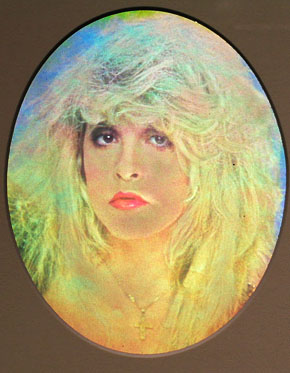
Music Review: Crystal Visions: The Very Best of Stevie Nicks (CD/DVD Double Disc Edition)

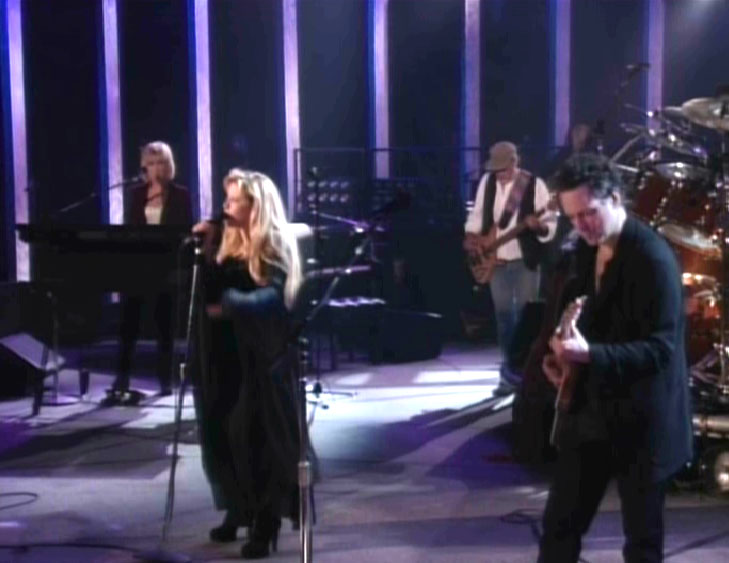
It might surprise some of you who saw all of the trouble I got myself into by leaving Christine McVie out of my recent Rockologist column on Fleetwood Mac, that I would venture back into that possibly hostile territory this soon. Hell, to be honest I'm a little surprised myself.
But this isn't a review about Fleetwood Mac at all. Rather, it is about the work of one of it's most visible members as a solo artist. The truth is, like her band and one-time life mate Lindsey Buckingham, I've always preferred Stevie Nicks solo work over her stuff with Fleetwood Mac anyway.

Within the confines of Fleetwood Mac, Nicks just always struck me as but one element (albeit perhaps the most visible one) within that particularly well oiled, hit making machine. Besides, as a solo artist, Stevie just always seemed to rock a bit more. As much as I can appreciate the pop craftsmanship and witchy spell cast by a song like "Rhiannon" for example, I'll take her duet with Tom Petty on "Stop Dragging My Heart Around" first every single time.

In it's deluxe CD/DVD version, Crystal Visions: The Very Best Of Stevie Nicks summarizes Nicks solo work in a marvelously put together package. Included here are all of her greatest hits, all of her videos, and loads of great extras. For starters, there is 30 minutes of never before seen video footage of the recording sessions for the Bella Donna album. There is also a booklet that includes tons of great photos, as well as liner notes by Stevie herself on each of the CD's sixteen tracks. On the DVD, Stevie also provides commentary on each of the videos included.

Speaking of those videos, watching old MTV mainstays such as "Stand Back" makes you quickly remember just why Stevie Nicks was once regarded as the "first lady of rock and roll."
The rarely seen "Scarlett Version" of that song is also included here in addition to the more familiar "Stevie sings with windblown hair" version seen on MTV in the eighties. The key difference here, aside from the "Gone With The Wind" storyline, is that the track features a completely different vocal take. If you listen closely, you can hear different vocal inflections, and Prince's famous backing keyboard track (the song was modeled after "Little Red Corvette") also seems just a pace faster. That along with the more commonly seen videos for songs like "If Anyone Falls In Love" show exactly why Stevie Nicks was such an MTV staple back in the eighties.

The other thing you notice watching these videos is just how much Stevie Nicks and her band really do rock, particularly in a live setting. On live versions of "Whole Lotta Trouble" and especially "Edge Of Seventeen," Stevie Nick's touring band, led by guitarist Waddy Wachtel, display an edge that is not always as apparent on the studio records. Wachtel's solo and intro on "Edge Of Seventeen" in particular are both ferociously delivered.

Like the DVD, the CD likewise features all of Stevie Nicks hits--from "Stop Dragging My Heart Around" to more recent work like her duet with Sheryl Crow on 2001's "Sorcerer". Best of all, there is also more previously unheard rare and live stuff. The "Deep Dish" mix of Fleetwood Mac's "Dreams" gives the well known hit something of a facelift for the dancefloor. "Silver Springs," the original B-side of Fleetwood Mac's "Go Your Own Way" shows up here as well.


On the live side, "Rhiannon" is given a more dramatic reading here, begining with a moody sounding intro that eventually seques into what is again a version that rocks quite a bit more than the original. On a live cover of Led Zeppelin's "Rock And Roll," Stevie summons the spirit of Robert Plant himself, as Wachtel and the band shred away with Zep like intensity. On live versions of both "Landslide" and "Edge Of Seventeen" recorded just last year in Austrailia, Nicks is backed by no less than the Melbourne Symphony Orchestra.

Whether you are a new fan looking for a great package of all her best stuff, or a hardcore Nicksaholic salivating for all those juicy extras, Crystal Visions sums up the very best of Stevie Nicks as a solo artist. It also shows her to be an artist who is just as vital now as she was then.