Thursday, June 7, 2007

Springsteen & Sessions Band Raise A Ruckus On 'Live In Dublin'

Music Review: Bruce Springsteen With The Sessions Band - Live In Dublin (Deluxe CD/DVD Edition)

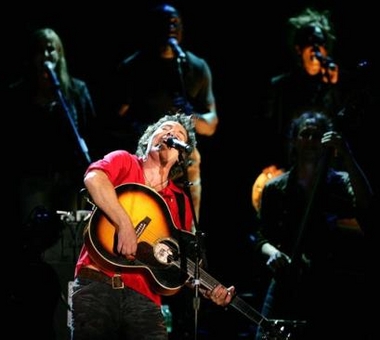
As big a Bruce Springsteen fan as I am — and I've seen the man in concert 32 times — I was not exactly crazy onboard for the Seeger Sessions project when it was first announced last year. I just figured that after a year of Springsteen doing the acoustic thing on the Devils & Dust album and tour, that he'd got the folk bug out of his system. Like a lot of Springsteen fans, I was ready for some E Street Band action.

So, the last thing I wanted or expected in 2006 was what sounded suspiciously at the time to me like another round of Springsteen getting his folk on. To me, it seemed too much like another "vanity project." But when I voiced that opinion over on the message boards at Backstreets Magazine, I was damn near chased out of town by angry Springsteen fans.
Seems some of those folks knew something I didn't. And it turned out, they were right.

One listen to the joyous noise made on the track "O' Mary Don't You Weep," and any doubts I had about The Seeger Sessions were wiped clean off the map. In a gruff voice reminiscent somewhat of a born again Tom Waits, Springsteen summons all the fire and brimstone of Moses himself as he belts out the lines about how "Pharoah's army got drownded" while his gospel army of singers and musicians wail on in rapturous delight.

Live In Dublin, the new concert CD/DVD document from last year's Seeger Sessions tour is worth owning for the inclusion of that track alone. Although this album comes in both CD and HD-DVD only versions, your best bet is to spring for the deluxe version which includes the entire 23 song performance on both the DVD and 2 CDs. This is a concert that needs to be seen as much as heard.

The setlist here runs the gamut from the Springsteen Songbook to the Smithsonian. You get the "Seegerized" versions of Springsteen classics like "Atlantic City," "Blinded By The Light," and "Growin' Up." You also get well chosen covers from the folk tradition like "We Shall Overcome," straight up Dixieland jazz in the form of "When The Saints Go Marching In," and even spirituals like "This Little Light Of Mine."
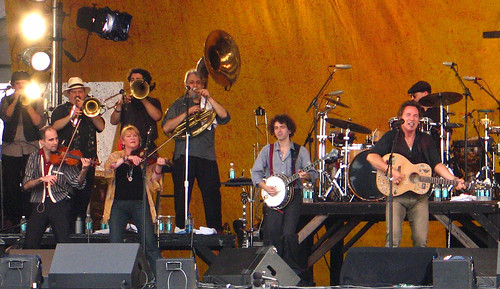
In performing these songs, The Sessions Band (shortened here from its original "Seeger Sessions Band" moniker) draw from multiple uniquely American music traditions including New Orleans Jazz, Southern Gospel, and even Roadhouse Blues to create a ruckus that is quite unlike anything you have ever heard.
In their own way, these guys make every bit the noise with their banjos, trombones, and fiddles that the E Street Band does with their own guitars and drums. Like those legendary E Street shows, the crowd also gets into the act quoting entire song verses in unison. And Springsteen himself appears to be having the time of his life here.
The highlights on this set are too numerous to mention. They include a reworking of Springsteen's "Open All Night" where the stark number from Nebraska becomes a boogie-woogie workout, complete with a mid-section featuring four female vocalists (led by Patti Scalfia) trying to out doo-wop four male vocalists doing their best to keep up. Bruce gets into his best tent-revival preacher's mode here leading the call and response.
"Long Time Comin" from Devils And Dust gets a surprisingly straight treatment here - albeit with a full band featuring horns, fiddles, and the rest. One of the best songs from that album, it sounds great here in a full-on band arrangement which has me whetting my lips to hear it again with the E Street Band. By the time of "Pay Me My Money Down," the crowd is eating out of Bruce's hand, continuing to sing even after the song has ended. The DVD also has an impromptu, uncredited backstage performance of "Cadillac Ranch."
The Seeger Sessions tour never played my hometown of Seattle, making it the first Springsteen tour I've missed since I first saw him on the 1975 tour for Born To Run. Experiencing this great performance on both CD and DVD makes me realize just how great a show I missed. It also shows a side of Springsteen that has never before been revealed.
Live In Dublin really does need to be seen as well as heard.

Tuesday, June 5, 2007

Big Mac Goes Back To Basics On "Memory Almost Full"

Music Review: Paul McCartney - Memory Almost Full

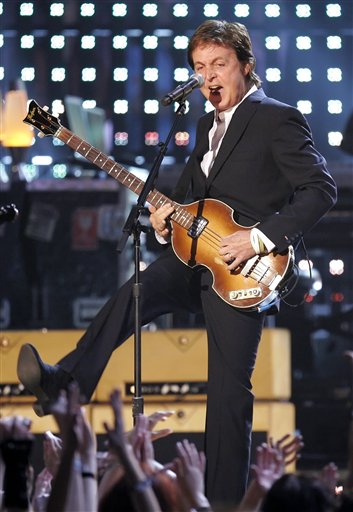
Paul McCartney's Memory Almost Full officially comes out today - just about forty years to the day after the Beatles' monumental Sgt. Pepper's Lonely Hearts Club Band was released in June of 1967. And although Big Mac's place in music history is beyond question, his days of making music with that same kind of impact are long behind him.

I have to admit that I had mixed feelings about this CD going in.

I saw McCartney on his "US Tour" in 2005, and even from the nosebleed seats it was an amazing three-hour marathon run. McCartney looked and sounded great, displaying more energy than most guys half his age. It reminded me of one of Bruce Springsteen's shows based on the endurance factor alone. But even though songs like "Jenny Wren" from his then-current Chaos And Creation In The Backyard sounded just fine, predictably it was the classic Beatles and Wings tunes that brought the crowd to its feet.

So, Memory Almost Full isn't going to change the world the way Sgt. Pepper, or even Band On The Run did. Let's get that out of way first. But McCartney still has a way with crafting great little pop tunes like very few other songwriters. This new release is full of them.

McCartney's new album kicks off with the simple, light pop of "Dance Tonight," which is also the album's first single. With a basic hook played on a mandolin wrapped around a metronomic bass drum beat, this track almost reminds you of "Let Em' In," another simple pop tune with an irresistibly infectious hook that opened Wings Speed Of Sound album.
From there, it's on to "Ever Present Past", another gem with a typically fluffy sounding pop hook. It's not quite "Silly Love Songs," but its bouncy, uptempo feel comes as close as you are likely to get in 2007. "See Your Sunshine" sounds like it could have come off Revolver, with a mix that puts McCartney's bass — which sounds as great as ever — front and center for the first time on the album. "Only Mama Knows" picks things up a notch with one of the album's few straight ahead rockers.

"You Tell Me" is a gorgeous sounding ballad that sounds kind of like a cross between "Yesterday" and "And I Love Her." McCartney's voice is augmented by a lovely acoustic guitar and some background harmonies straight out of Abbey Road territory. "Mr. Bellamy" is one of those very British sounding story songs where McCartney centers his lyrics around an equally British, presumably fictional character. Perhaps the character is a distant cousin of Eleanor Rigby or that customer getting shaved at the Barber Shop in "Penny Lane." The arrangement here is kind of George Martin-light as strings swirl around the vocal chorus of "steady, lads."

If there is such a thing as a "second side" in this age of CDs and MP3s, it begins here with track number eight, as the song "Vintage Clothes" begins a suite of short songs that carries through to the end of the album. Here the album's recurring theme of clinging to the past comes up amidst another of those string arrangements that glides between rock and pop. This segues into "That Was Me," which sounds like a slightly skewed version of "Mean Mr. Mustard" with the bass line again at the forefront, and McCartney building his vocals up to that famous "rock" voice of his.

In this suite of songs there is in fact a feel quite similar to the second side of Abbey Road.

The "suite" continues with the poppy "Feet In The Clouds" and the more melancholy sounding "House Of Wax," which features a nice little guitar solo in the middle, and another particularly more gnarly sounding one toward the end. This is played against a beautiful orchestral arrangement and Mac once again breaks out the rock voice here.

The suite closes with "The End Of The End," which again begs comparison to Abbey Road's second side closing "The End," although here McCartney seems to be trying to put a happy face on the subject of death. As if not to close the album on a downer, Paul adds on "Nod Your Head," another rocker, as an extra song after the "suite" to actually end the side.

Paul McCartney is said to have actually started this album back in 2003, and then put the project on hold to record 2005's Chaos And Creation In The Backyard, only to come back to complete it this year. The title also supposedly represents some sort of anagram for his late wife and soul-mate Linda. Ouch! Take that, Heather.

Much of the lyrics here also seem to reflect both a yearning towards the past, and the realization that it is directly connected to the present. Likewise, the music here also seems to draw from the past — particularly The Beatles Abbey Road and Wings Speed Of Sound albums in this case — like no other McCartney release has in recent years. The good news is rather than simply retreading those waters, this album is also connected very much to the present in musical terms.

Memory Almost Full won't change the world the way those milestone albums from Paul McCartney's legendary past once did. I'm also not wild about the idea of its release on a label bankrolled by Starbucks to be honest. But this is McCartney's overall best sounding release in years, and some of the best sounding new stuff I've heard from an ex-Beatle in a very long time.

Friday, June 1, 2007

Reconsidering Genesis "Middle Years": From Prog To Pop

Music Review: Genesis - And Then There Were Three & Duke (Remastered & Enhanced CD/DVD Versions)
2007 is shaping up to be a very big year for Genesis. A big reunion tour has been booked for this year featuring the version of the band that sold the most records--which would be the trio of Mike Rutherford, Tony Banks, and Phil Collins--minus those other two guys, guitarist Steve Hackett and vocalist/frontman Peter Gabriel.
Personally, I predict that the tour will do decent, but not great business. Here's why.
I base this prediction on the fact that even though this version of the band unquestionably sold a buttload of albums, the fanbase itself was more casual in nature. There was never the sort of intense fan devotion that was involved in earlier incarnations of Genesis.
The following that this band had during it's early, so-called "progressive rock" years may have been smaller than the millions who gobbled up albums like Invisible Touch and We Can't Dance. But they were a rabidly devoted lot. Much more so I would say, than what I would call the more transient fans who picked up albums by the Phil Collins' led Genesis of the "pop years," right alongside their purchases of Journey, Loverboy and REO Speedwagon.


But I digress.
I guess that I just don't see the memory spans of those fans matching that of those queueing up for the other big ticket reunion tour this year by the Police. Now if this reunion was with the band featuring Hackett and Gabriel doing The Lamb Lies Down On Broadway for example? Different story entirely. But only time will tell if I was right or wrong on this.
But anyway, like I said it's looking to be a big year for these guys either way.
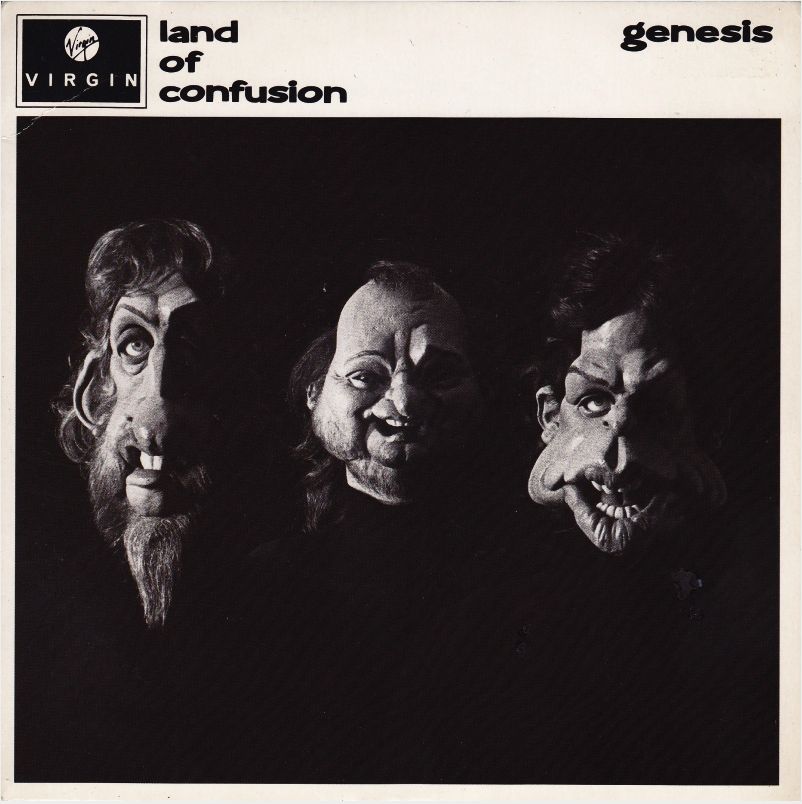
As part of the Genesis reunion hoopla, Rhino/WEA has released Genesis: 1976 - 1982, a boxed set covering the albums released during that period in new remastered and enhanced CD/DVD versions. They have also reissued each individual album by itself as a double remastered and enhanced CD/DVD.
These albums are interesting mostly because they serve as a bridge between the old, prog-rock version of the band, and the hit machine they became in the eighties. They are bookended by Trick Of The Tail and Wind & Wuthering--the first two post-Gabriel albums where the band simply continued doing the prog-rock they were then best known for--and Abacab, the album which completed the band's transition to more commercial fare.
Landing right in the middle of that are these two albums, and for that reason alone they may be the most noteworthy of this entire period. On And Then There Were Three and Duke, Genesis were a band caught between directions, that couldn't seem to decide which way it wanted to go. On these albums, what you hear is a clear case of a band with one foot in and one foot out. It's fascinating to be able to re-explore them in their newly remastered and enhanced context, knowing what has now come to light historically.
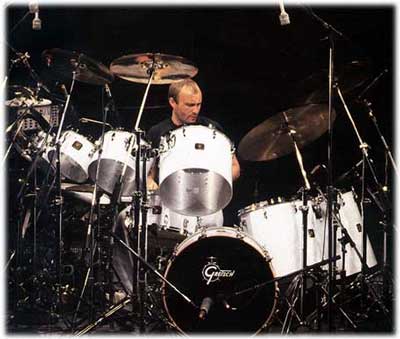
With Steve Hackett out of the band on the appropriately titled And Then There Were Three, you can hear Phil Collins begining to really assert creative control. The drums are mixed a lot higher for one thing--and on this remastered version they sound pretty amazing.
And let's face it, Phil Collins was and is one hell of a drummer. It's just too bad that what he really seemed to want to be was more of a song and dance man. Here, this first manifests itself in "Follow You, Follow Me," which despite it's nice, sugary enough pop sensibilities, sticks out like something of a sore thumb on this album.
Fortunately, Rutherford and Banks still made up the other two thirds of this band at this juncture, creatively speaking as well as in name. And for that, you get the soaring keyboard swells of "Snowbound" and the romantic textures of "Many Too Many." The band also flexes it's progressive rock muscles on tracks like "Down And Out," "Deep In The Motherlode," and even "Say It's Alright Joe" which builds from a slow rock ballad to a nicely layered crescendo of crashing keyboards and guitars.
But on the seven minute "Burning Rope," Genesis really remind you just why they were considered one of progressive rock's greatest bands. Banks and Rutherford build a virtual wall of layered sound on this track, and Collins just plain drums his ass off here. On this new remastered version it sounds even better than I remembered it.

By the time of Duke, Collins--by now, a commercial success as a solo artist--was well on his way to taking over the drivers seat in this band completely. Duke stands as the last gasp of the band's former progressive sound. By the time of the next album, Abacab it would be replaced pretty much entirely by the fusion jazz and big drum leanings of Collins. Which wasn't so bad, because the full-on schlocky pop/R&B of later albums hadn't yet completely reared it's ugly head. However, it was still lying in wait and lurking just around the corner.
On Duke, there are for the first time two bonafide pop singles--the bouncy "Turn It On Again" and the more romantic sounding "Misunderstanding." Again, two great songs from a band by now nonetheless moving further and further away from it's former self. The best remaining evidence of the band's prog-rock sensibilities captured here, lies in the grand sweep of "Duchess/Guide Vocal" and the closing drum driven jazz-rock of "Duke's Travels/Duke's End." Again, the remastered sound here does both great justice, especially on the grandly layered keyboard swells of "Duchess."
The remastered versions of these two albums each include some great extras on the bonus DVD. Duke, most noteworthily features a decent sized chunk of video from a 1980 live concert in London. And Then There Were Three also has live footage, plus new interviews with band members--including Steve Hackett, who explains his departure-- conducted just this year.
Taken together, both of these records close one chapter of Genesis history. They capture the final moments of a band clinging to it's legacy as one of progressive rock's most innovative and original sounding bands, right before they rode a wave of hits to become, well that "other band" in the eighties.

Monday, May 28, 2007

The Rockologist Flashes Back To His Favorite Albums Of The Seventies

What you are about to read was originally published by a small community newspaper called the West Seattle Herald on Wednesday Feburary 13, 1980.
Every writer has to start somewhere, and this is where I first started applying my craft in a "professional" capacity for the rich sum of twenty bucks a column. This was sometime after I had written a column called "Rock Talk" for my high school newspaper, and several years before I would write professionally for magazines like The Rocket and Tower Records Pulse Magazine, before eventually landing right here at Blogcritics. The Herald was basically my first professional writing gig.
At the time I was kind of "the rock guy" here in West Seattle. I worked at the neighborhood record store Penny Lane, and I wrote about rock and roll for the local paper. So they would run my little column each and every week on Wednesday when the paper was published, complete with a little picture of me up in the corner. They alternated the pictures often. My least favorite was the one where I was sporting this ridiculous Afro. My favorite was the one where I have that classic seventies rock look with the long hair and the mustache. I kind of look like the guy who plays the lead singer of the band in Almost Famous in that one.
Anyway, since I often revisit my past in this column, I thought it would be kind of fun to run one of my old Herald articles here. In the interest of authenticity, I've even left most of the mistakes and grammatical errors in there (and there are more than a few of them). But I did correct a few such as the really bad misspelling of the band Supertramp's name.
So this is how I looked back on my favorite albums of the seventies at the time. For the most part, I think I mostly got it right too. Though I'd probably take back what I said about Supertramp back then if I were writing this today. I still like that album, but comparing it to Pink Floyd's Dark Side Of The Moon is probably a bit of a stretch.
So to say I was raw as a writer back then would be an understatement. I didn't even have a typewriter so I used to turn my articles in handwritten if you can believe that.
But my editor at the Herald--a really sweet lady named Jeanne Sweeney who I once took to a Jesse Colin Young concert so she could write about experiencing a rock concert from the dreaded "adult perspective"--took quite a shine to me so I still got away with it. Fortunately for me, I had really nice penmanship.
So I'd like to think that I've long since refined some of the obvious rough edges in my writing back then--which will soon become evident as you read this. But you certainly can't fault my youthful enthusiasm. Anyway, here is that original article:
Trying to narrow down ten years of rock into it's ten or twenty best albums is of course a ridiculous proposition.
The biggest problem in compiling this list was the recurring names of some artists who seemed to consistently release the decade's best work.
Therefore this list has been narrowed down to fifteen artists, some with several albums under each respective heading. The choices are based on several things. These are the artists I felt best represented the different phases of the decade. The artists whose significance I felt will be measured most in the years to come. And the artists whose records were on my turntable most in the seventies.
1. Bruce Springsteen
Born To Run (1975)
Darkness On The Edge Of Town (1978)
The last of rock and roll's great innocents, Springsteen is an artist whose importance is only begining to be measured. Born To Run and Darkness On The Edge Of Town together are the soundtrack of urban and rural teenage America.


2. The Who
Quadrophenia (1973)
By Numbers (1975)
Pete Townshend represents the very soul of rock music. Quadrophenia is the masterpiece which tied all of the elements of the Who together into a moving statement on youth and it's loneliness. By Numbers was a revealing personal re-evaluation of the Who's future goals.

3. David Bowie
Ziggy Stardust (1972)
Diamond Dogs (1974)
Young Americans (1975)
Bowie was the most enigmatic personality of the decade. Ziggy is the rock classic of the glitter era. Diamond Dogs was Bowie at his over-dramatic, apocalyptic best. Young Americans, Bowie's experiment with soul, created his most believable persona.

4. Pink Floyd
Dark Side Of The Moon (1973)
Animals (1977)
Dark Side is as cohesive a work as was produced this decade. It's brilliant production brings it as close to the "Sgt. Pepper of the seventies" tag as anything. Animals is an amazing statement on the human condition and it's trappings.
5. Rolling Stones
Exile On Main Street (1972)
Some Girls (1978)
1972 found the Stones at the height of it's creative
talents, with a brilliant album in Exile and it's best live performances as a band. Just as some had written them off, 1978's Some Girls found the band hitting yet another peak.

6. Bob Dylan
Blood On The Tracks (1974)
Slow Train Coming (1979)
The seventies were a period of several comebacks for Dylan. Blood On The Tracks was arguably the most powerful record of his career, with "Idiot Wind" as biting as any of his lyrical work. Slow Train was Dylan's most courageous outing since the sixties, a testimony to his newfound faith.

7. Neil Young
On The Beach (1974)
Rust Never Sleeps (1979)
Neil Young laid his soul on the line record after record. On The Beach showed a loneliness and desperation in sharp contrast to the hope and optimism of Rust Never Sleeps

8. Led Zeppelin
Physical Graffiti (1975)
Heavy Metal was as dominant as anything in the seventies and Led Zep carried the torch for a decade. With Graffiti, Zep hit it's final peak before a slow period of deterioration. "Ten Years Gone" and "Kashmir" are among Zep's finest moments.

9. Alice Cooper
Schools Out (1972)
"School's Out" was to 1972 what "My Generation"
was to 1965. Cooper's final triumph before an embarrasing descent into self parody, "School's Out" was the seventies anthem of teenage rebellion by an artist who seemed rebellious at the time.

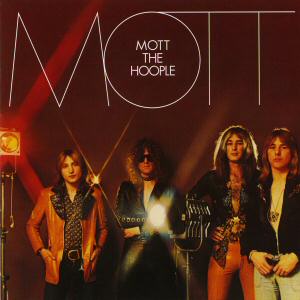
10. Mott The Hoople/Ian Hunter
Mott (1973)
All American Alien Boy (1976)
Ian Hunter and Mott The Hoople never gained the recognition they deserved, and Hunter's lyrics always reflected this. Where Mott hid behind a pretense of stardom's trappings, All American Alien Boy bitterly laid the truth of the matter on the line.

11. Genesis
Selling England By The Pound (1974)
The Lamb Lies Down On Broadway (1975)
Truly the most innovative and original of the art-progressive rock genre. Peter Gabriel's dramatic, if idiosyncratic vocals and persona were a perfect compliment to the rich texture and perfectly executed musicianship of Genesis.

12. Ramones
Leave Home (1977)
Rocket To Russia (1978)
The Buddahs Ramome (Glen's note--it was supposed to read "Bruddahs") came along at a perfect time, and influenced a generation of rockers who would top the charts two years later (Glen's other note--make that more like fifteen years later). Slashing guitars, dexedrine speed and irresistable Beach Boys harmonies marked these misunderstood innovators.

13. Supertramp
Crime Of The Century (1976)
Crime is an audio orgy which hits the listener on every level. It is a densely textured and produced masterpiece matched only by Pink Floyd's Dark Side Of The Moon this decade. Unfortunately, Supertramp have never matched the wall of sound "eargasm" of this record.

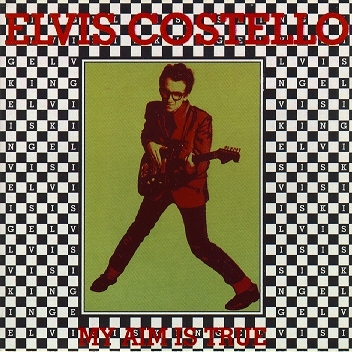
14. Elvis Costello
My Aim Is True (1977)
This Years Model (1978)
Armed Forces (1979)
Costello is undeniably the artist to watch in the eighties. His cynical, bitter lyricism combined with a seemingly unending arsenal of great pop tunes made him the most dynamic force of the late seventies. One wonders if he will burn out.

15. Sex Pistols
Never Mind The Bollocks (1977)
Although preceded three years by the New York Dolls, the Pistols brief cultural shock hit a stagnant rock scene in the face. The impact of this band is best measured by looking at rock's current direction. Short, non-excessive economical rock. This is why the Stones released Some Girls.


Sunday, May 27, 2007

Porcupine Tree Is Officially My Favorite New Band

Music Review: Porcupine Tree - Fear Of A Blank Planet

Ever since I was recently reintroduced to the music of Marillion--a band I used to like quite a bit in the eighties that I'd long since forgotten about--I've been repeatedly hearing the name of another prog-rock band called Porcupine Tree. In e-mails, and in comments on my articles about Marillion people have been telling me that this is a band I need to check out.

So earlier today as I was doing my laundry, I stopped into my neighborhood record store as my clothes were drying and saw a promo copy of Porcupine Tree's Fear Of A Blank Planet in the used CD rack and picked it up. And you know what? They were right. I haven't been able to stop listening to this CD since I got it home several hours ago. In fact, Porcupine Tree has just officially become my favorite new band.

In a sense this kind of pisses me off on at least one level since they played here two weeks ago and I passed on going because I couldn't drum up any interest in going from my friends. The guy I usually go to shows with these days passed because--like me--he hadn't heard any of their stuff. Based on what I have heard on this CD, I hope they come back soon.

Musically speaking, Porcupine Tree are all over the map on this album. On Blank Planet's seventeen minute long centerpiece "Anesthetize" alone, they go from a lilting melody centered around light bells right into metallic riffage straight out of Tool territory. The sound here just washes itself all over you. Somewhere in the middle of all that, Rush's Alex Lifeson provides a great guitar solo.

What is even more interesting about these guys though is the lyrics. Steven Wilson sings about everything from drugs to pornography on this album. But mostly he sings about drugs. From the title track, there is the line "the pills that I've been taking confuse me." Later in the song he lyricizes about a friend in a band that "sound like Pearl Jam, the clothes are all black, the music is crap." I knew there was something about these guys I liked.


But back to the drugs. On the absolutely gorgeous sounding "Sentimental," Wilson asks if "the pills I've been taking are helping" while some very haunting minor chords played on a keyboard are augmented by some of the most beautiful guitar I have ever heard. Did I mention by the way that I am an absolute sucker for minor chords? The acoustic version seen on the video below gives you some idea, but doesn't begin to do justice to the version on the album. This is just beautiful stuff.


If there is a central theme here (outside of drugs anyway), it seems to be the search for escape. On the album's closing track, "Sleep Together," Wilson equates "the act" as nothing less than that in the lines "this is fate, this is your escape." On another track, "Way Out Of Here" the opening line is "Out at the train tracks, I dream of escape." On this same track, Robert Fripp also provides some very nice atmospheric background soundscaping. The fact that guys like Fripp and Rush's Alex Lifeson apparently endorse these guys should tell you something right there.

This is just great stuff, and Porcupine Tree is a band that I can promise you I will be exploring much, much further. Since this band has a pretty deep catalog for someone so few people have actually heard of, I can also report that my wallet already hurts.

I just hope they get back to Seattle sometime soon.

Sunday, May 13, 2007

Remembering The Time Al Stewart Stole My Date, And Two Of His Best Records

As Collectors Choice Music prepares to reissue thirteen of English folk rock singer Al Stewart's original releases in new remastered editions with never before heard tracks, I couldn't help but reminisce a little. You see, old Al and I go way back.
As a twenty something record store clerk at the very begining of what would prove to be a long career in the music business, Al Stewart was one of my favorite songwriters. I first got turned on to Al by hearing the album Past, Present & Future, which was Stewart's first record to chart on Billboard in the United States (it peaked at #133). Minor as it was, that chart success was due in no small part to the success he enjoyed here in Seattle. Local rock radio stations like KZOK fully embraced Stewart on the airwaves, and his shows here always sold out. The truth is, Seattle was one of Al Stewart's earliest, and strongest markets.


And I'd like to think that guys who worked in record stores--guys like me--played a role in that as well. I was always giving records like Past Present & Future and Modern Times heavy instore play, and I'd just as quickly recommend his albums to anyone who would listen.

So like I said, the first record I heard by Al was Past Present & Future. I was particularly struck by the track "Nostradamus," as I was something of a "spiritual seeker" myself back then. I found Stewart's lyrics about the French seer predicting things like the rise of Hitler particularly fascinating. That album also contained a track called "Roads To Moscow" that had something or another to do with Russian history. You see, that was the thing about Al Stewart. Besides the fact that Stewart was particularly skillful at turning a phrase, his lyrics were just so damned literate.
They also often contained lush and romantic themes and imagery. So by appealing to both my pretensions of intellectualism, and the fact that at twenty something I was still something of a diehard romantic at heart, Al Stewart's music had me hooked from the get-go.
So did I mention that I worked in a record store back then? Well, one of the best perks that came from this job was free tickets to concerts. Occasionally, these free tickets would also include backstage passes if the label was trying particularly hard to get the so-called "tastemakers" in the market behind an artist.

Al Stewart was particularly big with the ladies back then. So when I got a pair of tickets with backstage passes for an Al Stewart concert, I figured this would be the perfect opportunity to ask a certain hot female customer I'd been eyeing for awhile out on a date. I mean what better way to impress a date than introducing her to music's most wonderfully romantic songsmith himself?
And I was absolutely right in my assumptions as my perspective future wife jumped at the chance to go. So off we went to see Al Stewart at the Paramount. By this time in 1976, I was well versed in Al Stewart's music, having bought all of the artist's American releases as well as several of the import titles like Love Chronicles. My date was also a big fan.

So after the concert, the label rep took us backstage to meet Al Stewart as promised. I was very excited and anxious to ask Al all about the wonderful romantic themes and historical references in his music. The thing is, once we got backstage Al wasn't terribly interested in talking to me at all. Actually, he rather was quite taken with my date. So as Al continued to chat her up and all but ignore me, I began to grow a little impatient.


After glancing at my watch rather obviously several times, I finally told my date we should probably be going. And thats when Al offered my date the opportunity to go back to the hotel with him, rather than to go home with me. Of course she said yes--after all, he was Al Stewart and by this point I was just the guy at the record store who took her to a concert and got her backstage to meet the artist. As I left after informing "Kathy" she would have to find her own way home, Al had one more favor to ask of me. He wanted the "Jimmy Carter For President" button I was wearing (I worked on his campaign that year).

Unbelievable.
I'm not sure how all of this ended up, as I never spoke to her again after that night. She apparently also found another place to buy her records. But for many years after that, Al Stewart's music just didn't sound the same to me. All of the historical moments in time and all of the lush, romantic places his songs had once carried me off to just no longer rang true.

But like those Time Passages he sings about in one of his songs, the bitter memory of being essentially jilted at the big dance eventually faded away. The whole incident has now been basically reduced to the humorous story I sometimes tell my buddies over beers, and the one that I just told you. Eventually, I was even able to appreciate Al Stewart's music again. For one thing, we have both grown up quite a bit since those days in the seventies. And whether he is still the womanizing cad he once was or not (and I've heard from reliable sources that he is not), the guy still has a way with a phrase that is just undeniable.
So I was pleased to hear about the reissues of all of Al Stewart's old records in remastered new CD editions. I immediately picked up copies of my two favorites. Love Chronicles is one of Stewart's earliest albums, and one that I remember having to buy my first vinyl copy of as an import.
Love Chronicles original six tracks include several recorded with Richard Thompson and the rest of Fairport Convention performing under pseudonyms due to some contractual deal with the record companies involved. As a result, many of these tracks such as "You Should Have Listened To Al" and "The Ballad of Mary Foster" have a decidedly folky sort of feel serving as a backdrop for Stewart's adept way of storytelling.

But the centerpiece of the album is the stunning title track. Stretching over some eighteen minutes, the song "Love Chronicles" so stands out on it's own that it just as well could have been another record all by itself. Over the course of this epic track, Al Stewart basically runs down every romantic encounter he has ever had from his adolescense to the then current day.
This was of course before he ever met my darling "Kathy".
As a pre Led Zeppelin Jimmy Page provides some very uncharacteristically tasty guitar riffage to the mix, Stewart pours over every painstaking detail of these encounters, wrapping each of them around the repeated phrase "it was no sense at all, but too much sense, that took me to the bridge of impotence." This is just some incredible songwriting here. And as coarse as a line like "it grew to be less like fucking, and more like making love" may sound here, in the context of this song it makes complete sense. Al Stewart makes losing your virginity sound every bit like the emotional rite of passage it is.
The three bonus tracks included on the new remastered version are "Jacksaw," "She Follows Her Own Rules" and "Fantasy." None of these have been previously issued on a commercial release.
So my other favorite Al Stewart album was Modern Times, which is the album that was originally sandwiched inbetween Past Present & Future and his real American breakthrough album, the smash hit Year Of The Cat. This is hands down my favorite Al Stewart album, and one I even continued to listen to during my personal boycott of his music after he stole my date.

Produced by Alan Parsons, this album has the sort of pristine sound and crystal clear production that are Parsons trademarks as a producer. It's also a bit more rocking than a lot of Stewart's other work, with tracks like "Apple Cider Reconstitution," "Carol," and "Sirens Of Titan" all containing the sort of bouncy groove that radio programmers love. Stewart's longtime guitarist Tim Renwick also is mixed more out front than on previous releases, and the fret work here is some of the tastiest sounding of his career.
Here again though, the title track is the centerpiece of the record. Though it doesn't completely overwhelm the rest of the album the way that "Love Chronicles" does, "Modern Times" is another of those stunningly personal pieces of storytelling from Stewart that simply takes your breath away. Here, Stewart tells the tale of a chance encounter at a bar with a friend from his past, and the reluctance to recount old memories of "chasing skinny blue jeaned girls across the building site" and "checking out the dancefloor while the band played Hold Me Tight". The bittersweet meeting goes on to reflect how "it all comes back like yesterday." Musically the track builds to a big orchestral close--the Parsons influence is especially felt here--punctuated by Renwick's best guitar work on the album.
"The Dark And Rolling Sea," which precedes "Modern Times" on this album is another of those reflective sort pf period pieces, this time told from the perspective of a salty old seaman. Here again, Stewart takes his subject matter and weaves a tale so achingly personal you'd swear he actually lived it. It also makes for a beautiful segueway into the title track.
The new remastered Modern Times also contains more of those previously unreleased bonus tracks. Here they include "Swallow Wind," and "A Sense Of Deja Vu."Both of these tracks sound very much like original outtakes from this album. A third bonus track, "Willie The King" is said to have come from the sessions for Year Of The Cat and has the slicker sound of that record.
So I guess I forgive Al Stewart for stealing my date all those years ago. But if I ever do run into him again, remind me that he is owed one punch in the nose.

Saturday, May 5, 2007

Jefferson Airplane "Sweep Up The Spotlight" On a Newly Unearthed Concert Disc

Music Review: Jefferson Airplane - Sweeping Up The Spotlight: Live At The Fillmore East 1969
In 1969 when this show was originally recorded, Jefferson Airplane were at the top of their game and regarded by many as one of the best live bands on the planet. At least, if you were fortunate enough to witness them on a good night. The truth, as revealed by the various live recordings of the band which have surfaced throughout the years, is that Jefferson Airplane's live shows could be wildly hit and miss affairs.

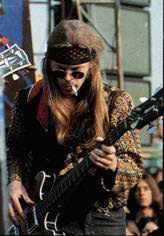
The definitive live Jefferson Airplane album--and indeed one of the greatest live albums ever made--remains Bless It's Pointed Little Head, recorded at the Fillmore East and West during 1968. On that album, the performance is simply a marvel to behold--particularly the dazzling exchanges between guitarist Jorma Kaukonen and bassist Jack Casady. There have been a number of live albums released by the band since, including several recorded at the Fillmore. As often as they played there, the Airplane--along with the Grateful Dead--could almost be considered the house band at the celebrated sixties rock venue.

Still, none of these albums have ever come close to recapturing the magic of Pointed Head. This newly unearthed, previously unreleased concert doesn't match it either. But it comes pretty damn close in a few places.

Recorded in 1969 at the Fillmore East on the heels of their great Volunteers album, the show kicks off fast and hard with the title track of that record. And fast is the key word here, as Marty Balin in particular seems to be about half a step ahead of the rest of the band.
The energy is undeniable, but Balin's rapid fire phrasing at times almost derails the song altogether. By the time of "Plastic Fantastic Lover," Balin still seems to be speeding his way through the vocals, occasionally punctuating them with screams. Thankfully, the band seems to have caught up to him by this time as the song takes on an almost punk-rock like pace.
That pace slows somewhat for "Good Shepherd," another track from Volunteers. Here, the traditional blues spiritual serves as a launch pad for some of those same, dizzying improvisational exchanges between Kaukonen and Casady that make Pointed Head such a great live document of this band. Curiously, Grace Slick's backing vocals as heard on the original version are left out entirely here.
On the rarely heard "You Wear Your Dresses Too Short," Balin calms down a bit and gets into a nice, soulful vocal groove. Kaukonen meanwhile rips off more of his trademark psychedelic staccato lead guitar runs as Casady's own bass runs circle round and round them. The quality of the playing here is nothing short of hypnotic, showcasing this band's two greatest musicians playing their asses off.
By the time of another rarely heard track, "Come Back Baby" it becomes clear the band has found it's groove and is well on it's way to one of those great nights that earned them their reputation as one of the great live acts of the era. Kaukonen, Casady and the late drummer Spencer Dryden click like a well oiled machine here, locking into one great improvisational exchange after another. This is simply great stuff.

On an extended version of their minor hit "The Ballad Of You & Me & Pooneil," Casady takes off on a lengthy bass solo during the middle section, followed by another of Kaukonen's raga like psychedelic guitar solos. Then Grace Slick and Paul Kantner take over the spotlight for "White Rabbit" and "Crown For Creation" as the big guns are finally brought out for the home stretch.
As for the big close? A ten minute version of Fred Neil's "The Other Side Of This Life" turns into another of those lengthy jams showcasing the amazing interplay between Kaukonen and Casady. It's really no wonder these two guys eventually just went off and did their own thing with Hot Tuna, and remain on and off collaborators to this day. On live recordings like this one, and of course Bless It's Pointed Little Head, it's almost as though the two of them were joined at the musical hip.

Sweeping Up The Spotlight is part of Sony/BMG Legacy's celebration of the 40th anniversary of the music of 1967, the so-called Summer Of Love. This new live recording is a previously undiscovered treasure from one of that era's greatest bands. It hits your nearest record store May 15.