Friday, May 22, 2009

Blind Faith Is Restored On New Clapton/Winwood DVD

Music DVD Review: Eric Clapton & Steve Winwood - Live from Madison Square Garden

First and foremost, this is pretty great stuff I gotta' say. But it is also kind of bittersweet. Allow me to explain...

The first time I saw Eric Clapton and Steve Winwood play together was on their -- prior to now -- one and only tour together as the massively hyped "supergroup" Blind Faith back in 1969.

Back then, the term "supergroup" was in fact pretty much invented for them -- well for them, and for Crosby Stills & Nash I guess.

The idea was to take the best parts of their previous megabands -- in this case it was Cream and Traffic -- and put them together with the idea of selling zillions and zillions of records.

The night I saw Blind Faith in 1969 (at just 13 years old I might add), at the H.I.C. Arena in Hawaii -- on what I'm pretty sure was their last performance together as a group -- the tension between them was obvious. By this point, the much ballyhooed "supergroup" had already broken up, and were simply playing out the commitments of their lone megatour.

But what was also quite obvious was the undeniable chemistry between Clapton and Winwood in particular.

Drummer Ginger Baker may have already been imagining the possibilities of his short-lived jazz megagroup Airforce, and who knows what bassist Rick Grech was thinking.

But Clapton and Winwood -- despite the pressures I'm quite sure both were feeling -- were obviously meant to play together. Both obviously went on to far bigger and better things over the course of time. But in the meantime, one could only imagine the possibilities of what could have been.

On this DVD, those possibilities are realized, even if only for the moment. Recorded on what was meant to be a one-off concert following a reunion at Clapton's 2007 Crossroads Festival, what becomes apparent is that the same chemistry between these two incredible musicians is not only still there, but that they really ought to to consider a longer term arrangement.

Seriously. These guys belong together.

From the get-go on this DVD, when the opening notes of "Had To Cry Today" kick things off, you can immediately see and hear it. Clapton and Winwood trade off the guitar solos here like it was 1969 all over again.

And it only gets better from there.

Covering Buddy Miles "Them Changes" on the eve of the great drummer's death, Steve Winwood sings this great song as though he was born to it, and Clapton responds with some of the best guitar he's played in a good long while.

Clapton and Winwood continue to feed off of each other on Clapton's "Forever Man," as well as on the gospel-charged Blind Faith song "Presence Of The Lord." Both are primarily Clapton staples, but again Winwood belts out his parts as though he was born to sing them.

The musical synergy is by this time undeniable. Eric Clapton has probably played a song like "After Midnight," for example, so many times he can do a decent job of it in his sleep -- remember those Michelob commercials? But it hasn't sounded this alive in ages.

Towards the end, when Clapton and Winwood get into covering Jimi Hendrix's "Little Wing" and "Voodoo Chile," the sparks really begin to fly.

When Winwood intones Hendrix's "Voodoo Child" in a much bluesier version than the original, with his voice rising in direct relation to the organ swells, Clapton responds with some simply amazing guitar playing. I can honestly say it doesn't get a whole lot better than this.

Interspersed between the performances, Clapton and Winwood speak candidly about things like the song selection (the bit about their choice to play Buddy Miles' "Them Changes" -- not knowing he had just passed -- is particularly telling), and the reunion in general.

There is also a second disc which gets into further detail about how this unlikely, but thankful reunion came about.

But the real meat here lies in the performance itself. Clapton and Winwood are taking this show out on the road this summer. Hopefully this will lead to a more permanent collaboration. In the meantime, see it if you can. And if you can't, get this DVD.

Now.

Sunday, May 17, 2009

The Rockologist: Is It Radiohead Or Wilco?

Okay, it's a weird question I know.

But tonight I got to thinking, who really is the best modern day rock band out there? Coldplay? White Stripes? Kings of Leon?

I mean let's face it, we really haven't got that many really great candidates waiting in the wings to assume the throne right now. There certainly isn't any Beatles, Stones, or Who standing in waiting and ready to step up to the plate -- to say nothing of a future Led Zeppelin or Pink Floyd.

As far as songwriters go, I likewise can't see the next Dylan, Springsteen, Brian Wilson, or Neil Young anywhere out there on the horizon -- as much as I would really like to. I mean, I like Conor Oberst as much as the next guy, but honestly speaking I just don't see him filling the shoes of Bob or Bruce.

These are different times than the sixties or the seventies were, and I understand that. Believe me, I do. But the question is where to look for that sort of greatness now? In other words, to quote the great Pete Townshend, "Who's next?"

Fleet Foxes? Great harmonies, but they still need work in the way of a writing a nice concise song that runs less then six minutes. Say it, don't spray it right?

Porcupine Tree? Great band, with one of the most underrated songwriter/musicians around in Steven Wilson. But still way, way too obscure at this point to make any kind of a dent in the international subconscious.

TV On the Radio? As much as the critics love to jizz all over these guys, I'll bet you dollars to donuts that nobody will remember them two years from now. Again, it comes down to that whole thing of having memorable songs here. Business aside, we still need actual songs that people will remember. No offense guys.

So as I was thinking about all of these weighty matters (and yes, I confess that this means I need a life), it came down to two bands for me.

Radiohead and Wilco.

For my money, these are the two most prominent bands out there that stand the best chance of being remembered years from now.

So I thought it would be fun to break these two bands down by category.

Let's start with songwriting:

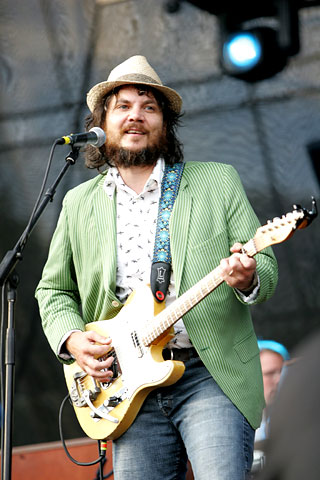
Wilco's Jeff Tweedy wins this one hands down.

I mean Radiohead haven't really written actual songs since OK Computer have they? What they write is more like soundscapes, and they are without a doubt mostly beautiful ones at that. But they are still more about ambiance and atmosphere than they are about actual songcraft.

Wilco on the other hand write these really great songs, with actual real characters populating them that you can relate to. Although they may be wrapped in a more exotic package, they still communicate basic timeless emotions like love and all that sort of thing. Where Jeff Tweedy writes about the Sky Blue Sky and trying to break your heart, Thom Yorke's thing is about how he woke up yesterday sucking a lemon.

Edge: Wilco

Musicianship:

Since Wilco added guitarist extraordinaire Nels Cline to the mix, this has become a much tougher call to make. Cline basically completes the Wilco package and is an absolutely monster guitarist. Just listen to his solos on "Impossible Germany" or "Bull Black Nova" (from the upcoming Wilco: The Album) if you doubt me there.

But one of the things that makes Radiohead such a great band is their willingness, and in fact their eagerness to experiment with new sounds. In Rainbows is an amazing album, and what Jonny Greenwood does with all of his effect boxes and the like is a big part of why that is. The rest of the band are likewise not exactly slouches in the musical department either.

Edge: Radiohead

Live Show:

Radiohead wins this one pretty much hands down, although again the addition of Nels Cline to the Wilco lineup makes it a slightly tougher call.

The thing about Wilco is they pretty much play it straight down the line. As in no frills, just the music. The thing is that the music is so good that it works. Radiohead on the other hand have some of the best lighting effects in the business, and the way they use it to such dramatic effect is a big part of what makes their live shows so special.

Edge: Radiohead

Vocals:

Thom Yorke. I mean my God, is there a more haunting voice anywhere out there? The more atmospheric Radiohead's music gets, the better Yorke's otherworldly voice suits it. Jeff Tweedy is cut more from the Neil Young school (as is Yorke actually), and I have to say that for what Wilco do, his voice is equally suited. But again, that voice of Yorke's is an instrument unto itself.

Edge: Radiohead

So for now, I guess Radiohead still wins. But only by a hair...

Wilco is creeping up on me by leaps and bounds. Their new album, which comes out next month, is an easy album of the year candidate which is making me rethink my thoughts by the minute.

"Bull Black Nova" is a great Kraftwerk meets Neil Young sort of successor to "Spiders (Kidsmoke)," and "You Never Know" marries a great Marc Bolan-esque vocal with the always amazing Nels Cline conjuring the spirit of George Harrison on guitar.

Feel free to weigh in with your own thoughts.

Friday, May 15, 2009

Return To Forever Play It Like They Mean It On Live Reunion DVD

Music DVD Review: Return To Forever - Live At Montreux 2008

As a rock fan first and foremost, I've always had a problem getting into certain types of jazz. What bothers me most is the way some of jazz's best musicians approach their own instruments.

As hard as a friend of mine once tried to turn me on to John Coltrane for example, there was something about those side-long improvisations that always left me kind of cold. Sure the guy could play his ass off. The problem for me was I could never figure out where exactly it was that he was going.

Likewise, I could never get how some of the musician types I knew way back when, drooled all over guys like George Benson and Bob James. Again, where I understood what "fine players" these guys were, albums like Breezin' just sounded like elevator music to me. And don't even get me started on Kenny G...

I guess what I've always wanted to say to musicians like these, is "yes, we get it. we know you can play." What I've always wanted to hear from them on the other hand, is the sound of them actually playing like they mean it.

Which is why when it comes to jazz, I've always gravitated towards the fusion bands like Mahavishnu Orchestra, Weather Report, and for my money, the best of the lot -- Return To Forever.

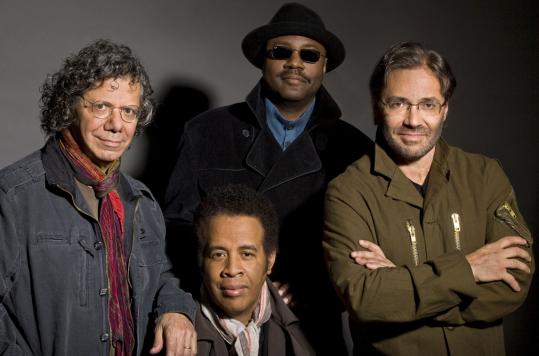
RTF began in the seventies as an improvisational jazz vehicle for keyboard virtuoso (and Miles Davis alum) Chick Corea. The group's early incarnations also featured a revolving lineup that at times included the likes of people like Flora Purim and Airto.

But by the mid-seventies, RTF settled into a fusion sound and a permanent lineup that featured what were arguably the best musicians in the world at their individual instruments. Although this was clearly still Corea's band, guitarist Al DiMeola, bassist Stanley Clarke, and drummer Lenny White were each so good that they often overshadowed the leader.

With that much talent collectively gathered under one roof, it was also inevitable the band would eventually split, which they did not long after they achieved superstar status with the Columbia Records released Romantic Warrior album. Clarke and DiMeola in particular would each go on to enjoy very successful careers as solo artists in their own right.

So when RTF announced their first tour together in 25 years, the news was met with both genuine excitement as well as some healthy skepticism. Could these four virtuosos still peacefully co-exist as a unit after all these years? And if so, would those original creative sparks still fly the same way they once did?

Live At Montreux 2008 puts to rest any of those lingering doubts once and for all. Recorded at the prestigious Montreux Jazz Festival during last year's Return To Forever Returns world tour, this DVD (also available on Blu-ray and audio CD) captures RTF in a great performance, which proves the band is still at the top of their game.

The audio and video here are first rate, thanks to the always reliable folks at Eagle Rock. The camera work in particular captures all the right angles -- especially in the way it gets all those great close up shots. Here, you get an up-close insider's look at the technique of each of these virtuoso musicians.

You get to see those gigantic thumbs of Stanley Clarke plucking and popping the living crap out of those bass strings. Likewise, watching Al DiMeola's fingers flying up and down the fretboard is a marvel to behold. DiMeola always was one of the fastest guns in the west, and he hasn't lost a single step here.

RTF is however still Corea's band. Although he isn't nearly as flashy as Clarke or DiMeola, Corea's keyboard flourishes remain the glue which holds this unit together.

On the epic track "Song To The Pharoah Kings" from RTF's very under-appreciated album Where Have I Known You Before, Corea switches gears between the (sadly-missed) Fender Rhodes, and a synthesizer where he recreates sounds ranging from drums to more conventional instruments.

Once again, the camera captures all of this by zeroing in on Corea's dexterous fingers. Clarke and DiMeola also get their own lengthy solos here, as the song moves through its various sections and intricate changes. Drummer Lenny White never gets his own solo (at least not until the appearance of bonus tracks from another RTF show in Florida), but is still given quite a workout, particularly when he locks into those funk grooves with Clarke.

Playing a setlist that focuses evenly on tracks like "No Mystery" and "The Romantic Warrior" drawn from all of RTF's albums, and with a running time of over two hours, Live At Montreux 2008 is worth every bit of the 25 year wait for a Return To Forever live document.

The guys are still playing at the top of their game after all these years, and are clearly having a great time doing it. Most importantly, they play like they still mean it here.

Wednesday, May 13, 2009

Hot Tuna: Jorma And Jack Can Still Play Their Asses Off

Concert Review: Hot Tuna with Loudon Wainwright III 05/12/09 at The Moore Theatre, Seattle WA

Although there weren't quite as many of what a friend of mine often jokingly refers to as "grey ponytail specials" in attendance, the fact that I was even in the building at a Hot Tuna concert has to be proof that I'm getting old.

Truth be told, it's been forty years since my last Hot Tuna concert. That happened back in 1969 when Jack Casady and Jorma Kaukonen's then side project opened for their other, more famous band Jefferson Airplane at Honolulu's Civic Auditorium in one of their very first live appearances.

As a then wide-eyed thirteen year old fan, I was close enough to the stage to marvel at the exchanges between guitarist Kaukonen and bassist Casady during sets by both bands. What I remember most was how skinny Kaukonen looked, and how I could see Casady squinting his eyebrows underneath his oval shaped hippie glasses.

Forty years and several incarnations of the Jefferson Whatever later, the Airplane have long since retired into the rock history books. But Hot Tuna are still going strong. Kaukonen is no longer the razor thin rock guitar god he was way back when, and with the weight he's since packed on looks closer to a vision of grandpa strummin' a guitar on the porch. As for Casady, well he still does that funny thing with his eyebrows. But man, can these two guys still play.

At Seattle's Moore Theatre this past Tuesday night, they were joined for a tasty acoustic set by mandolin virtuoso Barry Mitterhoff, a cat who is no slouch himself. Although they stuck mainly to the acoustic blues standards they are perhaps best known for, with the addition of Mitterhoff there were also touches of bluegrass and folkier elements added to the mix.

Kaukonen sounded as fine as ever, both on the guitar and with his smooth bluesy voice that Airplane fans will remember from songs like the original version of "Plastic Fantastic Lover." His voice has aged particularly well, showing some of the rough around the edges quality that comes with maturity.

Taking on blues chestnuts like "Hesitation Blues," (long a Hot Tuna concert staple), Kaukonen's voice sounded as fine as vintage wine. It even reminded you a little of the old bluesmen he so obviously admires. And while there weren't any of the trademark staccato guitar blasts associated with his best work with the Airplane in this setting, Jorma still got an opportunity to show off his well-worn chops during an encore of his signature instrumental "Embryonic Journey." Kaukonen's playing remains as flawless as ever.

But for many in the audience, Jack Casady was the guy they really came to see. As one of rock's all-time greatest bassists, Casady was an early pioneer of the style of playing that makes the bass sound more like a lead instrument than one that is there purely to provide the bottom end. The way he once made the bass rumble on the live version of "Plastic Fantastic Lover" (as heard on the Airplane's Bless Its Pointed Little Head), is a prime reason many still consider that album to be one of the greatest live rock recordings ever.

So when Casady's bass seemed to be turned way down in the mix during this concerts first few songs, the crowd was swift to react with shouts of "Turn Jack up" and "More Jack!" By the time of a great version of the Airplane's "Good Shepherd" however, that problem was suitably rectified as Casady got into an exchange of thundering bass runs that ran side by side with Mitterhoff's stinging mandolin and Kaukonen's tasty guitar passages. Although all three of these guys can play their asses off, Casady was still the star of this show.

The concert was opened by a short, but entertaining acoustic set from veteran singer-songwriter Loudon Wainwright III. Onstage, Wainwright proved to be an engaging, and often very humorous performer -- particularly during one song where he railed away about his bitch of an ex-wife. Wainwright also covered topics ranging from the recession to why he named his son Rufus as he offered up past material alongside songs from his new Recovery album.

Sunday, May 10, 2009

Beam Me Up Scotty, There Is Intelligent Life Here After All

Movie Review:
Star Trek (2009)

Let's get the big question out of the way first, and just come right out and say that Lost mastermind J.J. Abrams' new reimagining of the Star Trek saga is a fine addition to the Enterprise franchise.

The new movie looks great, and plays equally well thanks to a smart script that answers all of the questions created by the seeming holes that come early on in the story in due course, and in a way that should satisfy even the nerdiest of the trekkies out there.

The casting here is also top-notch. Led by Chris Pine (as Captain Kirk) and Zachary Quinto (as Mr. Spock), Abrams has assembled a fine group of young actors who all do an admirable job of making you believe these really are younger versions of the characters we've all come to know through the decades as etched in our memories by William Shatner, Leonard Nimoy, DeForest Kelley and the rest.

In these performances, you get just enough of the character traits of the originals to recognize them as the same people, but you also get a little something extra. Kirk's eye for the space ladies for example -- something the old series always hinted at, but never came right out with -- is given just enough extra edge by Pine.

The line he uses for example trying to pick up space linguist Uhura in a bar ("you must be good with your tongue") is a perfect case in point. Pine's Captain Kirk also ratchets up the impulsive, rebellious side of the character several notches -- this is a guy who isn't at all afraid to break rules, and who at times plays as much like James Dean as he does James T. Kirk.

Zachary Quinto -- up until now best known for his devilish portrayal of the sociopathic Sylar on TV's Heroes also does a great job as a slightly more prone to emotion Mr. Spock. Ol' Pointy Ears is even given a surprising romantic interest in Uhura (who is played very sexily by an ultra-hot looking Zoë Saldana).

The rest of the crew also shine, particularly Karl Urban as a much younger, but every bit as bitter and crotchety Dr. Bones McCoy, and Harold and Kumar vet John Cho, who adds a nice ass-kicking dimension to the role of Sulu.

All of these actors fit their roles like a glove, to make up a cast that should be able to stretch this well-worn series for several more years of the sequels which are no doubt sure to follow.

Now as for those holes...

We learn early on that the planet Vulcan has been destroyed and that the survivors do not include Spock's mother (briefly played by Wynona Ryder) -- who anyone that followed the series knows was around long after the maiden voyage of the Enterprise. We also learn that the real target of the films villain -- a particularly nasty Romulan named Nero -- is intended to be Spock who presumably hasn't even been born yet.

Later on, we learn that Spock is the Enterprise's Captain, and that he and Kirk (who is also fatherless thanks to more of Nero's dastardly hijinx) are not friends, but rather foils. There are lots of similar odd turns no doubt devised by Abrams to screw with the heads of Trekkies everywhere -- the fate of original Enterprise Captain Pike not the least among them.

But just when you'd expect the heads of said trekkies to be exploding, all is made clear when Leonard Nimoy turns up as "old Spock" just in time to neatly explain away the discrepancies as being the result of an alternate reality created by time travel (which anyone who follows Lost will recognize as a favorite Abrams plot device).

With the explanations for these and any other untidy questions still to come neatly out of the way, the rest of the movie is pretty much a non-stop, action packed roller coaster of explosions, explosions, and well, explosions. The Enterprise races against the clock to stop the Romulan badasses from destroying Earth the same way they did the planet Vulcan, blowing up virtually everything in its path along the way.

The rest of the crew, including such normally non-aggro types as Uhura and Sulu all get their licks in too, as all hands on deck provide ample support for Kirk and Spock's interstellar ass-whoopin' of the bad guys here. The special effects here are of your typical blow em' up, computer generated variety. But by this time, the movie has become so much fun that the CGI sameiness is easy to overlook.

Make no mistake, Star Trek is a summertime popcorn action flick, pure and simple. What separates it from most is a fine cast, and a script that gives a new dimension to characters you already thought you knew inside and out.

As impossible as it may seem, and just when you thought that Star Trek had all but run its course, J.J. Abrams has surprisingly breathed new life into what many might have thought a long since dead horse. I expect we'll be seeing a lot more sequels too.

Beam Me Up Scotty, There Is Intelligent Life Here After All

Friday, May 8, 2009

Marillion's "H" Delivers One For The Fans

Music DVD Review: Steve Hogarth - H - Naked in the Chapel


For those who are not already in the know, Steve Hogarth -- or "H" as he is known to hardcore fans -- is the lead vocalist for British progressive rock band Marillion.

Faced with the rather daunting task of taking over the reins from Marillion's original vocalist -- the highly theatrical Fish -- Hogarth not only rose to it, but actually helped reinvent Marillion in the process. With his far more personally engaging style, Hogarth in fact took Marillion from their one-time status as a sort of baby Peter Gabriel-era Genesis knockoff to a band who has long since re-established a unique identity for themselves with latter day progressive-pop masterpieces like Marbles.

The bottom line is that Marillion now enjoys a smaller, but more devoted fan base than they ever did in the Fish days. And those same fans absolutely love them their boy "H".

Which is why a concert DVD like H - Naked in the Chapel presents the sort of problem many a lesser band would actually love to have. For those faithful hardcore Marillion fans, it offers a rare and intimate audience -- think VH1's Storytellers series for the best point of reference here -- with the Marillion frontman.

It is, in fact, billed as an "intimate evening of music, rock n' roll diaries, lyrics and conversation" with one and the same. On the other hand, for those living outside of that particular universe, H - Naked in the Chapel could well leave you scratching your heads.

Not that "H" isn't an instantly engaging and likable performer. He is.

But in this particular setting, where "H" is captured performing alone on an acoustic piano in a London church chapel, even he has to make some concessions. At one point, "H" even acknowledges Marillion's past with Fish by saying "feel free to ask for "Kayleigh" (Marillion's biggest hit single with Fish) if you want to." At another point, he admits that this was "an experiment to see if I could get people to pay money to be in a room with me," which is perhaps the more telling point here.

That said, for Marillion fans, and especially for those of the latter-day model, this is pure gold to the point of almost being a sort of love letter. Seated behind his piano in the chapel, Hogarth tells several very amusing and often personal stories in between playing an informal, but well-paced set of songs from both Marillion, himself, and those of other artists.

The covers are particularly cool, and include David Bowie's "Life On Mars," Paul McCartney's "Maybe I'm Amazed," Leonard Cohen's "Famous Blue Raincoat," Tom Robinson's "War Baby," and Elvis Presley's "In The Ghetto" (which appears to come by request).

But for those hardcore Marillion fans (and let's be honest here, and say this DVD is who this is really for), seeing Hogarth's solo take on such an absolutely gorgeous song as "Fantastic Place" is worth the price of admission itself.

That said, this one is mostly for those who are already Marillion fans -- but they will love it.

H - Naked in the Chapel will be in stores on May 19.

Saturday, May 2, 2009

The Rockologist: Whatever Happened To The Live Album?

Whatever happened to the live album?

If it's not exactly the million dollar question burning holes deep into the minds of music enthusiasts and rock aficionados everywhere these days, it's still worth a good buck fifty of ink all these years after the fact.

You see, back in the sixties and seventies, live albums ruled.

In fact, for a time there in the early to mid seventies, live albums were considered so crucial to a rock band's career, as to be a make or break proposition.

Consider the case of an otherwise mediocre seventies rock band called Grand Funk Railroad. Grand Funk, at least up to this point, we're not known for making great records. But they absolutely packed em'in on the concert trail. And by the time of their third album, Closer To Home they were also finally beginning to get a lot of airplay on FM rock stations, primarily because of the single "I'm Your Captain."

Grand Funk's manager/svengali Terry Knight knew it was time to strike while the iron was hot. And Grand Funk Live Album -- released not six months apart from Closer To Home -- became an instant phenomenon, built as it was on months of the band's relentless touring. For a minute there, Grand Funk was as big as the Beatles -- they even sold out Shea Stadium.

From that point forward, Grand Funk's success became something of the blueprint for the model of the two-disc live album that served as the model for mid-level rock bands to achieve breakthrough success to the multi-platimun ranks of the really big leagues.

The most obvious example of this was Frampton Comes Alive, a two-disc live album which transformed the 3000 seat act Peter Frampton, to sold-out stadiums in less than a year, and, again for about a minute there, made Frampton the biggest selling act on earth.

Of course, all of this was not all at without precedent. Never mind the fact that these days Peter Frampton serves as the punchline to a movie joke where Cheech Marin asks "didn't you used to be Peter Frampton?" -- and whether or not such wanton disrespect is appropriate or not.

It doesn't matter. Frampton Comes Alive set young Peter for life.

Like I said, in the seventies the double live album was a business model that flat out worked miracles. Just ask the Allman Brothers (Live At Fillmore East). Or better yet, the numerous bands Frampton's manager Dee Anthony led to similar success using the very same model, like J. Geils Band (Full House, Blow Your Face Out) and Frampton's own previous pre-solo career band Humble Pie (Rockin' The Fillmore).

So what happened?

The thing that is most curious about the sixties and seventies live album phenomenon is that some of the greatest live bands of that time never really made a definitive live document -- a fact that can be summed up in one word.

Bootlegs.

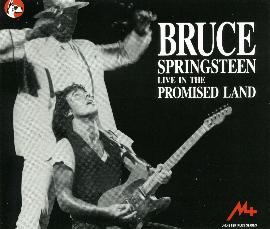
By the time of 1978's Darkness On The Edge Of Town tour for instance, Bruce Springsteen And The E Street Band had all but been universally acknowledged as the greatest live act on the planet. Yet, an officially released live document of that legendary tour remains to see the light of day.

The latter day live albums have come of course, but with mostly mixed results. The Bruce Springsteen Live 1975-1985 boxed set is a nice enough carrot -- but pales in comparison to the still widely available bootlegs of legendary shows like Winterland 1978 or Nassau 1980.

Led Zeppelin also remains one of the most widely bootlegged artists -- largely because nearly everyone agrees that The Song Remains The Same captured the mighty Zep on an off-night. Bob Dylan has been playing catchup for awhile with his Bootleg Series (although the 1974 tour document Before The Flood is actually quite good).

The Rolling Stones have released scores of live albums, and to this day there is only one that truly matters.

That would be the 1969 tour document Get Your Ya Yas Out. Which despite being a fairly sloppy sounding recording (which bootleg fans could credibly argue is bested by recordings like Liver Than You'll Ever Be and Rock Out, Cock Out), remains the definitive live Rolling Stones album.

The Who were much smarter, officially releasing not one, but two great live albums in Isle Of Wight 1970 (a must-have DVD for Who fans) and Live At Leeds -- the latter of which is thought by many to be the best officially released live album of all time.

It definitely gets my vote.

Curiously, some of the more visually oriented rock bands of that particular time -- Alice Cooper and David Bowie for example -- have never released what could really be called definitive live documents. Why settle for David Live for example, when the 1980 Floor Show is just a click away?

Which leads us to the present.

If whatever happened to the live album is the question, then once again I have to point to the bootleg. If the internet has made music more instantly accessible than ever through the various torrents, downloads, and what-not that are readily out there, why bother with a proper live album?

Take Radiohead for example.

They are argubaly the best live band in the world right now. Yet their officially released live output is limited to the relatively pathetic EMI release I Might Be Wrong: Live Recordings.

As the more informed fans of this band no doubt know, pro-shot DVDs of Radiohead live on every tour from OK Computer forward are readily available. These are not your standard grainy-ass bootlegs, but rather HBO special quality concerts, complete with the obligatory Dolby 5.1 sound in many cases.

So whatever happened to the live album?

Like most other things in the era of the internet, it's long gone to the reaches of cyberspace.

In other words, in the immortal words of that Stones album, "Got Live If You Want It."