Sunday, June 7, 2009

Procol Harum And A Symphony Orchestra? In 2009? You're Kidding, Right?

Music DVD Review: Procol Harum -
In Concert With The Danish National Concert Orchestra And Choir

Rock groups performing with symphony orchestras has always been a bit of a dicey proposition at best. Yet ever since the Beatles began adding such classical orchestration to their records, it has also been the sort of experiment that simply proved too much to resist for some bands.

Predictably, the results have almost always proved disastrous (there's good reason why few people remember Deep Purple's attempt for example). On the other hand, there have been a handful of groups who were actually able to pull it off, most notably the Moody Blues.

Procol Harum is one such band. In fact their second biggest hit song "Conquistador," (the biggest of course being the sixties psychedelic classic "A Whiter Shade Of Pale") came from just such a recording, a 1974 live album made with the Edmonton Symphony Orchestra.

Thirty years after that album, Procol Harum are at it again on In Concert With The Danish National Concert Orchestra And Choir, a new DVD filmed at an outdoor concert in Denmark under the picturesque setting of a Danish Castle.

Procol Harum and a symphony orchestra. Like that surprises you?

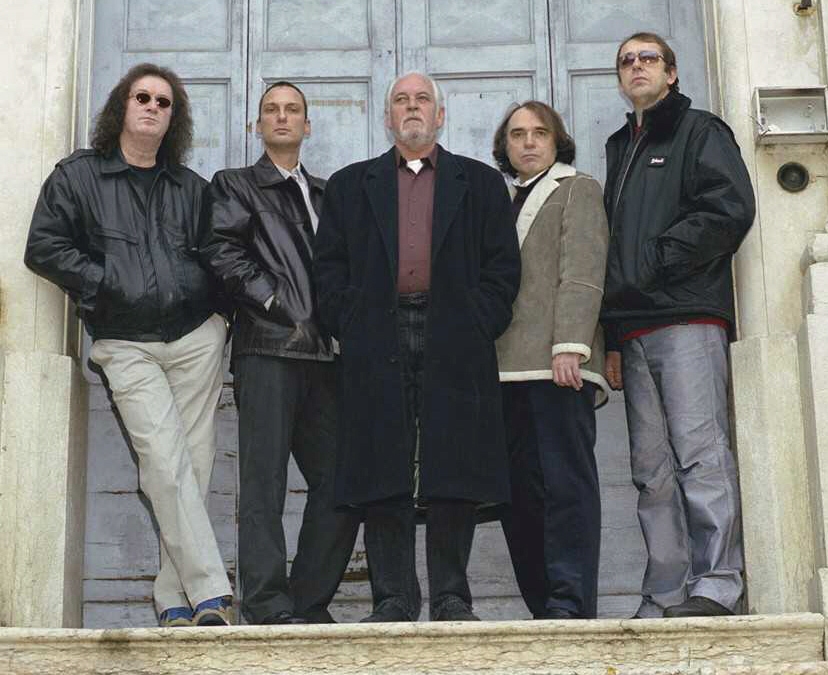
I for one was surprised to see that Procol Harum was even still together. That initial surprise was however quickly explained away watching this DVD as it became apparent that today's Procol Harum consists of original singer/songwriter/keyboardist Gary Brooker and a group of very good musicians, none of which I remember from the band as I knew them in their sixties and seventies heyday.

Of course Procol Harum was always kind of a revolving door that way. Previous members include one-time seventies guitar hero Robin Trower.

So this DVD is pretty much what I expected. Both the sound and the video are excellent as concert videos from the folks at Eagle Rock nearly always are. Gary Brooker, looking every bit like the perfect graying english gentleman these days, has also managed to maintain his voice quite well.

As for the songs?

Also pretty much what I expected. Some work great within the more classical format, while others don't work quite as well. The orchestral arrangement on "A Salty Dog" for example really does compliment the original, particularly in the case of the added choral touches. "Conquistador" is likewise flawless, but of course that song already benefited from the orchestral arrangement that made the song such a big hit back in the seventies.

Less successful is the symphonic arrangement of "A Whiter Shade Of Pale." If there was ever a song where you don't want to de-emphasize the organ (or to try adding to it), that's the one. It's like screwing with "Light My Fire." You just don't do it.

Likewise, "Simple Sister," a guitar powered near-hit for Procol Harum from the Trower days is done no favors by a female choir singing the words "Simple Sister" at exactly the moments where the guitar should be out front and center.

The bonus material here is pretty danged cool though -- a six song set filmed for a Danish TV special in 1974 that actually reminds you these guys knew how to rock at one time. And that people could actually smoke in a bar way back then.

Saturday, June 6, 2009

Moody Blues: Strike Up The Bong

Music DVD Review: The Moody Blues -
Threshold Of A Dream: Live At The Isle of Wight Festival 1970

Somewhere in between hearing my first choir-backed chorus on a heavy metal song by Uriah Heep (on the album Demons And Wizards), and delving head first into the mellotron drenched prog-rock of seventies bands like the Strawbs and Genesis, I discovered -- and briefly at least -- became quite fond of the symphonic rock of the Moody Blues.

In many ways for me, the Moodies acted as the bridge between the metal and glam rock of my high school years, and the full-on prog I found myself briefly immersed in as a college student. Punk Rock, New Wave, and Rap were still to come on my eventual road to discovering Bruce Springsteen. But I digress...

Although the Moody Blues are probably best known for the numerous recordings they have made with symphony orchestras and the like, their keyboard player Mike Pinder could make quite a substantial noise all by himself with the simulated strings and voices he employed on the mellotron.

Primary songwriters Justin Hayward and John Lodge provided an ample canvas for Pinder to fill in the colors with in the form of their lushly romantic pop songs of course. But for those in the know, Pinder was always this band's secret weapon.

Of course, there was also the none too small matter of the Moody Blues often unintentionally living up to their reputation of being quite possibly the most pretentious band on the planet to consider.

Between their new-agey transcendental meditation inspired lyrics (long after the Beatles had given up such nonsense), and Graeme Edge's oh-so-seriously spoken word intros on Moody Blues albums inviting listeners to "breathe deep" or to ponder words like "I think...therefore I am...I think," this was more than enough to scare off a lot of rock fans who just wanted to, well you know, rock out.

Legitimate gripe that this was, and still is, for the purposes of this review I prefer to remember the better things about this band.

Like sitting in my one bedroom apartment on any given Friday night where I couldn't find a date (which was far more often than I'd like to admit), and turning the lights down low, firing up the bong, and putting on an album like say, To Our Childrens Childrens Children and pondering the true meaning of this band's oh-so-deep music.

Yeah, that's it.

And on that note, Threshold Of A Dream: Live At The Isle of Wight Festival 1970 does an excellent job of not only taking me right back there, but making me forget that I ever finally outgrew this nonsense.

Well okay, not all of it was nonsense. And I've also got to admit that not only do a lot of these Moody Blues songs hold up surprisingly well -- but in the case of stuff like "Gypsy" and "Question," that the Moodies also actually kinda' rocked.

In fact on this DVD, recorded at England's 1970 Isle of Wight rock festival (the same one where an explosive performance by the Who was likewise captured for eternal DVD posterity), the Moodies even manage to rock out on such otherwise sanguine songs as "Tuesday Afternoon." Drummer Graeme Edge in particular powers these songs a lot more than I ever can remember him doing.

Captured by veteran rock documentarian Murray Lerner -- who has also made great rock films about Bob Dylan among others -- Live At The Isle of Wight Festival 1970 captures a moment in time, and a band who has been perhaps too often been unfairly maligned, at their creative and commercial peak.

Interspersed with the concert footage are present day interviews with the Moody Blues (and you don't know how tempted I was to say "surviving members," because amazingly in this case, they all actually have). Given the dated nature of the material, both the video and audio are also surprisingly good here. There is also footage of the Moodies back when they were a scrapping young band (including soon to be McCartney's Wingman Denny Laine) covering Bo Diddley songs (hence, the "blues" part of their moniker).

The set itself is pretty short, but the Moodies cover it quite well within the time alloted them. Hits like "Nights In White Satin" and "Tuesday Afternoon," captured while they were still relatively new, sound as fresh now as they did then -- and Mike Pinder's mellotron more than makes up for the lack of the London Symphony or whoever.

Again though, the real revelation here is that despite their reputation for pretentious mystical noodle-gazing, the Moody Blues actually kind of rocked.

Now excuse me, while I go look for that old bong...

Wednesday, June 3, 2009

CSN's dEMOS (Their Spelling, Not Ours) Compliments Neil Young's Box Nicely

Music Review: Crosby Stills & Nash - dEMOS

With all of the attention being paid to Neil Young's Archives set this week -- mainly because it's so hard to believe he finally put the damn thing out -- you'd be easily forgiven for missing the fact that his sometime bandmates in Crosby Stills & Nash also have their own new retrospective package out.

Though nowhere near as extensive as Archives, the more modest -- and moderately priced -- dEMOS (their spelling, not ours) makes a fine little compliment to Neil's far bigger deal collection. dEMOS comes exactly as advertised by its title, pulling together twelve demo recordings of songs made famous by various combinations of the three principals.

One interesting point here however, is the fact that on only one track, an acoustic demo of Nash's "Marrakesh Express," do all three members of CSN appear together. This leaves the listener with the distinct impression that these songs truly are the actual demos, as they were brought to various album projects by the individual members themselves.

What this also means, is that you not only get demos for the collective CSN albums, but for the various solo efforts of each of these musicians. Most of these prove interesting enough, although the results themselves prove something of a mixed bag. On Graham Nash's demo for his solo hit "Chicago" for instance, both Nash's vocal (even without a backing choir of female voices) and the signature piano melody remain so distinct you can barely tell the difference between this version and the more familiar one.

Stephen Stills solo demo for "Love The One You're With" likewise maintains the same feel as the original, although it's played quite a bit looser here. More interesting is a version of "Music Is Love," that was originally recorded for David Crosby's overlooked 1971 solo album If I Could Only Remember My Name. Joined by Neil Young, Crosby and Stills' harmonies on this song are fairly remarkable here, even without any overdubs. The addition of Young makes them even stronger.

Crosby's songs for CSN are likewise well represented here. Although his deeper vocal timbre is noticeably missed on solo acoustic versions of "Deja Vu" and "Almost Cut My Hair," it is equally at the forefront of the demo for "Long Time Gone." On the latter, Crosby is also joined by a slightly busy, but surprisingly decent sounding Stephen Stills on drums.

Produced by Graham Nash -- presumably around the same time he was putting together his own Reflections anthology box -- dEMOS is a decent, if not quite essential collection sure to please CSN's many fans. It also makes a nice companion to the Neil Young box.

Friday, May 29, 2009

The Rockologist: It's Hard Being A Neil Young Fan Nowadays

If everything goes according to plan -- note that I said "if" here -- Neil Young's ten plus years in the making Archives boxed set will finally see the light of day this upcoming Tuesday. I qualify this only because over the course of a decade long wait, Neil's fans have had to endure tease after tease about this release, only to have the mercurial artist pull it back for more of his seemingly endless tweaking.

It can be frustrating being a Neil Young fan sometimes, but we'll get to more about that soon enough.

This is not a review of the Archives box. Other than the parts that have been already released -- including the Live At Massey Hall and Live At Fillmore East sets, I've not heard a note of it, and probably wont anytime soon due to the prohibitively high cost of getting the DVD or Blu-ray versions of the ten-disc set. That is, unless any of Neil's PR people are feeling generous and would like to send one of these my way (hint, hint).

Instead, the impending release of Archives has provided your Rockologist a perfect opportunity to continue to vent about his public love/hate relationship with Mr. Young. To put things in proper perspective here, I'll first state upfront and without hesitation that Neil Young, along with Bob Dylan and Bruce Springsteen, makes up one third of my "holy trinity" of favorite artists. When he's firing on all four cylinders, I love Neil Young's music like that of few other artists out there.

Conversely, Neil Young's rather mercurial nature (and yes, I'll probably be using that word a lot here) as a bit of a musical maverick can mean years, and sometimes decades of waiting for him to "come back home" from what often seems like an endless string of those odd "experimental" albums.

The most notorious stretch where fans had to endure a decade of "weird Neil" was the eighties, but it wasn't the first. Following the breakthrough success of Harvest in the early seventies, Neil chose to make an abrupt artistic turn with the albums Time Fades Away, Tonight's The Night, and On The Beach. Those albums -- particularly the latter two -- have grown in the decades since to become essential pieces of his catalog. But at the time they first came out, they more or less left everyone from fans to the record company collectively scratching their heads in bewilderment.

Speaking of Neil Young's ability to frustrate his record company, you gotta' feel a little bit of sympathy for the raw deal that David Geffen must have felt like he got after signing Young to his then new record label in the eighties.

Coming on the heels of a commercial and artistic comeback with Rust Never Sleeps, Neil spent the next decade delivering album after album of odd experiments in techno, rockabilly, country, and just about anything but actual "Neil Young music" to his new label. Things got so bad that Geffen finally resorted to a lawsuit based on the premise that Neil Young refused to deliver product that the label could sell.

But the thing about those years of having to endure the artistic antics of "weird Neil" is that eventually he always comes back home. This certainly happened at the end of the eighties when he released the album Freedom seemingly out of a clear blue sky, just when many were ready to count him out. The album was a return to Neil's classic sound, and began a streak of great records that would continue well into the nineties, including classics like Harvest Moon and Ragged Glory.

But the thing is, if we are really being honest here, wasn't that the last run of really great music from Neil Young? The present decade, like most before it, has brought its share of both the decent and the not-so-much from the artist. Albums like Prairie Wind and Living With War certainly had their moments, but it's been a good little while now since we've seen an instant classic on the order of Rust Never Sleeps or Harvest Moon hasn't it? Meanwhile, Neil continues to put out as many goofy experiments like Greendale as he does decent, if not quite great albums.

Which may be why Neil Young has been devoting so much energy to his past lately. He still puts out new albums at a pretty decent clip. But many of these, like the recent Fork In The Road, have the unmistakable feel of being rather thrown together affairs. In the case of Fork In The Road, while it's not outright awful, I count exactly one truly great song on the entire record in "Just Singing A Song (Wont Change The World)."

In the meantime, Neil Young has spent just as much, if not more time putting out bits and pieces of the Archives box in the form of all those live albums. Meanwhile fans have patiently awaited the arrival of the complete box. Even 2007's "new" Chrome Dreams II found Neil relying on unreleased songs, which in some cases we're written decades ago.

So it's kind of as though Neil Young recognizes that the tank may be finally starting to run out of gas. In his defense -- I mean despite all the bitching here, lets not forget that I still consider myself a fan -- is the fact that Neil has rather painstakingly overseen the Archives material, and paid particular attention to ensuring the sound quality is top shelf. Although the box will also be released in CD and DVD versions, if Neil had his way you gotta figure he would have just gone with the Blu-ray.

Of course, this also means that Neil could charge his fans that much more to hear the music -- which means a fat $300 bucks in the case of the Blu-ray version of Archives.

This has been another rather sore point for Neil Young fans like me. That is, that Neil Young has become quite the born-again capitalist these past few years. He was among the first to pioneer the now common practice of charging exorbitant prices for tickets to his concerts, and continues to lead the way in doing so today. The $300. sticker on that Archives box will also be only the first of several planned volumes of the archival series (this one covers Neil's early years up through about 1972).

Neil Young himself justifies this by basically saying that he is worth it. And you wont get an argument from this fan there. As frustrating as being one of his fans can be, Neil still delivers the goods onstage every single time. I'm also not quite ready to count him out yet as far as the possibility of having one last great new album in him either.

But even my eternal fandom knows some limits, and I have to admit the last several "new" albums have tested my patience a little -- Chrome Dreams II notwithstanding.

I love Neil Young. I wouldn't have just devoted this much energy to writing roughly 1100 words about him if I didn't. But I've also got a confession to make here.

It's hard being a Neil Young fan nowadays.

Thursday, May 28, 2009

Elvis Goes Country -- Again

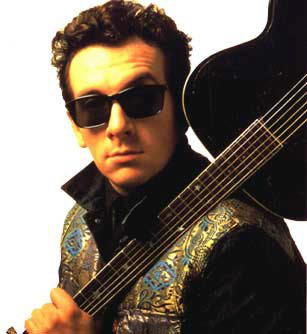
Music Review: Elvis Costello - Secret, Profane & Sugarcane

For those who haven't noticed, stripped-down, acoustically based music has made quite a comeback of late -- specifically that of the Appalachian variety.

And from John Mellencamp's Life Death Love And Freedom to Robert Plant & Alison Krauss' Grammy-sweeping smash Raising Sand, producer T-Bone Burnett has been right there at the center of most of it.

So it's little surprise then, that Elvis Costello recruited Burnett to produce his most recent attempt at what amounts to a stripped-down country record.

It's not Costello's first try at this either, nor is it his first time working with Burnett, who also produced his albums King Of America (which had many of the same elements found here) and Spike (which didn't). Costello's very first stab at making this type of album actually goes all the way back to 1981's Almost Blue, an album of covers by people like George Jones, which is mostly best left forgotten.

On Secret, Profane & Sugarcane, Costello fares much better, although casual EC fans should be forewarned. This isn't My Aim Is True, Armed Forces, or Imperial Bedroom. The truth is, this is probably a lot closer to being a cross between King Of America and (fortunately, to a lesser extent) Almost Blue. And yes, there is a bit of what I would call "filler" here.

Fortunately however, what's good here ("My All Time Doll," "Sulphur To Sugarcane") is so good that it's more than enough to erase the taste of the occasional (well okay, maybe not so occasional) artistic indulgence.

Mostly, Secret, Profane & Sugarcane is a bit of an acquired taste -- and will be even for some of those fans who've long since become accustomed to Costello's penchant for vanity projects. The only non-acoustic instrument even heard here is the occasional electric guitar flourish from Burnett -- and those flourishes are mostly very tasty I might add.

But for those willing to stick it out, Secret, Profane & Sugarcane is for the most part a record which proves ultimately satisfying.

Recorded over a three day period in -- where else? -- Nashville, the album was inspired in part by The Secret Songs, Costello's still to be completed work for the Royal Danish Opera about the life of Hans Christian Anderson.

Some of those songs show up here, although in arrangements far closer to the Tennessee backwoods than to any European Opera house. There are also songwriting collaborations with Loretta Lynn ("I Felt The Chill Before The Winter Came"), and with Emmylou Harris (she sings backup on "The Crooked Line").

However, once you get the past rather obvious bluegrass and country influences, this is still ultimately an Elvis Costello record -- which means that it comes down to the songs. And there are some really great ones here.

On "My All Time Doll," Costello proves he's lost none of his gift for sharp wordplay in lines like "you're my all time doll/you're all I adore/I'd swear to it now/but I already swore." Costello bites off lyrics like these with near the same playful spite as anything he's recorded with the Attractions, while the countrified backing manages to make it sound as funky as, well as funky as mandolins and such get I guess.

"Hidden Shame" takes on a near hoedown feel with it's dobros and fiddles, as Costello turns in another killer lyric in the chorus about a "Hidden shame, shame, shame" where he can't break away from "the torture and misery, must it be by secret for eternity."

Lyrically speaking anyway, Elvis is still king throughout Secret, Profane & Sugarcane.

"Sulphur To Sugarcane" is the real standout here though. Against a beat that is really more like a hillbilly shuffle set to a countrified backdrop of -- yep, you guessed it -- fiddles and dobros, Costello rattles off a hilarious series of lines about ravaging women in various U.S. cities. Sample lyrics include "the women in Poughkeepsie take their clothes off when they're tipsy, "Up in Syracuse, I was falsely accused, but I'm not here to hurt you, I'm here to steal your virtue," and my personal favorite, "in Worchester, Massachusetts, they just love my sauce."

When Elvis takes this show out on the road this summer, I can see that one being not only a crowd-pleaser, but depending upon the city and the venue, a sure-fire campfire sing-along song. This is just great stuff -- unless of course, you happen to be one of the unfortunate women in those cities.

I guess the closest thing I could compare this to is Springsteen's Seeger Sessions record. Once you get over the initial shock of the odd arrangements -- not to mention all those damn fiddles and what-not -- this is a very decent Elvis Costello album that occasionally -- if not quite as often as I'd like -- approaches greatness.

Secret, Profane & Sugarcane arrives in stores this Tuesday June 2nd.

Monday, May 25, 2009

Dimebag Darrell: Just An Axe And A Black Tooth Grin

Book Review:
Black Tooth Grin: The High Life, Good Times, and Tragic End of "Dimebag" Darrell Abbott by Zac Crain

During his short, spectacular life -- he was just 38 years old the night he was brutally murdered -- as a guitar god with the bands Pantera and Damageplan, "Dimebag" Darrell Abbott was a living, breathing, walking, talking, and yes often drinking -- heavy metal caricature.

His transformation from a scrawny guitar prodigy barely big enough to hold the instrument -- let alone play it as well as he did -- to take his place amongst the ranks of the rock stars he idolized as a kid growing up in Texas is the sort of stuff that rock and roll dreams are made of.

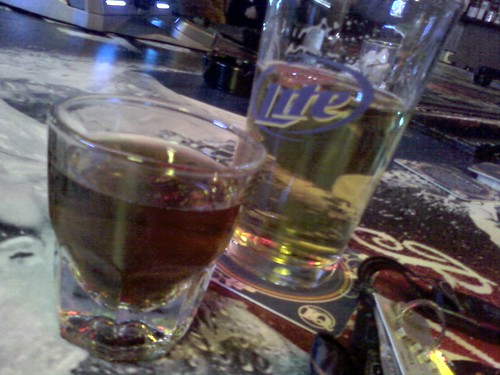
In Black Tooth Grin, which is named for the whiskey and coke concoction that was Abbott's preferred drink of choice (and which was never too far away from his lips), former Dallas Observer music editor Zac Crain recounts Abbott's rise to stardom in Pantera, up to his murder on December 8, 2004 while performing onstage with Damageplan in a Columbus, Ohio nightclub.

Crain neither dwells too heavily on the details of that tragic night, nor does this book really shed any new light on them. Still, his recounting of that event -- which some metal fans still call the "9/11 of heavy metal" -- as remembered by those who were actually there is chilling.

What becomes clear is that Abbott's murder, which took place 24 years to the day after the murder of John Lennon, was exactly what it appears to be -- a senseless act by an apparently deranged fan.

Despite the significance of the date, you won't find any conspiracy theories here, but rather just eerie, tragic coincidence. The stories about how Nathan Gale was heard to have said something to Abbott about how "you broke up Pantera" before brutally killing him are as meaningless now as they were on that horrific night.

Although Dimebag's murder and subsequent remembrances (including those by people Abbott worshiped like Eddie Van Halen) are given the amount of space they warrant here, the bulk of Black Tooth Grin chooses instead to focus on Abbott's life, which by all accounts was one which was lived to the fullest extent of rock and roll excess and debauchery.

Growing up as a rabid teenage fan of people like Van Halen and Kiss guitarist Ace Frehley in Arlington, Texas, once Dimebag made it himself, he vowed to live the rock and roll lifestyle to the fullest. Which meant the usual rock and roll excesses of partying, strippers, and trashing hotel rooms. And booze. Lots and lots of booze.

In one particularly funny story from early on in Pantera's career (that even comes with a picture), the band feels it's their sacred rock and roll duty to destroy one hotel room, but are too still too poor to risk having to pay for the damages. So they instead take pains to make sure the lampshades are crooked and all the pictures on the wall are knocked askew.

As the fame of his band rises though, so does Abbott's need to behave like a "real rocker" at all times. You rarely see him without his guitar or a drink in his hand. The Dimebag drinking stories were already the stuff of legend of course -- you literally couldn't meet this guy without spending hours or even days subsequently downing shot after shot with him.

But what also emerges here is a picture of Abbott as a genuinely nice guy, who never lost sight of things like family or of his inner sixteen year old rock fan. This is a guy who even after making it big himself, had Ace Frehley sign his chest and then had the signature made into a tattoo.

When Dimebag was asked to join bands early on, as he once was with Megadeth for example, it was also always a package deal that included his brother Vinnie on drums. As a person, Dimebag never really changed even after having hit the big time.

He lived at his Mom's house long after he had need to, and was known to pay off all of her credit card bills whenever he returned home to Texas after a tour. By all accounts, Dimebag always treated fans and other strangers the same as he did his friends -- especially when he had a few trays of shots in him.

Abbott's rise to fame with Pantera, from playing keg parties in Texas to headlining sold out arena tours and gracing the covers of guitar magazines is also recounted here in detail. As is the case with most rock and roll stories however, so is the band's fall -- a messy breakup fought out in the pages of the music press between the Abbott brothers and former vocalist Phil Anselmo.

The final section of the book finds the Abbott brothers back to square one -- touring the country in a bus and playing club dates with their new band Damageplan. The arenas were long gone, but Dimebag's outlook remained upbeat right up until that fateful night in Columbus. He was the ever gregarious King Dime right up until the end.

Zac Crain's biography is a fast and thoroughly entertaining read -- a definite page turner that I actually read through in a single sitting. For fans of Dimebag Darrell, Pantera, and heavy metal in general it's a must.

But even if you never banged your head in the moshpit to "I'm Broken," Dimebag's story, like a good, stiff drink, is one you wont want to put down.

Sunday, May 24, 2009

A Critical Look At Blaxploitation Films Through The Looking Glass

DVD Review:
Black Hollywood: Blaxploitation And Advancing An Independent Black Cinema

Originally released in 1984, Black Hollywood: Blaxploitation And Advancing An Independent Black Cinema is an often fascinating documentary focusing on the history of black filmmakers and actors attempting to break through the color barrier in Hollywood.

What makes this DVD so fascinating -- especially when viewed now through the time tunnel of the present day -- is just how far we have actually come, yet how very far we still have to go.

There is an eerily prophetic sense you get watching veteran actors like Jim Brown in the interviews here talk about the breakthroughs made by Micheal Jackson in music for example. In this segment, Brown proposes that the film industry should adopt a similar model as the record industry of that time -- where careers of musicians like Jackson were built from the ground up on black radio, and by black owned labels like Motown. As prophetic as Brown sounds here, he obviously could never have imagined the way that the internet would turn such models upside down just a few short years down the road.

Far more interesting is the way this documentary goes deep into the history of black cinema, and how pioneers from Dorothy Dandridge to Sidney Poitier to Richard Pryor paved the way for the (at least comparatively speaking) more color blind images of African-Americans we see portrayed in cinema today.

As a white man who has always enjoyed African-American culture -- both in movies, and especially in music -- I have to admit that this documentary opened my eyes up quite a bit. Interspersed between interviews with people like Brown, comedian Paul Mooney, actress Alfre Woodard, and a rare interview with Lorenzo Tucker (who, as Hollywood's first black leading man was fashioned as the "Black Valentino"), is a fascinating history of how blacks were portrayed in cinema through a series of historical film clips.

Watching scenes from movies like D.W. Griffith's Birth Of A Nation, and those featuring such stereotypical characters as Steppin' Fetchit for example, it's hard to reconcile such portrayals with the ultra liberal image many have of today's Hollywood. This is not just a history lesson, but an indictment of the institutionalized racism that existed in that so-called "enlightened" artistic community for so many years.

When Jim Brown talks about how he could never identify with a film like Gone With The Wind for example -- because the guy he saw on the screen wasn't Rhett Butler, but rather Big Jim -- you really start to get a sense of the struggle black actors and actresses had to endure. Many of the other interviews included here reveal how these same actors would accept such roles -- as prostitutes, lowlifes, junkies, and the like -- in the hopes of a break, or to simply put bread on the table.

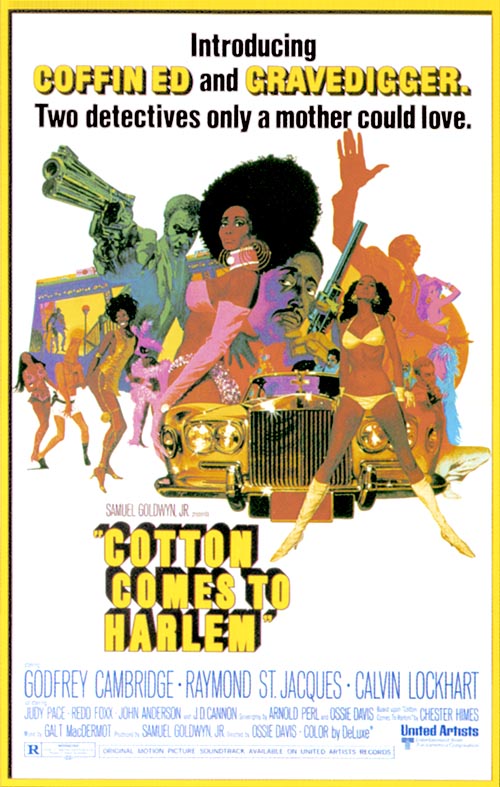
It's almost enough to make me feel guilty for enjoying movies like Shaft and Superfly in the seventies. Well, almost. I mean let's face it, those were some kick-ass films. And as far as sexy screen females go, give me Foxy Brown any day.

That aside, Black Hollywood: Blaxploitation And Advancing An Independent Black Cinema does an excellent job of putting all of this in its proper perspective -- albeit through the prism of 1984, as Grandmaster Flash's "The Message" reminds us continuously in the soundtrack. How could we have known where that song alone would have led way back then?

When Jim Brown talks about the possibilities of Jesse Jackson running for president in the eighties, you can see how far we have since come. And how far, we apparently still have to go.