Tuesday, October 13, 2009

Daltrey + Vedder = Killer

Concert Review: Roger Daltrey At The Showbox Sodo, Seattle, WA, 10/12/09


I wish I could say I had the setlist handy for the Seattle stop on Roger Daltrey's current Use It Or Lose It solo tour, but I don't.

Which is unfortunate, because this was truly a case of a great show sandwiched within the middle of an otherwise merely good one.

The Who's Roger Daltrey is currently on his first concert tour as a solo act since the mid-eighties. He has no present solo album to support, but is rather playing these dates reportedly to get the vocal pipes into working shape for an upcoming Who album and tour in 2010.

That being said, Daltrey's Seattle stop at the uncharacteristically club-like setting of the thousand seat Showbox Sodo — his second date on this tour, and his first in the U.S. proper (the tour kicked off the previous night in Vancouver B.C.) — was truly a tale of two completely different performers.

For the faithful 1000 or so concert-goers who turned out to see a rare performance from sixties/seventies rock-royalty performing within the intimate club confines of Seattle's Showbox Sodo (Daltrey himself remarked at one point how he wasn't used to playing something other than an arena), there were really only two questions:

How much vintage Who material would Daltrey do, and was his voice in anything resembling working shape?

The former question was answered fairly quickly as Daltrey — backed by a capable band which included Pete Townshend's younger brother Simon — opened with a semi-acoustic version of "Who Are You?," which soon gave way to a slightly less familiar, but nonetheless welcome rendering of the more obscure Who single "Pictures Of Lily."

For the Who fans in attendance, seeing an icon like Daltrey performing such arena-rock standards in this setting had to represent something close to nirvana. Daltrey, for his part, also sounded great here.

Unfortunately, the latter part of this question was likewise answered midway through the set when Daltrey led the band through one of the Who's earliest singles, "I Can See For Miles." Daltrey's voice was strong here, but the song was also played in a much lower key than the more familiar original version, and by this time, it was all but obvious there would be none of Daltrey's signature screams forthcoming on this night.

A side trip into Daltrey's solo material from the seventies and eighties served mainly as an excuse for a much needed trip to the bathroom, or for a trip to the bar, or outside for a smoke.

From there, Daltrey's stories of how songwriter Leo Sayer provided many of the songs for solo releases like Ride A Rock Horse were certainly informative enough — but for those of us who were actually around back then, we remember Sayer mainly as the guy who wore clown makeup on one album cover, and had a few Bee Gees-era disco hits like "You Make Me Feel Like Dancing."

In other words, stuff we are better not reminded of.

But then, something great happened.

Daltrey's band began the chords to the Pearl Jam hit "Better Man," and sure enough, there was PJ's Eddie Vedder out there on stage with Roger. The two of them sounded great together, continuing on through a great version of "The Real Me" from Quadrophenia.

From this point on, Daltrey seemed to get a bit more of a fire under his belly as he powered the band through inspired versions of "Baba O'Reilly," and especially a very sweet sounding coda of the Live At Leeds staples "Young Man Blues" and "Shakin' All Over."

Now, this was what we came for.

Daltrey then brought Vedder back out onstage and said, "if I can't hit the high notes here, I've brought someone who maybe can." On a killer version of "Bargain," Vedder did exactly that, and then some.

By this point, Roger Daltrey's Seattle concert was transformed from a rather routine appearance of rock royalty going through the motions in a small venue, into something truly special. I can't imagine anyone leaving the Showbox Sodo feeling like they had seen anything less than real greatness.

Obviously, Daltrey won't be bringing Eddie Vedder along for the entire tour. It's also fairly obvious that on this very early end of the tour, the kinks in the set are still being worked out.

But for all you Who fans out there, I wouldn't miss this. Daltrey may not be able to quite hit the screams that he used to, but his voice is still surprisingly strong.

What I can say for sure, judging by this show, is that Roger Daltrey is nowhere near ready to be put out to pasture just yet. On this night, with help from Eddie Vedder, he turned a potentially good show into a great one.

Sunday, October 11, 2009

For Marillion, Less Is More Indeed

Music Review: Marillion - Less Is More

Less Is More, the 16th studio album from British progressive rock veterans Marillion may just go down as my favorite album from the band since their acknowledged masterpiece, 2004's Marbles — although not for the reasons you might expect.

As its title indicates, Less Is More is a stripped down effort — call it Marillion's Unplugged — in which the band take eleven songs from their back catalog, and basically perform them in mostly acoustic arrangements. But here is where I have a confession to make.

There is a huge, twenty something year long gap in my knowledge of this band. I was a big fan of Marillion's first incarnation with original lead vocalist Fish back in the eighties as a sort of baby Peter Gabriel-era Genesis. But then — like so many American fans — I lost track of them, up until about three years ago.

So as far as the remade songs on Less Is More go — which I assume have to come mostly from their pre-Marbles albums — I really have no point of reference to compare this music with. For me, these are essentially brand new songs. The thing is, I really like what I'm hearing here.

The most notable thing about Less Is More is Steve Hogarth's voice. Stripped of the full-on electric arrangements of Marillion's usual sound, it quickly becomes apparent just how crucial of an instrument Hogarth's voice is to Marillion.

On songs like "If My Heart Were A Ball," Hogarth's vocal sounds like part scream and part aching plea, and is the one thing separating this song from what otherwise sounds like a slower take on the Doors "Break On Through (To The Other Side)." Not that this is a bad thing...

For the most part, the mood of this album is very quiet, and to my ears at least, very late night.

Songs like "Wrapped Up In Time" and especially "The Space" provoke the sort of color and shade you might hear in a smoky jazz lounge around closing time. At least until Steve Rothery's guitar and Mark Kelly's keyboards kick in. On the former, Rothery's guitar adds just the right amount of flourish, while on the latter it is Kelly's haunting piano that does the trick.

On "Interior Lulu," the band probably come closest to the proggy sound of their other recordings, but even here the mood is a decidedly late night and laid back one. Set against an oriental sounding backdrop of strings and percussion instruments I couldn't identify if you paid me, Hogarth's dramatic, off-color falsetto vocal gives the song all the lift-off it needs.

Less Is More is a bit of a departure for these guys, but it is also a destination I wouldn't be at all disappointed to see them visit more often. At the very least, it's great to see a band like Marillion continuing to musically stretch itself this far into their careers.

Less Is More indeed.

Wednesday, October 7, 2009

Will Blog For Promos: Making Sense Of The New Blogola

Whether you are a person who frequents blog sites on the internet, you own a personal blog, or you even write articles on websites like this one, you've probably heard about the FTC's intention to more closely regulate such things by now.

Established in 1914 by the Federal Trade Commission Act to promote consumer protection and combat anti-competitive practices, the Federal Trade Commission is the government agency charged with making sure all is fair in love and trade as relates to the American consumer.

More recently however, the FTC has represented three letters striking fear into the hearts and minds of bloggers everywhere, as the agency has begun to take steps towards regulating the wild, wild west world of the blogosphere.

Specifically, as of December 2009, the FTC will begin requiring full disclosure of any payments made to bloggers in exchange for product endorsements.

Such payments would include not only monetary compensation, but also the products bloggers often receive for review purposes — which in theory could mean anything from cars, trips, and the like, to the CDs, DVDs, and books thousands of bloggers routinely write about every day at sites such as Blogcritics Magazine.

So what does this mean for people who review music CDs and such on the internet? Perhaps a brief history lesson will help put this into the proper perspective.

Promotional albums — or "promos" in the industry vernacular — have in fact been part of the way business is done by the music industry for a very long time now. In addition to the thousands of writers and bloggers who receive them for review purposes, they are routinely sent out to radio programmers and DJs as well as what is left of the music retail community.

They are not only used to help determine which new releases get written about, but also what gets played on the radio, and what gets pushed in record shops through things like instore play.

They have also from time to time been used as an accepted form of currency in the record business, which has produced its own fair share of scandals over the years.

Although I wasn't actually around to witness it first hand at the time, I am old enough to remember the original payola scandals of the fifties and sixties as a student of music history.

The "pay for play" scheme was a big enough deal back then to prompt congressional investigations, and bring down a number of key figures, including no less than Alan Freed, the radio pioneer generally credited with coining the term rock and roll. Some of the scarier stories from this period also included rumors of organized crime types shaking down radio programmers who refused to play along.

By the time I was actually working within the record industry myself (in the eighties and nineties), the practice of payola had been supposedly cleaned up. In truth, it actually just shifted itself around a bit. This is where the idea of promos as an acceptable form of currency largely came into play.

On the surface, promo albums as a movable form of something with an actual tangible monetary value are essentially worthless because they are clearly marked as such. In the days of vinyl albums, they were marked with big white labels stating they were not for sale and were intended solely for promotional use, and the jackets also usually had some sort of hole punched in them.

These days, promo CDs go a step further through things like the practice of watermarking, and even more detailed labels stating that the recipient agrees to return the item to the sender — meaning the record label or PR firm — at any time upon request.

Still, this has not entirely stopped the underground promo trade, as any routine visit to sites like ebay will demonstrate. Back in the nineties, it was also not at all uncommon to see new releases being sold at used record shops a few days before the street date.

I have very specific memories of going to such shops when I lived and worked in the record business in L.A. back in the nineties. If you knew where to go back then, you could easily pick up something like the new Snoop Dogg release (to cite a specific memory) on the Thursday before it came out — because promo copies usually were sent out on that day. In the case of the aforementioned Snoop Dogg release, I can actually remember running into a low-level record executive I knew at the time unloading the cargo at one such shop.

What was even more common than underpaid industry types pocketing a few extra bucks by selling promos however, was the use of free-goods or "cleans."

Back in those days (before the creation of the industry reporting system system Soundscan), chart positions were reported to trade publications like Billboard using an honor system. The trades would call selected music retailers and ask them to report their sales figures for the week, which in turn would help determine chart positions as they appeared in the following week's magazine.

Since chart position — in theory anyway — influences both radio airplay and record sales, the practice of sending out unmarked "clean" product to retailers to put on sale (usually at a ridiculously low price) soon became a fairly common one. The idea here was that putting these items on sale would help influence chart position and thus, boost sales and airplay.

Although the practice began with independent labels and promoters, before long most, if not all of the majors, were also willing to play along. For the music retailers who reported sales figures, this was a "win-win" situation as it boosted their low profit margins, and in a few cases also provided underpaid employees a source of extra income.

In a rare case of the record industry policing itself, the practice of using "cleans" as a form of usable currency was halted (or at least, drastically curtailed) by the introduction of the Soundscan reporting system in the early nineties.

This system of scanning actual record sales was universally adopted by both the trades and music retailers, and the old school way of relying on word-of-mouth sales reporting was eliminated virtually overnight. Although some retailers probably found ways around the new way of reporting sales by actual scans, chart positions were now made largely far more accurate, and reflective of the actual marketplace. In doing so, another congressional payola investigation of the record industry was most likely averted.

The most immediate effect of all this back then, was how it changed the complexion of the record charts themselves. Country and hip-hop — both of which were always under-reported genres anyway — went overnight from being the industry's best kept secrets, to coming out of the closet as being the big-sellers they in fact had always been. In that respect, you could probably call Garth Brooks the first superstar who was essentially made by Soundscan.

So how does all of this relate to the present FTC ruling? In all honesty, outside of providing a history lesson, it probably doesn't. There is a big difference between what are traditionally referred to as promos, and the clean copies which were once used to manipulate chart positions and sales figures.

In today's world, a CD used for promotional purposes has been rendered virtually useless in terms of it having any monetary value. The CDs are in most cases clearly stamped with things like "not for sale" and "must be returned upon demand" which gives them a value of exactly nil. In other words, there is no widespread "blogola" here to speak of.

The practice of watermarking on many of these items also makes them something undesirable for most music fans to want to actually add to their collections. When you factor in the fact that many music companies are now delivering their promotional music to writers and bloggers through digital means, their value as a tangible, sellable item is likewise reduced.

That a collectors market for rare, promotional material continues to exist and probably always will, is however an undeniable fact. Any routine ebay search for something like "Beatles remasters" for example proves this to be true

Still, my best guess is that the intent of the FTC is more targeted towards those who still receive big-ticket items like cars, trips, and flat-screen high-definition TVs, than it is towards the lowly minions who blog about the CDs they receive on sites like this one. Even in this case, my understanding of the new FTC regulatory practices is that they are intended mainly to go after the big companies sending out the goods, rather than the bloggers who write about them.

Although there are exceptions, bloggers are for the most part unemployed or underpaid folks who do what they do largely for the love of doing it.

Speaking of which, if anyone out there reading this would like to employ my own services, I'm currently in the market seeking opportunities. My new sign reads "Will Blog For Money."

Sunday, October 4, 2009

Christmas Comes A Day Early For Seattle Dylan Fans

Concert Review: Bob Dylan And His Band At The Moore Theatre, Seattle WA, 10/04/09


Bob Dylan's fall American tour doesn't officially get underway until this Monday at Seattle's WAMU Theatre. But for a few Seattle fans lucky enough to get tickets, Christmas came a day early as Dylan and his band performed an intimate warm-up show at the 1300 seat Moore Theatre on Sunday night, October 4.

As someone who has seen Dylan live numerous times over the years, I can tell you from experience that his shows can be hit or miss affairs — sometimes wildly so.

The last time I saw him play with his current band for example — back in 2006 at Seattle's much larger Key Arena — the show felt rushed, and Dylan only played one song, "Thunder On The Mountain," from his then current (and still brilliant) album Modern Times.

Tonight however was a completely different story. Playing in the much more intimate confines of the Moore Theatre, Dylan was about as loose as I think I've ever seen him. Rather than stay behind his keyboard as he has on recent tours, Dylan prowled the stage, singing several songs without playing any accompanying instrument other than his mic.

He was also uncharacteristically animated, waving his arms about as he sang, and giving cues to the rest of the band by pointing his fingers at them. Dressed from head to toe in black, this was a much showier Dylan than you'd normally expect. On several songs, he also played his signature harmonica, which made for a nice touch on songs like "Shooting Star," "Ballad Of A Thin Man," and "Not Dark Yet."

Speaking of the band, they sounded simply amazing playing in such an acoustically perfect theater as the Moore. Returning lead guitarist Charlie Sexton in particular was a house of fire — he literally tore the joint down on rockers like "Highway 61 Revisited" and "Thunder On The Mountain."

Bassist Tony Garnier and drummer George Recile made for a rock solid rhythm section, although Garnier seemed to be having some sound problems during the early going (which were eventually ironed out). Rounding out Dylan's band were second guitarist Stu Kimball and multi-instrumentalist Donnie Herron (banjo, electric mandolin, pedal steel, lap steel, trumpet).

Dylan himself was in great form, reinventing his songs as he so often does in his concerts, but this time doing so more through his vocal inflections than with the actual arrangements.

On a stunning version of "Nettie Moore" from the Modern Times album for example, Dylan's voice went from a deep low register to a high pitched wail. He bit off the lyrics with rapid fire delivery, sometimes going from single to double phrases within a single line. The way Dylan emphasized the word "black" in particular -- from the line "the world has gone BLACK before my eyes" -- gave this song a much darker feel than the recorded version. If there are any bootlegs out there of this, I would love to get my hands on one. It was a standout even on a night where there were so many of them.

Even such Dylan standards as "Ballad Of A Thin Man" and the warhorse that is "Like A Rolling Stone" took on new urgency as Dylan's phrasing breathed new fire into them. When Dylan sang the familiar line "something is happening here, but you don't know what it is, do you, Mr. Jones" he once again double-phrased the lyrics, giving the song even more of an angry feel than the original. Anyone who says Dylan is a lousy singer, obviously knows very little about vocal phrasing — an art Dylan has mastered like very few singers around, outside of maybe the likes of Sinatra himself.

Dylan also did something he hasn't done in awhile on this night — he picked up the guitar for a few songs. Although you could see he was clearly struggling with it somewhat (Dylan rarely plays guitar live anymore, reportedly due to an arthitis condition), he sounded just fine trading licks with Sexton on "Don't Think Twice, Its Alright" and "High Water (For Charley Patton)."

Other highlights included a letter perfect "Beyond Here Lies Nothin'" from this year's Together Through Life album, and a fierce sounding "Gonna Change My Way Of Thinking," a song from Dylan's Born-again period which made for a very surprising choice to open the show.

Dylan and his band played a solid two hours — which is a little long by his usual standards, and seemed to have a great time for the duration. Dylan even smiled a few times.

Here is the complete setlist courtesy of Boblinks.com:

1. Gonna Change My Way Of Thinking
2. Shooting Star
3. Beyond Here Lies Nothin'
4. Don't Think Twice, It's All Right (Bob on guitar)
5. Lonesome Day Blues
6. I Don't Believe You (She Acts Like We Never Have Met)
7. Tweedle Dee & Tweedle Dum
8. Not Dark Yet
9. High Water (For Charley Patton) (Bob on guitar)
10. When The Deal Goes Down
11. Highway 61 Revisited
12. Nettie Moore
13. Thunder On The Mountain
14. Ballad Of A Thin Man

Encore:
15. Like A Rolling Stone
16. Jolene

Anvil: The Cautionary Story Of The Real Life Spinal Tap

Music DVD Review:
Anvil: The Story of Anvil

If ever there was a story that needs to be told about how the music industry eats its own, The Story of Anvil is that story. As funny as much of this film is, it is also in many ways a cautionary tale.

In its limited theatrical release, this story of the real life Spinal Tap got considerable attention, and to be flat-out honest, that is exactly what initially drew me to it.

The joke factor here was obvious. Anvil: The Story of Anvil is the story of an eighties hair-metal band — complete with every possible stereotype you could ever imagine — who had their brief moment in the sun, sharing concert bills with the likes of Bon Jovi and the Scorpions, before slipping into obscurity.

And honestly, I've never particularly cared for the brand of hair-metal that bands like Anvil play. But the thing is, watching a film like this one gives you an entirely different perspective on the inner-workings of how the music business actually works, and how quickly they discard their own like yesterday's rubbish.

I signed up to watch this expecting to get a good laugh with lots of music-biz insider jokes — which I got. What I didn't expect, though, was to instead find myself inexplicably not only reaching for my hankie, but ultimately actually rooting for these guys.

Anvil: The Story of Anvil is an undeniable hoot in many ways, but it is also one of the saddest real-life rock-docs I have ever seen. It begins with Anvil's brief moment of glory headlining some sort of eighties Monsters Of Rock type deal with bands like Whitesnake, and then abruptly shifts to the present-day reality of a band whose members work day jobs in factories, and play gigs before maybe 100 people.

The opening credits say it all. Anvil is shown at a mega-concert with bands such as The Scorpions and the like, who all went on to sell millions of records — while one did not. Guess who that was?

Rock stars like Metallica's Lars Ulrich and Guns N' Roses' Slash offer up all their due accolades and respect. But in the end it all feels tragically empty, and you find yourself asking, "So where are these guys now?"

The thing is, even though these guys — especially the main players in Anvil, Robb Reiner (now there's a Spinal Tap connection if ever there was one), and Steve "Lips" Kudlow — may be down, they are never out.

http://cribbster.files.wordpress.com/2009/09/anvil-the-story-of-anvil.jpg

Anvil: The Story of Anvil tells both the story of the enduring friendship of these two principal players, as well as their unwavering dedication to the idea that they still have a shot at the big prize of rock stardom. You see them with their families. You see them playing shitholes in Europe, being hopelessly mismanaged, getting dissed by their rock heroes, nearly coming to fisticuffs, and yet ultimately still refusing to give up their dreams.

And in the end, for all of their misguided dedication to a rock era which has clearly passed them by some twenty years or so — you find yourself rooting for them. I know I sure as hell did.

More than anything, Anvil: The Story of Anvil is a story which reveals how morally bankrupt the music industry actually is — and how they throw away yesterday's hitmakers as though they were trash. Watching that part of this film really sucks, actually.

I went into this DVD expecting to get a good laugh, and instead found myself choking back tears. And although this film has brought Anvil more attention then they have received in decades — they've been on Kimmel, VH1 and the like — I am equally sure that by this time next month they'll be back working their day jobs. That's just the way that this business works.

And it couldn't happen to a bunch of nicer, hard working guys. To any would-be rock stars with bright lights in their eyes, I cannot recommend watching this DVD highly enough. There is some hard reality here. Yes, you'll get some laughs, but you might also learn something.

Anvil: The Story of Anvil comes out this Tuesday, October 6.

Saturday, October 3, 2009

Wanna Whole Lotta' Zeppelin? Here's Your Stairway To Heaven...

Book Review: Led Zeppelin: Shadows Taller Than Our Souls by Charles R. Cross

Wow! As rock books go, they simply don't get much more complete than this. The fact that the subject of Charles R. Cross' Shadows Taller Than Our Souls is Led Zeppelin — who arguably stand only just behind the Beatles as the biggest rock band of all time — only strengthens the appeal of this book.

If you think that everything that could possibly be written about Led Zeppelin has already been committed to paper, you are for the most part absolutely correct. What sets this book apart from the rest, is the treasure trove of extras and bonus goodies you'll find thumbing your way through its pages. For Led Zeppelin fanatics, this is not just a must-own — it is in many ways a holy grail of sorts.

Shadows Taller Than Our Souls — its title is taken from one of the lyrics to "Stairway To Heaven" — is the Led Zeppelin fan's ultimate coffee table book. Housed in a beautiful hardbound slipcase, every page of this lovingly assembled book reveals a new surprise.

There are pages that fold out to reveal never before released photographs of the band, as well as things like reproduced ticket stubs and press releases nicely tucked in between nearly every page.

You get things like the original cover of the Atlantic Records promo E.P. for Led Zep's first album, an invite to Zep's first appearance at the 1969 Seattle Pop Festival, and the ticket stubs from Zeppelin concerts in the seventies (priced at the then outrageous price of $12.50 a ticket).

Towards the end of the book, there is even an original pull-out of the press release announcing Led Zeppelin's breakup following the death of drummer John Bonham. There is also an audio CD of a rare Jimmy Page interview with Trouser Press journalist Dave Schulps.

For his own part, Charles R. Cross focuses in on the music, rather than the sort of sordid sex and drugs and rock and roll details of previous Zeppelin bios — most notably Stephen Davis' Hammer Of The Gods. A wise move considering the fact that Zep's reputation for road excess has pretty much been covered to death in previous tomes.

Instead, the Seattle based music journalist, and New York Times best -selling author (Heavier Than Heaven: The Biography Of Kurt Cobain), takes the reader through an album by album, concert by concert retelling of the musical evolution of Led Zeppelin.

In Shadows Taller Than Our Souls, Cross takes you from how Led Zeppelin rose from Jimmy Page's original vision of a "very loud band" that would emphasize shades of both dark and light — did you know for instance that Joan Baez was one of their earliest influences? — to become the biggest band in the world.

In his very easy to read narrative — I read through it in a single sitting — Cross takes you into the recording studio during the creation of Zep's landmark debut album, through "Stairway To Heaven," Physical Graffiti and all of the rest, right on up through the band's final days and such post-mortem releases as Coda.

Cross also recalls Zeppelin's greatest concerts, as well as their biggest disappointments (those early Rolling Stone reviews), through the eyes of both of the seasoned critic that he is, as well as with the enthusiasm of an obvious fan. The excesses and the controversies are likewise documented, but the emphasis is always on the music — as it should be.

For Led Zeppelin fans, Charles R. Cross' Shadows Taller Than Our Souls is a must. Wanna' Whole Lotta Zeppelin? Here's your Stairway To Heaven.

Charles R. Cross' Led Zeppelin: Shadows Taller Than Our Souls arrives in bookstores this Tuesday October 6, which should make for many a merry metal ho-ho-ho come Christmas time.

Thursday, October 1, 2009

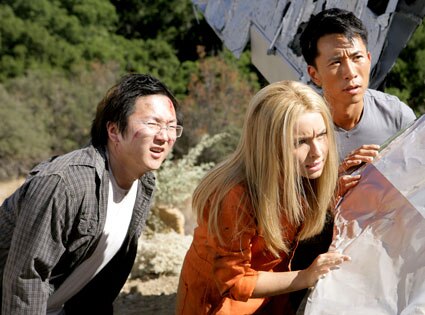
How To Save NBC's Heroes

So the new fall TV season is upon us. Well, sort of anyway. Much of the really good stuff that a lot of us tube-tubbies have been waiting for — can you say Lost anyone? — is actually still weeks, if not months away.

In the meantime, the new shows offered up by the networks so far seem to be a pretty mixed bag. ABC's Flash Forward is probably the most promising of a lot that otherwise includes Courtney Cox's Cougar, a new batch of witches from Eastwick, and the jacked-up, joy-riding EMT's of NBC's Trauma (warning: look before you open a car door anywhere in their immediate vicinity).

And then there is Heroes.

Few shows in recent memory have fallen so far, and so fast as this once promising series from NBC and producer Tim Kring.

The first season was pretty much a knockout (save for a less than satisfying ending). In each of the subsequent seasons however, Heroes has played itself out in such a way as to suggest that the writers never expected to make it past season one, and that once they did so, had no idea of what to do next or how to otherwise move forward.


If there has ever been a television series where it seemed the writers and producers were making things up on the fly as they go, Heroes is it.
Characters dying and coming back to life are such a regular occurrence on Heroes that the sort of shock value that television deaths are intended to produce has been pretty much stripped clean away.

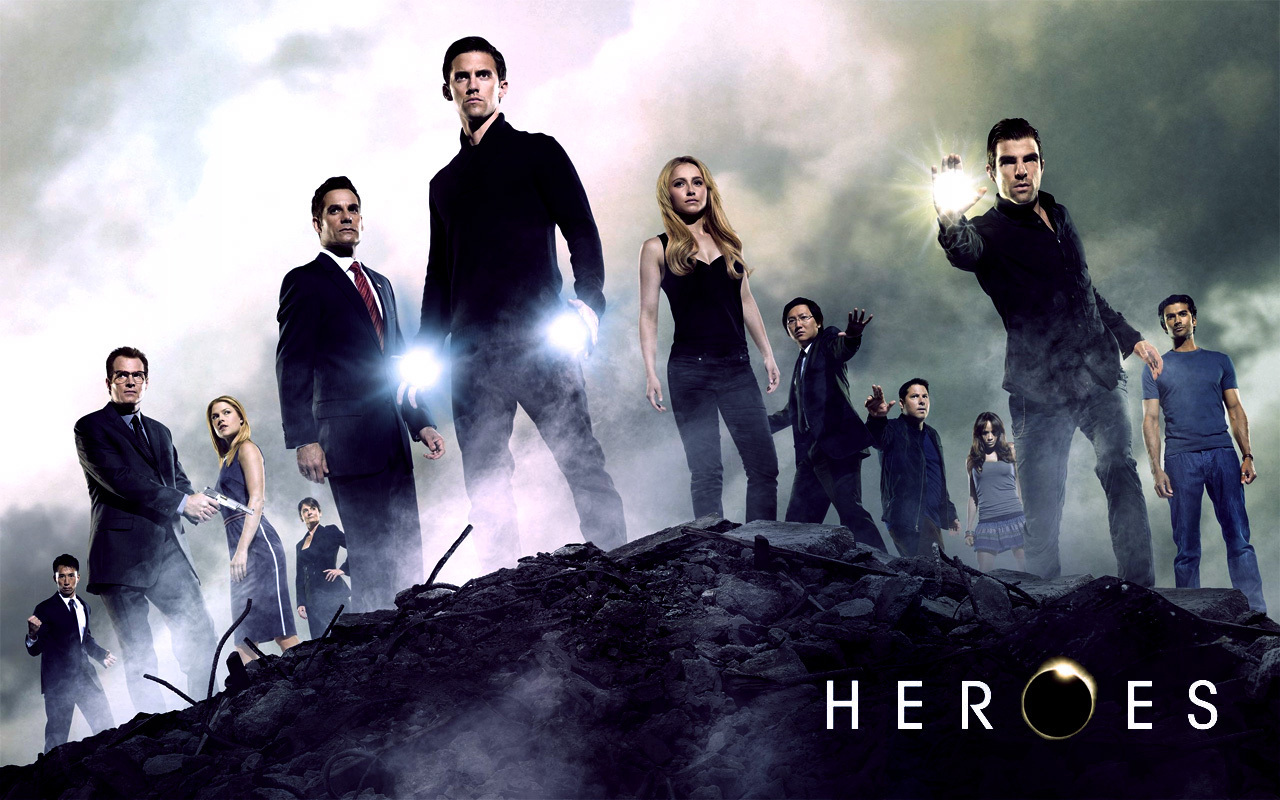
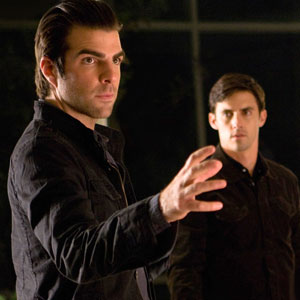
Once strong characters like the deliciously evil Sylar (the still superb Zachary Quinto) and shadowy government spook Noah "HRG" Bennett (Jack Coleman) have had their "good guy/bad guy" roles flipped so many times, you'd think this was the WWE's Monday Night Raw. Of the other characters, Ali Larter's Tracy Strauss replaced an earlier character she played when the writers apparently couldn't figure out how to advance her original storyline.

In short, after the promising start of Season One, Heroes has pretty much been a complete mess, and by most accounts, this season will be a make or break one. So the question is, two episodes into this new season, just how super are these Heroes really looking?

And the answer is — they look surprisingly good. But there are also a few lingering reservations.

The parts of the Heroes story left over from last season — such as the dead/alive Sylar character who inhabits both the mind of detective Matt Parkman (Greg Grunberg) and the body of politician Nathan Petrelli (Adrian Pasdar) — are still a frustrating and unmitigating clusterfuck. Resolve this, or drop it already.


Ditto for the daddy-dearest babyface they inexplicably want to hang on HRG's glasses. I mean, screw all this "Claire Bear" crap, and let's see more of HRG as the sort of G. Gordon Liddy black-ops plotting government shithead we all came to know and hate in Season One.

Where these storylines go is anyone's guess, and quite frankly the sooner they are either resolved or blown to all kryptonite kingdom-come the better.

Why? Because, the new storylines are soooo much more promising. For one thing, if you need a shot of good old fashioned pure strangeness, there is nothing quite like a carnival troupe to up the creep factor.

Make it a time-traveling band of carnies with gifts like being able to alter the properties of ink in such a way as to produce tattoos that predict the future, and you've hit pay dirt, baby! Even HBO's sorely missed Carnavale couldn't muster that trick. Heroes also scored a nice coup in getting Robert Knepper to play chief carnie creep Samuel — a role he plays with all of the juicy relish, mixed in with just enough ambiguity, that such a truly evil character requires.


Another promising new development is the introduction of the newest hero Emma (Deanne Bray), a deaf woman who "sees" sound. Her scenes with a cello in this past week's "Ink" episode were among the most interesting to come out of this series in awhile. A promising new storyline with potential love interest Peter Petrelli (Milo Ventimiglia) — one of the Heroes who is in the most need of exactly that — could be just the sort of jumpstart this franchise so sorely needs.

So in the meantime, what do we about the rest of these Heroes?

Characters like Mohinder Suresh, the female Flash (check your DC comic books for reference), and the girl who cries the black tears of death appear to be gone forever and should probably stay that way. I also wouldn't be too heartbroken if the cheerleader we were all supposed to save in Season One went away for good (so Daddy Horn-Rims can get back to his dastardly cloak and dagger ways as a government spook).

Take Ali Larter's Tracy character with them while you're at it. I mean I like the eye-candy as much as the next horny old man, but her current character is only marginally more interesting than the one she used to play on the series. You know, the one they shit-canned.

Although the team of Hiro (Masa Oka) and Ando (James Kyson Lee) were once the heart and soul of this series, they have likewise outlived their usefulness. Still, they should probably be kept around to provide comedic relief and the occasional handkerchief moment. Ditto for Angela Petrelli (Cristine Rose), but only as long as there is a significant re-upping of her once so delightfully repugnant bitch factor. Maybe more plotting between her and HRG...yeah, that's the ticket.

Beyond that, the new storylines on Heroes look very promising, and for now at least, will have me waiting in anticipation each week to see what happens next. We'll just have to wait, watch, and see if anything interesting actually does.

I'll be rooting for them. Let's hope they don't blow it.