Monday, November 2, 2009

An Unexpected And Surprising New Album From An Old Friend

Music Review: Al Stewart - Uncorked (Live With Dave Nachmanoff)

Al Stewart's first all-acoustic live recording since 1992's Rhymes In Rooms is a little like reconnecting with an old friend.

Although not entirely unexpected, it's still a welcome reminder of just how fine a talent the one-time "Year Of The Cat" hitmaker really is. Especially when left alone in a room to do his thing unadorned by the strings and over-production of some of those records made back when Stewart filled arenas, rather than the smaller, folkier venues where he was recorded here.

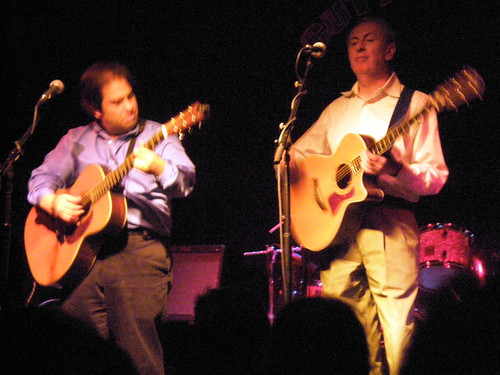
On Uncorked, Stewart and his musical counterpart Dave Nachmanoff are simply two guys with their acoustic guitars — but together they create a surprisingly big noise. The smaller arrangements sound every bit as rich and full here, in a small setting, as on their studio counterparts, thanks to both a marvelously clear and crisp recording, and even more to just how well the two jell together as guitarists.

And that is really the most delightful surprise here. Although Stewart is known primarily for his songwriting talents, this is as much of a showcase for the guitar as it is for the rich wordplay of his songs. The main disappointment is that once Stewart and Nachmanoff really get going, it's not often clear just who is playing which part because they blend so well together.

"Last Days of The Century," for example, is at first propelled by what I presume to be Nachmanoff playing the bass part, with Stewart (again presumably) playing lead. Before long though, the two of them are ferociously trading solos in a blinding blur with all the deftness of Beck and Page in the Yardbirds, causing the audience to break into spontaneous applause at various points.

On "News from Spain," Nachmanoff plays Rick Wakeman's piano solo from the studio version — an "unenviable task" Stewart jokes — on guitar, and totally nails it.

But lest we forget his songwriting talents, this album also provides a worthy reminder that Al Stewart is one of music's more literate historical storytellers. Song titles from his catalog like "Palace of Versailles" and "Old Admirals" only hint at the rich escape lying within.

At their best, Stewart's songs are like rich tapestries originating from such places as 16th Century European battlefields ("Coldest Winter"). The stories are mostly told in the first person, and in such ways as to actually transport you there. Stewart's voice has also never sounded better.

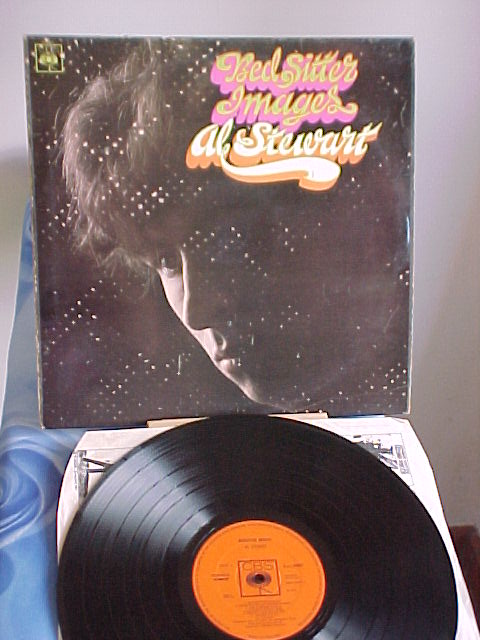
Many of the songs here will be unfamiliar to more casual fans — an intentional decision by the artists, so there would be no overlap between this and the previous live album. So there's no "Year Of The Cat," "Nostradamus," or "Roads To Moscow". However, for the more devoted fans, Stewart does dig deep enough into the well to pull out chestnuts like "Bedsitter Images" and "Carol."

Whether you are already a fan, or you just love great songs, rich storytelling, and some unexpectedly wicked guitar playing, Uncorked is a wonderful new album from an old friend.

Saturday, October 31, 2009

Giving Up The Ghost: A Guide To Basic Cable's Paranormal TV Shows

Is it just me, or has basic cable been completely taken over by ghosts lately? No, I don't mean those fuzzy double images that show up during a rainstorm for those of you with rabbit ears or satellite.

I'm talking about the real thing here, as in things that go bump in the night. Disembodied spirits. The undead. You know, ghosts...

I'm not sure exactly where the trend of all these geeks running around with thermal cameras and electro-magnetic field measuring devices started, but lately it seems you can't turn on the TV without seeing a bunch of guys sitting in a dark room someplace — usually captured in glorious black and white — checking out such paranormal activity as shadows, creaking floors and headlights outside in the driveway.

Okay, I'll admit I'm not being completely fair here.

Some of what you see and hear on these shows is mildly interesting, and occasionally even somewhat compelling. More often however, you see these "investigators" jumping out of their skins and screaming "paranormal" pretty much whenever their equipment picks up a fly on the window.

The bottom line is reality TV is out, and unreality TV is in. These shows are freaking everywhere these days — it doesn't even have to be Halloween.

But the grandaddy of the bunch has to be the Ghost Hunters franchise on the SyFy channel. Before these guys spawned this lucrative enterprise, head honchos Jason and Grant were a couple of schmoes working for Roto Rooter. These days, the SyFy channel has become home to an empire that in addition to the original Ghost Hunters show, now includes Ghost Hunters International and the soon-to-be-launched Ghost Hunters Academy.

For my money though, Ghost Hunters also rides head and shoulders above the rest of this increasingly crowded paranormal pack on basic cable. As head investigators of T.A.P.S. (The Atlantic Paranormal Society), Jason and Grant largely approach their investigations both scientifically and with an open and even semi-skeptical mind. I like that.

These guys basically know their stuff, and using their nuts and bolts knowledge of things like pipes and drains gained through working their day jobs at Roto Rooter, they are actually able to quickly debunk a lot of the creaking floors and such they encounter while investigating alleged haunted houses.

The other thing that impresses me about these guys is the way their team of investigators painstakingly go through hours of everything their assorted video and audio gadgetry catches on these investigations. If it were me, I'd be bored stiff. So if nothing else, sifting through all of this "evidence" the way these guys do demonstrates both a dedication and a seriousness towards what they do that I have to yet to see from any of the other para-wannabes that have followed in their wake.

Occasionally they catch some pretty wild shit too, such as EVPs (Electronic Voice Phenomena) of voices that aren't supposed to be there, and video of things going beyond the dust in the air so often misindentified as "orbs" by some of the other shows out there. It also doesn't hurt that one of the Ghost Hunters is a pretty hot chick named Kris Williams. That girl can haunt my house anytime.

As always with anything on the tube, success breeds imitation, and the ratings of Ghost Hunters has spawned a whole slew of imitators and paranormal pretenders — some of them are good, some not so much, but none are as good as the original.

The Biography Channel practically turns into a paranormal channel of its own on Saturday nights, running a slate of shows including Ghost Stories, A Haunting, Psychic Investigators, and the inevitable latest entry into the paranormal sweepstakes, Celebrity Ghost Stories.

None of these are particularly compelling — unless your idea of goosebumps involves people like Sammy Hagar and Tom Arnold sitting in a darkened room and talking about the things they thought were under the bed as children.

A&E's Paranormal State is a bit more likable, and easily the best of the lot.

It revolves around a painfully earnest Penn State student named Ryan who investigates hauntings and the like in an effort to make sense of what seems to be some rather fucked up things he experienced as a child. His team includes a spacey chick named Elfie, a Russian guy named Sergey, and a revolving door of various psychics and professional exorcists who mix traditional religion and the occult to root out spirits during something they call "dead time."

Pretty spooky stuff, kiddies.

Over at the Travel Channel, they mix historical travelogues like Haunted History, with yet another team of would-be paranormal investiagtors on their Ghost Adventurers. I'd probably like this show more if the main protagonists acted more like the pros on Ghost Hunters, and less like macho assholes when confronting the spirits at such locations as haunted prisons and graveyards.

Speaking of macho assholes, they seem to be cropping up everywhere on these shows. Of the newer entries into the field, The Discovery Channel's Ghost Lab follows a pair of brothers who travel around the country in a van filled with all of the latest ghost-hunting gadgets in search of the undead.

I really wanted to like this team, except that they lacked both the professionalism and the healthy skepticism of Ghost Hunters vets Jason and Grant. On a recent episode, I admired the way they "phoned a friend" (in the form of a scientist) to get the straight scoop on Electro-Magnetic-Fields. But they lost me just as quick when they wanted to ascribe such fields to paranormal activity, rather than the discomfort that occurs naturally when lots of wires cause high levels of EMFs.

In General Electric terms, these guys were dim bulbs. Jason and Grant would've known better.

Worse yet however are the trio of nerds and jocks comprising the team on the A&E Channel's Extreme Paranormal. These guys actually scare me, but not in a good way. It's not just the way they are willing to label any shadow seen in a supposedly haunted prison as a ghost (and use electric drills to kill the undead bastard again), but also the way they do really dumb shit like diving into haunted lakes during thunder storms.

Led by the sort of big dumb jock you might remember from high school (and who has populated every B-grade horror movie since the dawn of time), these guys strike me as the very definition of people who have no clue of what they are doing, and who I fear will actually one day end up in a premature grave of their own.

But at least the cameras will be rolling, right? Note to the fat nerdy guy here — get out while you still can.

Between shows like these and all of the UFO and Nostradamus stuff on the History Channel, I see no signs of the proliferation of these paranormal TV shows slowing down anytime soon. The good news here is, at least you'll have something to watch when the trick or treaters show up tonight.

Better yet though, just rent that Dawn Of The Dead DVD. Yes, again.

Happy Halloween everybody.

Friday, October 30, 2009

Bookmark The New Bio Bowie Bio

Book Review: Bowie: A Biography By Marc Spitz

Normally, I like to read books front to back much like everyone else, but Marc Spitz's new Bowie: A Biography is something else entirely.

I've found myself going back over it again and again, and placing those kind of little bookmarks all over it for reference the way you normally do with things like Shakespeare, the Bible, or Mad Magazine.

Okay, I was just kidding about the Mad Magazine part...

Like Spitz, I grew up on David Bowie and remain a huge fan to this day. As you might expect, reading and re-reading through Spitz's exhaustively researched book — which is easily the most thorough Bowie bio I have come across to date — has also brought back a ton of memories.

The biggest problem has been absorbing it all.

In his research for the book, Spitz conducted hundreds of interviews with those closest to Bowie — ranging from ex-wife Angie, to one-time sideman Peter Frampton, to Dick Cavett of all people. Spitz doesn't miss a trick here.

In the book, Spitz meticulously traces the history of the ever-mercurial chameleon Bowie through all of his various career phases. We follow the former David Jones from his evolution from young R&B loving mod and later beat-influenced hippie, all the way through his career periods and artistic incarnations as Ziggy Stardust and the Thin White Duke, to the Plastic Soul Review, the Berlin trilogy, and beyond.

In doing so, Spitz makes the most effective case yet as to just how major an influence Bowie has been over the years. Particularly in the post-modern era which began in the late eighties with bands like Nine Inch Nails — but which can really be traced back further to the kraut-rock of Kraftwerk, and of course, finally to Bowie himself.

Reading through this amazing book, we also discover just how much Bowie's influence lives on today through bands ranging from Arcade Fire to the Killers (yes, the Killers).

Along the way, we follow Bowie's amazing journey as he moved through labels, managers (Tony DeFries), sidemen (the late, great guitarist Mick Ronson), rivals (most notably Marc Bolan), and addictions and identities (Ziggy Stardust, the Thin White Duke), to become the icon and legend he is recognized as today.

The funnest part about reading this for me was going back to Bowie records I haven't listened to in years, and reliving my own memories as a teenaged fan.

From my earliest exposure to Bowie on the song "Moonage Daydream" (which I first heard on a promotional 4-song E.P. I got as a sixteen year old intern at Seattle rock station KOL), to witnessing Bowie's sparsely attended 1972 Ziggy Stardust show in the orchestra pit at Seattle's Paramount with my high school buddy Kim Murrell, the memories came flooding back.

Bowie and Kim had a rather spirited exchange back then, when, in a rare moment of getting up close and personal with his audience, "Ziggy" offered my fifteen year old friend the microphone. Remind me to tell you about it one of these days...because it's a great story.

I don't necessarily agree with all of of Spitz's critical assessments of Bowie's work here — I would definitely call comparing latter-day Bowie albums like Outside to the Berlin trilogy (reunion with Eno aside), somewhat misguided.

But for the most part Spitz gets it right here like no Bowie biography has to date.

Most importantly, he reveals just how much David Bowie is truly missed. I suspect I'll be re-reading and discovering new things here for weeks and months to come.

Come back David. All is forgiven.

Sunday, October 25, 2009

On Cornflakes, Critics, And The Personal Memoirs Of Robert Hilburn

Book Review:
Corn Flakes with John Lennon: And Other Tales from a Rock 'n' Roll Life by Robert Hilburn

One of the things you hear most often from guys my age is our pissing and moaning about the death of rock and roll.

Truth be told, a pretty good case can be made for it too. Certainly the most common complaints — the lack of any true megabands since U2, the decline of record sales, and the increasingly disposable pop of the Disney teen acts and American Idol — ring true enough.

The fact is, in today's musical landscape, the chances of a true game-changing phenomenon — one that affects not just the musical, but also the cultural landscape of America and the world in ways that the Beatles, Dylan, or even Nirvana did — just isn't that likely to happen. This probably has as much to do with how music is distributed to the masses these days as anything else. But that's another subject...

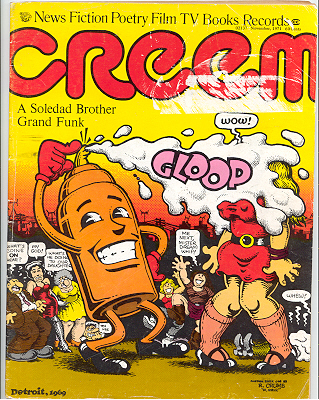
What I miss nearly as much as rock's golden age of the sixties, seventies, and eighties, however, is the brand of rock journalism which often went side by side with it — the type of writing I soaked up like a sponge in magazines like Creem and Rolling Stone as a kid, written with a fan's passion by guys like the late, great Lester Bangs.

Since I didn't grow up in Los Angeles (and therefore was unable read the music coverage of the L.A. Times), I was never that familiar with the work of Robert Hilburn, although I certainly knew of his reputation.

Reading his new book, however, it's certainly clear that he was, and still is, cut from that same old-school cloth of rock criticism that I miss so much. In fact, Hilburn's Corn Flakes with John Lennon: And Other Tales from a Rock 'n' Roll Life is one of the best books on the subject of rock and roll I have read in a good long while.

Hilburn certainly writes from a perspective that is more informed than most — at times this book reads as much as a history of rock as it does as his own personal memoir.

But more importantly, Hilburn writes about the music he so clearly loves with all the passion of the most hardcore fan. This, more than anything else, is what separates Corn Flakes with John Lennon: And Other Tales from a Rock 'n' Roll Life from the rest of the rock books you'll find in the music section at your nearest Borders, and also what makes it such a great read.

Although this is largely a personal memoir of Hilburn's career as pop music critic for the L.A. Times, it is also a fascinating journey through the history of rock and roll itself — dotted with Hilburn's personal memories of rubbing shoulders with such greats as Elvis, Lennon, Dylan, Springsteen and Bono.

Tracing his own history of discovering the music through listening to his uncle's records by artists like Hank Williams, and then later discovering R&B and of course Elvis, Hilburn goes on to describe how he liked the attention he got from the other kids in school through his writing, beginning a journey which finally landed him a gig with the L.A. Times, first as a stringer, then eventually as full-time pop music critic.

That part of Hilburn's story will primarily be of interest to writing geeks like myself. What gives Corn Flakes With John Lennon its more universal appeal, though, are the stories of how Hilburn endeared himself to some of the greatest musical icons of this generation — often to the point of becoming a personal confidant.

The common thread running through nearly all of them is how Hilburn was able to cut through the barriers surrounding musicians who were treated more like Gods — particularly during the sixties when rock was impacting culture like it hasn't at any time before or since. In story after amazing story here, we learn how Hilburn perfected this art mainly by first being honest, and then by connecting with them as fans.

And what stories.

In Corn Flakes With John Lennon, we travel with Hilburn to Folsom Prison on the occasion of Johnny Cash's historic concerts there. We go backstage and discover the shy, insecure person lying beneath the dynamo that was Janis Joplin, and are there on the night of Elton John's career-making shows at L.A.'s Troubadour club.

We meet John Lennon during his infamous alcohol-fueled "lost weekend" in seventies L.A., and later during the "house-husband" period of his album Double Fantasy, where we find Lennon's biggest vice to be the chocolate bars he sneaks when Yoko (who he refers to as "Mother") isn't around.

Sadly, we are also there for the funerals of Elvis, John Lennon, and Kurt Cobain. Hilburn's bedside interview with a grief-stricken Yoko Ono and later with Courtney Love in particular reveal a side of these rock and roll widows which clashes profoundly with their public images.

Most telling though is the way this book reveals the unique relationship between rock critics like Hilburn and the artists they write about.

Hilburn's various conversations with Bob Dylan over the years are particularly revealing — ranging from Dylan's changing his setlists at the writer's suggestion (and how he later chided him about it by asking if he brought a setlist with him), to the way the notoriously interview reluctant Dylan uncharacteristically opened up to Hilburn about subjects ranging from his "born-again" conversion to his songcraft over the years.

Hilburn also takes no less than Bruce Springsteen — an artist he clearly loves — to task for compromising his art by playing his old hits on the early nineties tour just after "The Boss" enraged many fans by disbanding the E Street Band. At another point in the book, Hilburn urges a young Bono, then known for scaling 30-foot high scaffolds and throwing himself into audiences, to scale down the "antics" and let the music do the talking. Bono, who was said to be haunted by Hilburn's stern lecture for years, nonetheless took the critic's advice to heart. It's no coincidence he wrote the intro to this book.

Corn Flakes With John Lennon ends on a somewhat depressing note however.

Although Hilburn tries his best to cover his glum appraisal of the present and future state of rock and roll with signs of optimism — pinning most of his hopes on people like Jack White and Conor Oberst — it's pretty clear that the wise old critic can see the writing on the wall. There is a tone of resignation in the final chapter here that perhaps rock music's time as a true life altering cultural force has indeed passed.

Corn Flakes With John Lennon is a must read for anyone who loves writing, but especially for anyone who loves rock and roll. It is also one of the best books on rock music I have read in a good long while. I cannot recommend it highly enough.

Tuesday, October 20, 2009

Dylan Croaks And Croons His Christmas In The Heart

Music Review; Bob Dylan - Christmas In The Heart

So it should be stated right upfront that this album isn't gonna' be for everybody. In fact, for most people, the verdict on Bob Dylan's first-ever collection of Christmas tunes is probably going to come down to which side of a central question you are on.

That would be "The Croak."

"The Croak," for those not already in the know, is the ragged, Tom Waits-like tone and quality Dylan's voice has taken on with all of his albums this decade dating back to at least Time Out Of Mind. Some people love it, while it makes others cringe.


As for me? I love "The Croak."

So the only real question for me going into this album was, will the harsh, sandpaper on cigarettes quality of Dylan's voice that works so well on a song, like say, "Thunder On The Mountain" sound appropriate on something like say, "Hark The Herald Angels Sing"?

And on that particular song, the answer is no, it really doesn't. The reason has more to do with the arrangement than it does with anything else though.

One of the reasons Dylan's voice works so well with his own recent songs, is because when he sings something with the fire and brimstone lyrical imagery of "Thunder On The Mountain," "Beyond Here Lies Nothin'," or even "Aint Talkin'," the apocalyptic world-weariness in his voice is a perfect match to the subject matter. Dylan also is a master of phrasing, so in his own songs every double-phrased or twisted syllable adds just that much more dramatic emphasis to the words.

On "Hark The Herald Angels Sing," as with the other songs on Christmas In The Heart, Dylan however plays it completely straight. The arrangements are as traditional as a holiday card from Hallmark, and likewise there are no twists of phrase in the vocal delivery. So, in the case of "Hark," this only serves to illustrate the fact that he just can't hit the notes.

Even so, and putting that little bump on the road to grandma's house aside (strictly in the interest of fairness of course), on much of the rest of this album Dylan does just fine.

Christmas In The Heart begins with sleigh bells — Sleigh Bells, for crying out loud! But by the time you hear Dylan, in all of his croaking glory sing "Here comes Santa Claus! Here comes Santa Claus!," you really can't help yourself from cracking up. Or, at least I couldn't.

Elsewhere, on songs like "I'll Be Home For Christmas" and "Have Yourself A Merry Little Christmas" (complete with the most syrupy sounding female backup vocals you're likely to hear this side of the Lennon Sisters on the old Lawrence Welk Show), Dylan's croak substitutes for Crosby-esque croon surprisingly well.

And for the record, no, he doesn't tackle "White Christmas." Dylan always was a smart sumbitch'. Elsewhere, Dylan's take on "Must be Santa" borders on beer-barrel polka, while he offers up surprisingly credible versions of such traditional fare as "Little Drummer Boy" and "Silver Bells."

So it's an acquired taste to be sure. But since Dylan's doing this album for charity — all present and future royalties from the CD will go to the hunger fighting folks at Feeding America — I'm willing to cut him a break here. Besides, the CD actually isn't that bad, and in some cases ("Here Comes Santa Claus" for example) is actually pretty damn hilarious.

Just make sure that you dig "the croak."

Sunday, October 18, 2009

Sing A Song, Play Guitar, Make It Snappy

Book Review: Book Review: From Zero To Rock Hero: A Crash Course In Playing Rock Guitar by Owen Edwards

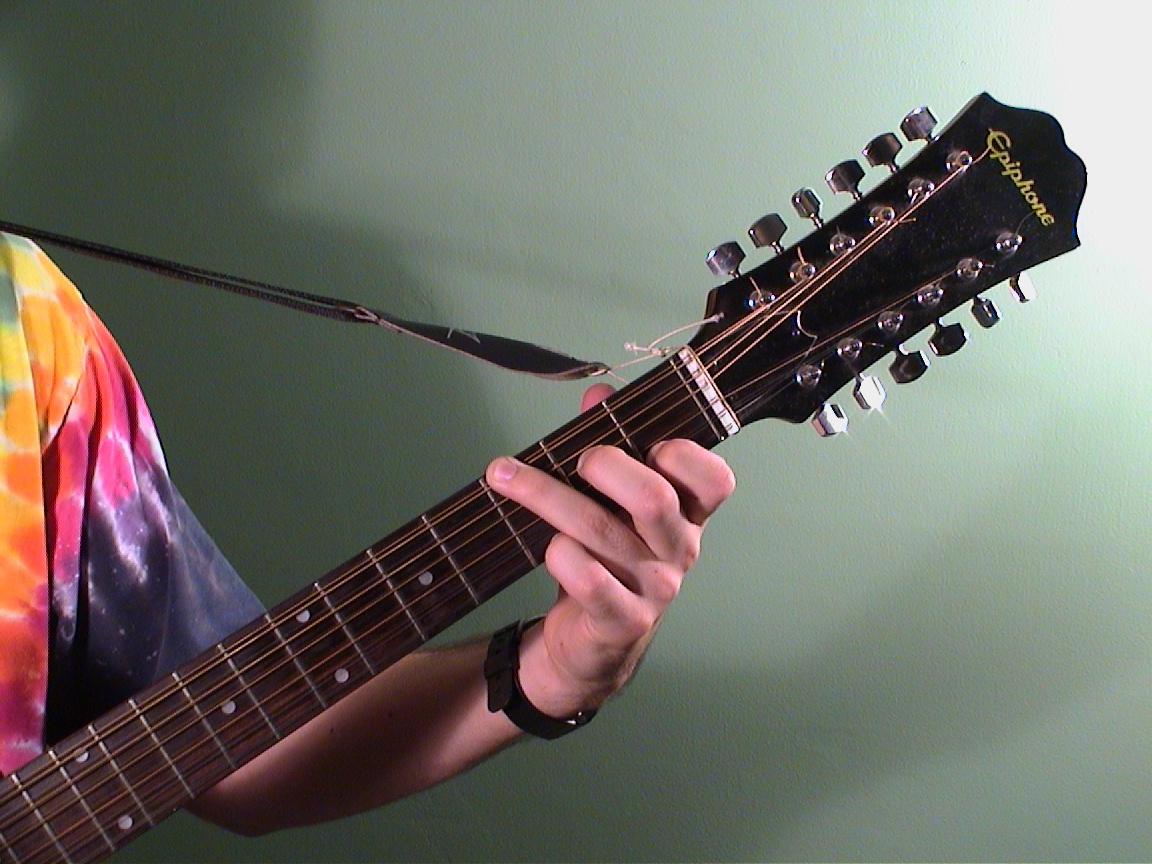
A year or so ago, I took it upon myself to try to learn to play guitar, after winning a shiny new black Fender Stratocaster and a Marshall practice amp in a contest.

After all, as everyone knows, those of us who write about rock music are in fact frustrated rock stars ourselves, right? Or so the myth goes...

Anyway, things went pretty well for awhile. I bought myself one of those Guitar For Dummies instruction books, and dutifully set about the task of learning the few basic chords of songs like "Michael, Row Your Boat Ashore" taught in the book. I figured I'd be playing like Hendrix or Clapton in no time.

But then something happened — well, two things actually.

The first thing that happened was the dreaded F chord, which was something that I just couldn't quite wrap my stubby little writers fingers around. You had to be one of those ambidextrous human rubber bands to master that damned F chord as far as I was concerned.

The second thing however, to be quite honest, was my own lack of discipline and a creeping sense of boredom with the whole thing. My first novel has been on perpetual hold for much the same reason.

So, like my favorite American president Richard Nixon, I gave up. Go ahead, call me "The Quitter." I dare ya'...

The truth is, endlessly practicing songs like "Home On The Range" will only take you so far for so long. The guitar has been gathering dust in my living room ever since.

I could have used a book like this one back then.

When Owen Edwards' From Zero To Rock Hero: A Crash Course In Playing Rock Guitar showed up unexpectedly in my mailbox earlier this week, I had to take notice. Here was a book which made the bold claim that in a mere six weeks, I could be rattling windows and pissing off my neighbors like the guitar hero I always knew I was born to be. Like that song by Traffic says, here was a book that promised I could "sing a song, play guitar, make it snappy."

I had to give it a try.

So the good news is, Edwards' book lives up to its lofty promise on at least one level. This isn't your average how-to guitar book. There's no easing you in with simple folk ballads and the like. Instead, Edwards cuts right to the chase. Following a day by day lesson plan, this is a crash course designed to unleash your inner Jimmy Page in the quickest amount of time possible.

Edwards wastes no time in delving into such basic rock guitar essentials as power chords, riffs, and even some very cool lead guitar tricks. Before long — assuming you follow the plan here — Edwards even teaches the would-be guitar hero such things as the "tapping" technique made famous by Eddie Van Halen. The book also comes with a CD to allow you to track your progress against the real thing.

Best of all, Edwards takes you through the necessary steps with an engaging narrative and plenty of great songs to get your feet — or rather your fingers — wet with. As you learn everything from Zeppelin to Sabbath to Metallica and AC/DC on your way towards becoming a rock star, there are also plenty of great stories and pictures here to inspire your quest towards future world domination.

This is the book I wish I had when I first won that damn Strat. With any luck, it is also the one that will finally inspire me to pick it up again. I'll keep you posted.

Thursday, October 15, 2009

Bruce Fans Remember 'The Light In Darkness'

Book Review:
The Light In Darkness by Lawrence Kirsch
Bruce-Pictures-009.jpg
Like its predecessor For You, Lawrence Kirsch's The Light In Darkness is a beautifully put-together, limited edition coffee-table sized collection of reminisces from Bruce Springsteen fans.

What makes this a must-have for the Springsteen fan on your holiday shopping list, are the hundreds of photographs here — many of which were shot by fans as well, and thus are seen here for the very first time.

The difference with The Light In Darkness is the fact that this volume focuses specifically on the 1978 tour behind the album Darkness On The Edge Of Town. As most longtime Boss fans will tell you, this was the tour where Springsteen and the E Street Band largely solidified their reputation as one of the greatest live attractions in rock.

On this tour, Springsteen shows rarely ran under 3 1/2 hours, and when multiple encores were factored in, would often push closer to the five hour mark.

These were the days so fondly remembered by the fans who were there, when songs like "Prove It All Night" began with a blistering guitar intro that was longer than the song itself, and where "Backstreets" included a lengthy mid-song rap (then called "Sad Eyes") which eventually formed the foundation for the song "Drive All Night" on the 1980 album The River.

Here, on page after lovingly assembled page, these same fans recall their memories of seeing such legendary performances as the oft-bootlegged December 15, 1978 show at San Francisco's Winterland Ballroom — one of the very final rock concerts to take place at the legendary venue. In the case of this particular show, several stories are recounted, including a beautiful photo essay of the show from Backstreets photographer P. Jay Plutzer, that includes many never before seen photos.
Bruce-Pictures-010.jpgIn addition to the hundreds of images and personal anecdotes from fans, there is a list of every show, and every song played during the Darkness tour. In another section, writer Roy Opichinski examines the songs left over from the original sessions for the Darkness album that failed to make the final cut — including both the ones Springsteen gave away to other artists like Patti Smith ("Because The Night"), and such lost masterpieces as "The Promise" and "Iceman."

The release of The Light In Darkness comes at a time where there is a renewed interest in the 1978 Bruce Springsteen album which forms its central theme.

Springsteen and the E Street Band have been recently featuring the album played in its entirety — most recently at the Spectrum in Philadelphia and at Giants Stadium in New Jersey — as part of the theme nights closing their current tour, where a classic album is performed from start to stop. It is also widely expected that a deluxe, remastered edition of Darkness will see the light of day sometime next year.

In the meantime, this beautifully done new volume from Lawrence Kirsch serves as the next best thing. For those who were there, it serves as a reminder of a time where great rock and roll seemed to make anything possible. For those who weren't, it does a nice job of telling the story of just why Springsteen and the E Street Band are so revered by the fans who were.

As a postscript here, a few Blogcritics have stories of their own that made the cut in the book. Look for Mark Saleski on page 96, and yours truly on page 52. The Light In Darkness can be ordered at the author's website (you'll also find a link at the bottom of this page).