Career Builder Search Engineering Basic Executive14 CareerBuilder Search Widget Searches jobs in CareerBuilder Virtual Career Builder - Jobs posting jobs to all submissions made by any User or third party whether in regards to the market.
Dara cantik yang sering disapa alexandra ini rela membuat kulitnya yang putih dan mulus menjadi hitam demi mendapatkan hasil maksimal pada film terbarunya 'Tanah Air Beta', film yang disutradai oleh Ari sihasale.
Sinopsis Film Tanah Air Beta :
Ketika Timor-Timur berpisah dari Indonesia, perisahan harus terjadi, terhadap dua kakak beradik yang saling menyayangi, mereka terpaksa harus hidup dalam kondisi dan lokasi yang berbeda, dikarenakan kepentingan yang sangat tidak mereka mengerti, menjadikan Merry (10 th) harus tinggal berdua saja dengan ibunya...Tatiana (29 th) disebuah kamp pengungsian di Kupang NTT. Sementara kakak laki-lakinya Mauro (12 th) tinggal bersama pamannya… di Timor Leste!
Tatiana dan anaknya...Merry, hidup di sebuah kamp pengungsian bersama ratusan ribu orang pengungsi lainnya. Di antaranya Abubakar seorang keturunan Arab yang sudah turun temurun hidup dan tinggal di Timor-Timur
Tatiana mengajar di sekolah darurat di kamp tersebut. Merry juga bersekolah di tempat itu bersama Carlo seorang anak laki-laki yang sangat jail dan suka menggangu Merry, itu dikarenakan Carlo ingin sekali mempunyai seorang adik dan merasakan kembali cinta kasih keluarga
Kehidupan yang sangat berat di sebuah kamp pengungsian dan di tengah ketidakpastian akan keberadaan anak laki-lakinya, tidak membuat Tatiana menjadi lemah. Kerinduan Merry akan kakaknya dan penderitaan yang begitu mendalam dari sang ibu...menjadikan Merry, anak perempuan yang cerdas dan nekad. Suatu hari Dari seorang petugas relawan, Tatiana mendapatkan informasi bahwa ada kemungkinan ia bisa bertemu dengan anak laki-lakinya
Monday, June 7, 2010
Porcupine Tree Anesthetize DVD Trailer: Out June 14
I can't wait for this.
Saturday, June 5, 2010
Everyday I Write The Book
So my life these days is a lot like an Elvis Costello song. No, not "Accidents Will Happen" (although there's a grain of truth in that song as well). Actually, I was thinking more along the lines of "Everyday I Write The Book." Because, that is exactly what I'm spending most of my time doing -- writing a book. Not about Elvis Costello though. Actually it's a book about Neil Young.
The way this came about was I was contacted last winter out of a clear blue sky, by a guy named Robert Rodriguez, who also happens to be the author of a pair of great books about the Beatles called Fab Four FAQ and its sequel Fab Four FAQ 2.0. As it turns out, Rodriguez was already familiar with my work for Blogcritics (proving it's really true that you never know who is actually reading you on the Internet). He also happened to be spearheading a similar series of "FAQ books" for Hal Leonard Publishing.
Robert wanted to know if perhaps I was interested. I dunno...I mean , gee, ya' think?
When Rodriguez approached me about writing one of these, I was actually as surprised as I was thrilled. Actually, I just about fell out my chair. I mean, me? Write a damn book? You' gotta' be kidding, right?
I've always wanted to write a book, but could never really figure out what the topic would be or how to get started with it...something about all that discipline crap. Rodriguez solved both of these problems for me -- by giving me the motivation for the task at hand (not so much because of the whole money, fame and fortune thing, but more because of the whole idea of becoming an actual published author), and by handing me a topic.
Actually, Robert handed me a whole bunch of topics in the form of a list of artists I could choose from to write about. My first choice -- Bruce Springsteen (big surprise there, right?) -- was already claimed. So, after eliminating people like Bob Dylan (too damn hard) and Sir Mix-A-Lot (sure I know the guy, but "Baby Got Back" and "Posse On Broadway" aren't exactly gonna' be good for 150,000 words), I settled on the next best thing. I went with Neil Young.
After months of back and forth negotiations between Robert, the folks at Hal Leonard, and myself, the final contract arrived this week, and I signed on the dotted line. So it's official. I'm honest to God really doing this.
Now, while I am absolutely thrilled that I'm very soon going to be an actual published author (the book comes out next year), don't let my elation fool you. I'm still flat broke, and I still need a damn job. Nothing has changed there. Contrary to popular belief, not everyone who writes books gets rich, or even makes a living at it. In fact, most authors are as broke as I am. For every Stephen King or J.K. Rowling out there, you'll find at least a hundred or so starving authors. I'm very happy with the terms I agreed to in the contract with HL Publishing, but believe me, I won't be getting rich doing this anytime soon.
Even so, for me this represents the fulfillment of a dream, so let me just say this again for emphasis: I'm writing a damn book! Whoo-Hoo!!
The work has so far been very hard (150,000 words isn't gonna' be a walk in the park, even for a verbose sumbitch' like me), but also very fulfilling. In researching and reacquainting myself with Neil's amazing story, I'm learning a lot of things about him I never knew before, and rediscovering my love for his music by listening to all his albums again, only this time with a much more critical ear.
There have been a lot of nights writing until the sun comes up too. But every minute of it has been worth it. The narrative is also coming to me fairly easily -- at the rate I'm going I should be able to come in well ahead of my deadline.
So be on the lookout for Neil Young FAQ, coming soon to a Barnes And Noble near you sometime next year.
Did I mention I'm writing a damn book? Repeat after me, Glen Boyd: Published Author. Damn, I like the sound of that already!
The Rockologist: Growing Organic Music Communities In A Corporate World
These past few months, I've been doing a lot of reading and research about Neil Young for a book I'm writing about him due to be published next year. And I've been learning a whole lot about him — including a surprising amount of information for the first time.
Anyway, in conducting this research, and in reacquainting myself with Neil's amazing story, one thing has struck me above all else. Perhaps it is because of just who he is, or maybe just because he was in the right place at the right time, but as he was working his way up to become an iconic/legendary artist, Neil Young managed to find himself planted dead center in the middle of not one, but several locally based "scenes" that would go on to alter the course of popular music.
He was there in Canada — in Fort William and in Toronto, Ontario — when folk music and rock and roll began to coalesce itself into the hybrid sound that would eventually produce such influential artists as Joni Mitchell on the one hand and the Band on the other (not to mention Young himself).
He was there once again when the American West Coast began to similarly merge these sounds in the mid-'60s to produce the folk-rock boom which gave birth to the Byrds and to Young's own band with Stephen Stills, the Buffalo Springfield.
Neil Young was also there when this same sound evolved into the beautiful, trademark four-part harmonies of Crosby, Stills, Nash & Young — the country/folk-rock supergroup who provided the eventual blueprint for every West Coast country-rock band which would follow in their wake, from the Eagles and Poco on down through latter-day midwest acolytes like the Jayhawks and Wilco.
Anyway, this article is not so much about Neil Young per se, as it is about these geographically indigenous music communities themselves, as well as the many others which both preceded and followed them.
So the big questions here are these: first, how did a guy like Neil Young stumble into such preordained scenes in the first place (and was it actually by accident or, rather, by design), and second, are such localized, organically grown cultural movements even possible within the music landscape of today?
The short answer is, at least in the case of Neil Young, no! Absolutely none of these things happened by accident. Neil Young, in fact, played a major role in helping to shape the future of every movement in which he ever found himself involved.
As for lightning being able to strike twice, history proves that such is absolutely possible, but conditions have to be absolutely right.
From the early days of jazz, blues, and rock and roll to the more recent phenomenons of grunge and hip-hop, the single most unifying factors in such organically grown musical communities have not surprisingly also been the most common ones of satisfying a shared need based on the cultural, musical, and often political conditions of the times.
Here where I live in Seattle, for example, the early '90s grunge-rock movement was a product of everything from the archaic local liquor laws governing live music at the time to our own rather depressing gray and rainy weather — which has no doubt contributed to Seattle's high suicide rate, as well as our unique penchant for breeding serial killers like Ted Bundy and Gary "The Green River Killer" Ridgeway.
Back in the late '80s, when local rock musicians found themselves locked out of playing cover tunes at local bars by short-sighted politicians, they instead took to rehearsal studios located in dingy, burned-out downtown warehouses and concentrated on making original music.
Since Seattle has always been at its core a "hard music" sort of town — from the Sonics and Hendrix to Metal Church and Queensryche and finally to Nirvana and Soundgarden — there was never any doubt a music movement out of Seattle wasn't going to be based, at least in part, on metal.
But there was also this uniquely sort of f-you, in-your-face, punk-rock attitude about it. And let's not forget that all that gray Seattle atmosphere can tend to make one's thoughts turn somewhat — well, shall we say, inward?
So this atmosphere of artistic regression eventually led to indie labels like Sub Pop and C/Z Records making homespun recordings, and as news began to spread by both word of mouth and in underground publications like The Rocket, makeshift venues like the all-ages OK Hotel began to promote their own live gigs.
The flannel and the rest of the '90s fashion bullshit was just a product of the natural Seattle environment. It's cold here, okay? The long, flailing, stringy hair likewise served to keep our rain-soaked ears warm. In other words, it was an accident.
Nonetheless, from Charles Peterson's groundbreaking concert photographs to Kurt Cobain's lyrics (which so perfectly captured the Seattle experience of isolation, depression, and natural youthful angst), a national movement was soon born.
Why?
Because it captured a need to express the national zeitgeist of its unique time — borne out of the first Bush era with all of the accompanying economic uncertainty, the first Gulf War, and the rest of the social divide that came along with it — as well as the need for '90s Seattle rock fans to emerge from their cubbyholes and just get out there and dance again.
Is that really so hard to understand?
The hip-hop movement which sprang out of New York right around the same time (okay, maybe it was a few years earlier), likewise came about by the same sort of fortunate accident.
In this case, street DJs threw impromptu parties in the parks during the dying days of late-'70s disco. As one DJ would mimic the art of disco mixmasters manipulating records on two turntables, another MC would rap freestyle rhymes over them into a microphone broadcast over a loudspeaker.
The difference here — in what is one of the most remarkable historical cases of such an organically driven musical movement (on record at least) — is the way the New York rap scene so quickly spread across the country and, initially at least, on mostly racial lines. This spawned numerous regional scenes — from the "Miami Bass" of the south coast, to the electro-funk and eventual "gangsta rap" of the west coast.
As the original innovators of the style, New York rappers took things one step further as they began to take on an increasingly strident, political tone (Grandmaster Flash, Public Enemy, KRS-One and Boogie Down Productions) on the one hand, and incorporate harder rock and metal influences into the mix (Run-DMC, Beastie Boys) on the other.
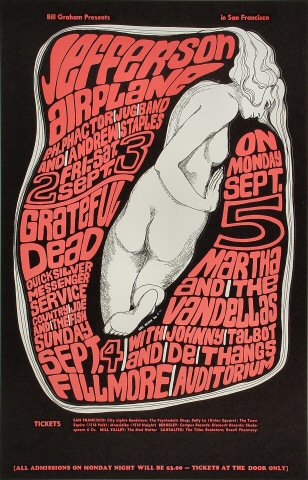
This sort of organic, populist artistic movement in rock and roll has some of its earliest roots in the psychedelic movements some 35 years prior which sprang up simultaneously in San Francisco (Jefferson Airplane, Grateful Dead, etc.) and in London (Pink Floyd) during the mid-to-late '60s. Ditto for the punk-rock movements which burst out of New York (Ramones, New York Dolls) and London (Sex Pistols, The Clash) in the late '70s.
The common denominator in both of these examples is that each organic musical community began with a group of disenfranchised artists reacting to the artistic (and often sociopolitical) conditions of their time, who then banded together to form a uniquely organic community of like-minded outcasts and cultural misfits, ultimately growing to satisfy a much larger void in the general culture, thus forever impacting it.
Could such a thing even be possible now? Color me the eternal optimist, but despite the obstacles involved, I'd like to believe that the answer is yes.
The political and cultural conditions are certainly present. Pop music today exists in a vacuum like no other time since the pre-British Invasion days of white bread pop acts like Pat Boone and the other Fabian-styled teen idols of that particular era.
And thanks to the Internet the ability to zone in on a singularly directed movement with the ability to impact the larger culture has likewise become impossibly diluted. The corporate software executives running sites like MySpace would like you to think of it as some wild, wild west atmosphere when, in fact, it's nothing of the sort.
It's a lie.
While the wide-open atmosphere that such access has provided anyone who thinks that he/she/they can actually create meaningful music has afforded them — not to mention the ability to get it out there to the unguarded masses in a way like never before — the overall result is something more similar to an over-sized cyber junkyard.
Finding that rare diamond in the much-larger coalmine has become something more like finding the proverbial needle in a haystack. So when was the last time you went searching for your lost wallet at the garbage dump?
You want to talk corporate rock? At least in the original, old-school music business model, the corporations we were talking about were Warner Brothers, Capitol, and Columbia Records. These days, your music is more likely to come through the delivery systems of folks like Microsoft, Google, Verizon, and Samsung — the same folks who are outsourcing your tech support questions about why your computer just froze to some guy in India.
You have to wonder — hip, pony-tailed IT geek-guy aside of course — just how many actual music guys are in that boardroom meeting come Monday morning?
The political and cultural conditions for the next great revolution in music, however, are as right as rain, right? Perhaps more now than ever. So, please, for the sake of humanity... let's just get on with it.
Step away from your computers, your iPods, and your cellphones. Get out of the house and learn to smell humanity again.
And while you're at it, if you are a musician, it's time to get on with creating the next big thing. If you are a listener or even an armchair critic, it's also time to get out there in the trenches and learn to dance again. The future of humanity hangs in the balance. Seriously.
For the sake of God, country, and the world, we are counting on you!
Vive La Révolution!
This article was first published as The Rockologist: Growing Organic Music Communities In A Corporate World at Blogcritics Magazine.
Friday, June 4, 2010
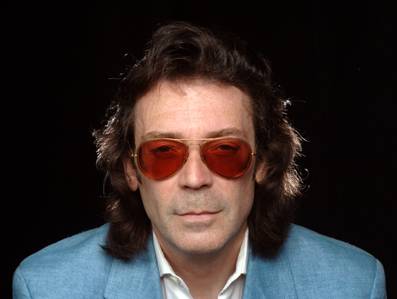
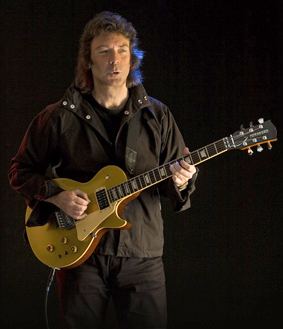
Steve Hackett's Best Album Since Spectral Mornings Just Keeps On Sustaining
Music Review: Steve Hackett - Out Of The Tunnel's Mouth
Although his career has had its fair share of ups and downs — from the highs of his work in the seventies with Genesis, to the relative low of his album with prog-rock "supergroup" GTR (which inspired the now-famous one-word review "SHT") — I've always admired Steve Hackett as a guitarist.
In particular, Hackett's albums with Genesis showed him to be a strikingly versatile and original guitarist with many different sides to offer that band, back when they were still more interested in experimenting with the boundaries of what rock music had to offer, than in simply cranking out the hits.
Several examples of this are given a reprise on the bonus six-song disc included as part of Steve Hackett's new album Out Of The Tunnel's Mouth.
The bonus E.P. features a sampling of Hackett's best songs from the Genesis days performed live with his current band, including the beautiful classical/flamenco inspired playing of "Blood On The Rooftops" and a slightly abbreviated, but nonetheless killer version of perhaps his most famous (and best) guitar solo ever on "Firth On Fifth."
On the latter, Hackett's signature use of sustain is simply breathtaking even now — the notes bending, crying and hanging in mid-air in a way where every second is made to count. It's one of those rare guitar solos whose economy leaves you wanting more, and a lesson more than a few modern rock guitarists could learn from.
While Hackett's catalog as a solo artist has been a bit more spotty — and has included everything from prog-rock to classical — his best albums like Voyage Of The Acolyte and especially the great Spectral Mornings have likewise focused on his economical, but textured style of playing.
With the new Out Of The Tunnel's Mouth, Hackett makes a welcome return to rock, on an album that nonetheless draws from numerous other musical influences which vary from classical to middle-eastern.
Backed mostly by a six-piece band, co-led by keyboardist and musical director Roger King, the scope here is sweeping and symphonic as evidenced from the get-go on lead-off track "Fire On The Moon." The track also wastes no time in getting to one of Hackett's trademark solos, and that wonderful use of sustain. There's nothing quite like hearing a guitar that seems to cry forever dancing around the deep, thick bass lines of Yes bassist Chris Squire either.
On "Nomads," Hackett switches back to the acoustic on a flamenco influenced track where the guitar recalls "Blood On The Rooftops" and the haunting vocal harmonies conjure images from something like a Spanish town in a Sergio Leone spaghetti western. Then halfway through, Hackett switches things up with more of that crying electric guitar sustain played out over a suddenly very busy backdrop of latin-flavored percussion.
From there, fellow Genesis alum Anthony Phillips adds some nice twelve-string guitar flourishes to "Emeralds And Ash." This leads right into the all-out assault of "Tubehead," an instrumental where Hackett makes an abrupt turn into the sort of fusion territory of fellow sustain-master Jeff Beck. On the album's liner notes, Hackett describes this track as "death by Marshall cabinet" and he's not that far off.
On another instrumental, "Ghosts In The Glass," Hackett's fluid guitar cuts in and out of the bottom provided by the fretless bass of Nick Beggs. The album closes with its most overtly middle-eastern sounding track, "Last Train To Istanbul." This one kind of left me scratching my head just a bit — the cinematic sweep here is such that for a minute I wasn't sure if I was stuck in Sarajevo or it was just last call at the belly-dance bar. This song does nothing if not strike a mood.
But for the most part, Hackett's amazing guitar work is the glue which binds Out Of The Tunnel's Mouth, and the sustain that sustains. You can call it the cowbell of the soul, as in more sustain Steve.
You can also call Out Of The Tunnel's Mouth Steve Hackett's best solo album since Spectral Mornings.
This article was first published as Music Review: Steve Hackett - Out Of The Tunnel's Mouth at Blogcritics Magazine.
Nama Lengkap : Nadine Chandrawinata Gender : Perempuan Tempat, Tgl lahir : Hannover, Jerman, 08 Mei 1984
Biografi :
Nadine Chandrawinata adalah Putri Indonesia 2005 dari utusan propinsi DKI Jakarta. Nadine bekesempatan mewakili Indonesia di ajang Miss Universe 2006 yang berlangsung di Shrine Auditorium, Los Angeles, Amerika Serikat dan berhasil meraih juara kedua untuk Budaya Nasional Terbaik dan Putri Persahabatan.
Saat mengikuti ajang Miss Universe, perempuan yang terlahir dari ayah Indonesia dan ibu Jerman ini, mengenakan gaun tradisional ala Ratu Kencono Wungu atau Tribhuwana Wijayatungga. Sayang, penampilan ayunya tak diimbangi dengan kemampuan bahasa Inggris.





 Profil Nadine Chandrawinata :


.jpg)
