Sunday, September 11, 2011

NBC does Comedy Right with Parks and Recreation and Community

This past week two of NBC's best comedies were released on DVD, Parks and Recreation and Community.  These are some of the best comedies NBC has ever produced, and their commitment to these shows displays a commitment to quality programming.  In my down time this week I was able to watch both season three of Parks and Recreation (two times), and season two of Community.

Parks and Recreation had one of the best seasons in television history.  The show started out as a copy of The Office.  Greg Daniels the creator of The Office started another show in 2009 which would star Amy Poehler as Leslie Knope the bumbling boss of a parks department in Pawnee Indiana.  Daniel's surrounded Knope with a group of bumbling office workers, and the show sounded too familiar.  The show soon found its own niche within season two and evolved added a few new characters and formed a show that is in my opinion much better than The Office.


Parks-and-Recreation-cast.jpg


Leslie Knope stopped being like Michael Scott, and moved toward having more heart.  I think the problem with Michael Scott is that he often appears more unsympathetic.  When the central character of your show can be incredibly polarizing this can often leave even loyal viewers (like myself) cringing at awkward moments.  Parks used its supporting cast in less gimmicky ways.  Ron Swanson is one of the best characters in television history; he is an abrupt honest, meat loving Libertarian who shakes things up.  Aubrey Plaza (April) and Chris Pratt (Andy) play a Jim and Pam like couple but there relationship steers away from the cute and allows more laughs because their characters are unconventional.  Rob Lowe has never been funnier, and he is "literally" such a great comedic actor.

Community is a show that like Arrested Development will gain more respect from people when its off the air.  The show filled with wonderful pop culture references to Cougartown, a hatred towards Glee, and numerous D list movies, and of course Pulp Fiction is great in my book.  The show like Parks started out slow, but soon found its path with obscure pop culture references with style and wit.  This rag tag ensemble with Joel McHale (The Soup), Alison Brie, Danny Puddi, Donald Glover, Yvette Nicole Brown, Gillian Jacobs, Ken Jeong, and (shockingly as the weakest link) Chevy Chase.  The creator of Community, Dan Harmon used the Arrested Development brains Anthony and Joe Russo to add that quirky flare to make this one of the best shows on television.


community_nbc_tv_show_wallapper_01.jpg


One thing is for certain these shows are not something everyone will enjoy.  They both have a specific brand of humor.  While cashing out at Best Buy (which I will no longer be going to-another story), the cashier had told me she had never heard of either of these shows.  I was both stunned and saddened.  I know both shows have low ratings, but thought their cult status would have hit employees at a chain electronic store.  She asked if the shows were similar to Glee, I laughed and said "They are for sure nothing like that show, and I am grateful their sarcasm will be around for another year.

Friday, September 9, 2011

ELP 2011: Bring On The Prog, Dude

Music DVD Review: Emerson Lake And Palmer - 40th Anniversary Reunion Concert


Emerson Lake and Palmer is a band that has been — unjustifiably in my own opinion — universally shat upon by rock critics over the years. Personally, I have never quite understood the hostility.

Back in their brief, early seventies heyday, ELP provided the blueprint for the progressive rock power trio format later employed to varying degrees of success by bands ranging from imitators like Triumvirat (not so much), to those who really took the ball and ran with it (Rush and the latter day Phil Collins led version of Genesis).

What most people don't remember though, is that back in the early to mid-seventies, ELP ruled. With a string of mostly great — though occasionally indulgent — albums like Tarkus, Trilogy and especially their masterpiece Brain Salad Surgery, ELP held the undisputed title of the greatest "musician's band" on the planet.

As most of their most diehard fans already know, the party was pretty much over when ELP released the Works Volume 1 set (three sides of solo albums, plus a fourth side of group tracks), followed by the mostly outtakes Works Volume 2 set. Much ego-wrangling followed, culminating in the particularly wretched Love Beach album, and their eventual breakup.

But back when ELP inspired the same sort of debate amongst keyboard enthusiasts between Emerson and Rick Wakeman of Yes, as Beck Vs. Page did amongst guitarists, these guys were the real deal. As for Carl Palmer, and with all due respect to Rush's Neil Peart and Porcupine Tree's Gavin Harrison, no one outside of perhaps Keith Moon has better defined the term "monster drummer" before or since.

That said, ELP's 40th Anniversary Reunion Concert DVD is mostly a nostalgia trip. It also has a few very noticeable flaws sound wise in the early going, particularly during "The Barbarian." Here, the band don't seem to be playing as a tight unit (although they do eventually find their place on the later tracks). Emerson's mike also noticeably cuts out.

Even so, the crowd doesn't seem to care.


The guys all look mostly good (although former groupie magnet Greg Lake has gotten pretty fat), and they still can play their asses off. Which is what really matters in a DVD like this. When Lake bellows out the improbable "Karn Evil 9," lyrics rhyming "gypsy queen" with "vaseline" and "guillotine," any original critical nitpicks are reduced to irrelevancy. ELP are recapturing a moment in time here, and God bless em' for it.

As the concert progresses, and the band falls into a familiar groove, all the theatrical stops are pulled out. Cannons are fired during the otherwise ponderous "Pictures At An Exhibition." Emerson reprises the knive wielding, keyboard destroying theatrics of his nationally televised performance at 1974's California Jam, and Carl Palmer turns in a spellbinding solo on his revolving drum kit.

It's all enough to make one yearn nostalgically for the days of pretentious, seventies indulgent prog-rock. Sign me up, Scotty.

This article was first published at Blogcritics Magazine.

Tuesday, September 6, 2011

Susan Lucci and Daytime Television

When I was a young kid I used to watch soap operas with my mom; she worked late nights and my dad worked days.  My parents set up this schedule so they always could be with me and I would not need a babysitter.  I watched The Young and the Restless, The Bold and the Beautiful, and As the World Turns with my mom.  After a while my mom started working days and my time was split between both sets of my grandparents.  My one grandmother was not into the soap operas as much as my other.


I did not start watching All My Children till later, but I remember everyone talking about Susan Lucci's, Erica Kane.  I watched around the time Erica dealt with the story of her daughter Bianca's anorexia.  Now I have to admit, Ms. Lucci is not one of the best actors, but she created one of the most memorable characters in all of television history.  Lucci was primarily known for losing at the Daytime Emmy's but after 19 nominations Lucci finally won.  The moment (in the the clip below) was incredibly emotional.  All of daytime television was on their feet screaming.  I have never seen so much excitement in one room at award show.  This moment proves that there was an entire industry that was ready for this moment, in honoring and rewarding this woman for creating an iconic character.


Lucci has tackled numerous story lines in daytime television that were firsts; she was the first character to have an abortion (this was later undone and ruined a classic moment in television), battled a mountain lion, coped with her daughter being and anorexic and a lesbian, she was married so many times, arrested for insider trading, murder people and went to jail and so on.

I cannot fathom the world of daytime without Erica Kane, it is like Sesame Street without Elmo and Big Bird,  there will be a tremendous loss when the curtain comes down on All My Children when it leaves ABC.  The show was picked up by Prospect Park to be viewed online come January, but with Lucci declining her offer I do not think All My Children can survive without Erica Kane; she has been a cultural icon that will be missed.

Friday, September 2, 2011

Rise of the Planet of the Apes Rises to the Occasion

Rise of the Planet of the Apes (3 1/2 out of 5 stars)
Directed by: Rupert Wyatt (The Escapist)
Written by: Rick Jaffa and Amanda Silver
Starring: James Franco, Frieda Pinto, John Lithgow, Brian Cox, Tom Felton, and Andy Serkis

Rise of the Planet of the Apes Caesar 
 
Ten years ago Time Burton re imagined the concept of the original concept of the original Planet of the Apes which was released in 1968.  The 1968 film was made most famous by its twist ending.  The original version of these films starring Charlton Heston as an astronaut who crashed landed on "on a strange plant" to find man enslaved by apes was done effectively.  Then in 2001 Burton's remake looked appealing but was left an awful taste in my mouth.

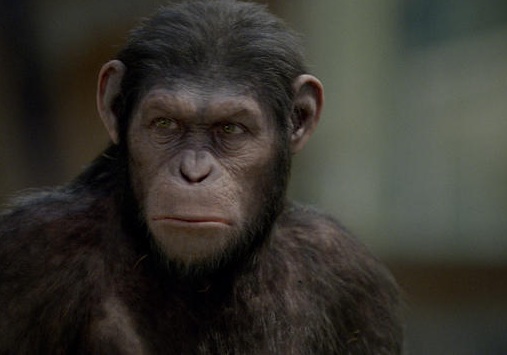
Now in 2011 Rick Jaffa and Amanda Silver constructed an origin story. Will (James Franco) works for a lab and creates an experimental drug that will help cure Alzheimer's, a disease Will's father (John Lithgow) suffer from.  The original test goes badly and Will is left with Caesar (Serkis).  Caesar is far advanced, but soon the distinction between man and animal become apparent and how their behaviors divided them.

The films screenplay is the highlight of this film.  The story that writers Jaffa and Silver constructed is so fascinating.  The film delves into testing on animals for the sake of humans, and can a drug that changes animals have an effect on humans.  This film took away aspects of previous films that were campy and silly and made a realistic representation of science gone haywire.

Unlike the other films this film used CGI to create the actions of the apes.  Relatively unknown director Rupert Wyatt used actors to create the emotional context of the apes like Peter Jackson did with his version of King Kong (2005).  Using actors like Andy Serkis to create an visual on screen of actual animals with human emotions was brilliant and took this film to a whole new level.  The film suggests the differences between humans and animals, but also insinuates their similarities, and in a world filled with evolution when does animal end and man begin, or does that ever happen?
Praying For My Little Brother Steve


This is the only known picture I have of my little brother Steve Boyd.

I got it from Facebook. Of all of my brothers, Steve is the one I have most closely related to myself. He is a kind, sensitive guy who just can't seem to cut himself a break (sound familiar?). Earlier tonight, I learned that Steve was involved in a horrible traffic accident where a person was tragically killed. Apparently, Steve was also drunk.

Whatever you might think of Steve, I know that amongst a band of Boyd brothers that have a well earned reputation as bad boys, Steve has a great heart, and this is probably eating him up inside far more than the extended jail time he is undoubtedly facing now. We Boyd boys seem to have a particular tendency for drawing out the devil (whether intentionally or otherwise), and from what I know, Steve has had a particularly bad go of it in recent years (losing a daughter among other things).

What I also know is that the fact that Steve may have been responsible for taking another person's life is probably eating him up more inside far more than the extended stay in a jail cell he now undoubtedly faces.

This is a good kid who made a horrible mistake, folks. Honestly, Steve is not a bad guy.

And knowing Steve as I do, I am quite sure he believes he deserves everything that is coming to him. But what I also know is that he didn't mean it, and if he could rewind time and take it back, he would so in a heartbeat.

Please pray for my little brother Steve. He really is a good kid. Thank you.

Thursday, September 1, 2011

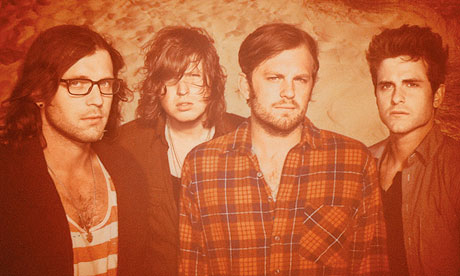
The Joyous Rock And Holy Roller Noise Of Kings Of Leon


Sometimes it takes something like watching a movie to really "get" an artist or band. This week, after watching multiple screenings of Stephen C. Mitchell's Talahina Sky: The Story of Kings Of Leon documentary on Showtime, I think I may have finally gotten the appeal of the post-modern, southern fried, gospel tinged rock of the Followill boys.

Better late than never I reckon. The thing is, it's still not for the reasons you might expect.

As a live band — despite their recent graduation to headlining arenas and stadiums — Kings Of Leon have yet to take that next big step which elevates them to the big leagues as a "must see" attraction on the same level as a Bruce Springsteen, U2, Radiohead or even Coldplay.

In fairness though — and based on the all-too-brief concert clips in this film — Kings Of Leon still rock convincingly enough. But outside of the big lights and production values that come when your albums begin to do the platinum business KoL's have, there is little difference between their current use of stagecraft, and the not-quite-ready-for-prime-time band I saw open up for Bob Dylan nearly a decade ago.

With a few notable exceptions (like the gorgeous "Talahina Sky," which closes this film on a perfectly bittersweet note of uncertainty that I'm sure was completely intentional), Kings Of Leon's songs also still fall in the mostly very good to just above average range.

What does come through about Kings Of Leon in Talahina Sky though, is the fact that this is an extremely earnest and thoughtful, sincere and likable bunch (especially Caleb). This is a band who rose from very poor and humble beginnings to their current (if somewhat tenuous) status as perhaps the last truly great American rock and roll band.


Fan or not, Talahina Sky: The Story of Kings Of Leon is not only a film that will leave you rooting for this band to carry on — but one which will stick with you for days on end after seeing it.

The Kings Of Leon story is already well known to those who follow such things. The Followill brothers (Caleb, Jared, and Nathan), along with cousin Matthew, are the rock and roll spawn of a southern Bible Belt family led by tent revival preacher Ivan Followill. With no apologies, KoL left that Red State, Pentecostal existence behind to conquer the music world as international rock stars. Except, at least according to this uncommonly honest and unguarded rock-doc, maybe they didn't leave it back in the church at all. Not completely, anyway.


The story of rock and roll artists coming from church backgrounds, and then going on to a life long struggle between the pleasures of the flesh and the joys of the spirit is of course nothing new — especially in the deep south. Artists ranging from Elvis and Johnny Cash, to Jerry Lee Lewis and Little Richard have famously fought this spiritual battle between a higher calling and the so-called "devil's music" throughout their careers, and often in quite public fashion. In the case of Kings Of Leon front man Caleb Followill, he even aspired to follow his father's footsteps into the pulpit from an early age.

In Mitchell's Talahina Sky: The Story of Kings Of Leon, we see the way this inner struggle between flesh and spirit can exact a profound psychological toll, in up close and personal fashion.


This is possibly the closest thing to a "real time" story of this type ever made, and although the notoriously hard drinking Kings Of Leon aren't a band particularly known for their musical proselytizing, this film shows they haven't left their faith completely behind either. In Caleb's case, this inner turmoil seems to manifest itself most dramatically when he drinks — which he does often here.

In light of recent events which have cast some question over the future of Kings Of Leon as a band, Mitchell's film is also much more than just the latest exercise in self-aggrandizing rock-doc puffery. Taken in this context, it is actually quite the eye-opener.

Much of the film is framed against the backdrop of the annual Followill family reunion picnic, which takes place somewhere on a private patch of creekside land tucked deep inside the furthest boonies of Oklahoma. Here we see the Followill boys engaged in wholesome family activities like group prayer, pitching horseshoes, fishing for crawdads, and drinking plenty of hooch.

This is a tight knit clan of cousins, uncles, grandmas and grandpas that are also clearly quite proud of their most celebrated sons, the Followill boys of Kings Of Leon. Even so, fame is still defined by some of these folk as meaning being referenced on the game show The Price Is Right.


With a colorful cast of friends and relatives that seems to have sprung straight out of some backwoods trailer park, the Okie-authenticity of these characters is hard to miss. Good old boys like Uncle Cleo (who died of cancer shortly after this film was completed) and roadie cousin Christopher "Nacho" Followill make nighttime shots gathered around a raging campfire eerily reminiscent of a white supremacists gathering (minus the racist elements, of course).

Numerous home movies taken from the Followill boys childhood provide the clearest look at the real backstory here though. At times, these private family reels seem to be pieced together without much regard for continuity, giving the film the occasional feel of patchwork. But taken together, they tell what may be the most crucial element of the overall Kings Of Leon story.

We see Caleb and Nathan as squeaky clean church boys singing hymns for the congregation, scant years prior to their transformation into boozing, worldly rock stars. But we also learn that when their father went from preaching the gospel at revival meetings to hitting the bottle at local beer joints, it took a heavy emotional toll on the Followill boys, and on their faith.


At this point, any sheltered illusions the Followills had of a two dimensional world consisting only of saints and sinners were pretty much shattered. Caleb — remember, this is the sibling who once aspired to become a preacher himself — in particular seems to continue struggling with these lingering demons.

In one of Talahina Sky's more telling moments, we hear Caleb say "As soon as I got a record deal...I knew I was going to hell." There are also numerous scenes cut throughout the film of what appears to be a recent one-on-one interview between Caleb and the unseen camera man. Here, Caleb drunkenly rambles on about the band, his life and his mortality, as he proceeds to smoke and drink literally everything in sight.

We also see Caleb fighting with his bandmates in the studio, at one point mercilessly berating cousin Matthew over a guitar part, and finally being read the riot act by brother Nathan. In the very next scene, we see the band come back together in a circle of prayer, with all transgressions apparently forgiven (for the moment, anyway).


With the recent cancellation of an American tour following Caleb's strange outburst during a concert in Texas putting a question mark on the band's future, Talahina Sky places these events into a much larger context. Their current hiatus has been officially explained away as a much needed break and an opportunity for Caleb to heal up his vocal chords.

But Twitter posts from the band members themselves have done little to quiet the Caleb rehab rumors out there. What is clear in watching this film, is that this is a band who are collectively dealing with considerable issues, and that Caleb himself seems to be wrestling with a personal crisis of conscience and faith.

But what is also clear is that these are four very likable, mostly good, clean Christian boys, with four very distinct personalities. Jared is the most "rock star" of the group, Nathan is the one who is "all business, all the time," and Matthew, as seen here anyway, seems to be the adorable goofball. Caleb, of course, is the earnest thinker who carries the weight of the world on his shoulders, which may at least partially explain his searching for the answers inside of a bottle.


Fans of this band will find that Stephen C. Mitchell's Talahina Sky: The Story of Kings Of Leon provides at least some of these answers (not to mention some pretty great music). It is also the sort of rare, unvarnished insider look into the private lives of jet-setting rock stars — complete with warts and all — that makes you wonder what possessed the band members to sign off as executive producers for this project. Ultimately though, this is a film that makes a great argument that some rock stars are just as human as the rest of us — at least if they happen to be the Kings Of Leon anyway.

I'll be rooting for them. Talahina Sky: The Story of Kings Of Leon is currently playing on cable television's Showtime network. You'll find playing times by checking for them at Sho.com.

This article was first published at Blogcritics Magazine.

Andy Serkis: The Man, the Myth, the Legend

Andy Serkis in Rise of the Planet of the Apes
While sitting in the theatre and watching one of the two worthwhile films released in August, Rise of the Planet of the Apes, the performance that I noticed most was Andy Serkis.  Serkis played Caesar the chimpanzee that James Franco's character adopts in order to help cure his father's Alzheimer's disease.  In the film Serkis takes Caesar from sheltered chimp to an enraged almost human creature.  Serkis has been in other films where we get to him like 13 Going on 30,  and The Prestige, but most people would know him from his work where we never get to see him.


Serkis is most famous for his work as Gollum in The Lord of the Rings trilogy.  This role should have potentially landed him an Academy Award nomination for Lord of the Rings: The Two Towers.  Even though Serkis himself is clouded in CGI his acting is beyond stellar; he proves that even with more and more CGI being used that the actor is still important.  Serkis also played Kong in Peter Jackson's adaptation of King Kong (2005); he brought humanity to the "beast."

When I watched him on screen as Gollum, Kong, and Caesar I was amazed at the humanity he gave to each of these characters.  Gollum is the closest thing he has played in this form that was somewhat human, and even then he adds nuances to the character development.  Playing an animal or Gollum and giving them human characteristics has to be a challenge, but Serkis appears to be up to the challenge and tackles these characters with finesse.  Every time I watch any of the Lord of the Rings films I am blown away by how Gollum was portrayed, and how it seems as though no one but Serkis could have done played that role.

Serkis will of course reprise his role in both The Hobbit: An Unexpected Journey and The Hobbit: There and Back Again.  He will also be lending his voice to the animated film directed by Steven Spielberg The Adventures of Tin Tin.  I hope in the near future he is rewarded for immense talent.  I doubt the Oscars will pay attention to his work as Caesar in Rise of the Planet of the Apes.  Just like with Gollum the Academy does not understand this evolution of acting.  Serkis brings things to a new level, and I am excited to see where he goes next.