Friday, May 14, 2010

Are You Ready For Star Time? Vintage Live Otis From 1967

Music Review: Otis Redding - Live On The Sunset Strip


"Are you ready for Star Time?"

So asks the emcee at the beginning of Live On The Sunset Strip, a recently unearthed 2-CD collection of live performances capturing the incomparable Otis Redding at the peak of his powers in 1967, during an Easter weekend stand at the legendary L.A. showcase club the Whisky A Go-Go.

The same emcee then proceeds to rattle off a litany of songs from the man who brought you such hits as...well, you get the idea. They simply don't do it like this anymore, and it's a damn shame. Live On The Sunset Strip serves as an unforgettable reminder of just how it used to be done, though.

Although many of these performances have surfaced in bits and pieces over the years and in various forms, Live On The Sunset Strip represents the first live document of Redding's 1967 stand at the Whisky to offer the last three sets in their complete chronological order. For fans of both Redding himself, and of the great, lost art of the original southern fried R&B/soul style revue, this is nothing short of a gold mine.


Today, Otis Redding is remembered primarily for his biggest hit, "(Sittin' On) The Dock Of The Bay" — a great ballad in its own right that has long since become a staple both on oldies radio and in karaoke bars. That song is nowhere to be found on this set — but there is actually good reason for that.

What is sometimes forgotten about the man who brought us that great ballad is that he was also arguably the most electrifying R&B/soul singer of his time.

At the 1967 Monterey Pop Festival for example, Otis is remembered by most who were either there or have since seen it on film, as one of the undisputed highlights of the legendary concert which also launched the careers of Jimi Hendrix and Janis Joplin. As Taj Mahal, whose band The Rising Sons opened the shows documented on Sunset Strip says, "Otis was it."


Here, backed by a ten piece band led by saxophonist Bob Holloway, Redding displays ample evidence of just why he was held in such high regard. Although there is some unavoidable song repetition in the setlists (owing to the back-to-back nature of the three shows captured), what is heard here is the pure funky grit of one of the great soul men of all time, backed by a band that is as tight as a well-oiled machine.

For anyone in doubt, all you have to do is give just one listen to these guys firing on all four cylinders during "I Can't Turn You Loose" to learn just who wrote the blueprint for all the great R&B revues which followed — a template that would later be lovingly imitated by the likes of the Blues Brothers. On the last set, there's also a great little sax solo that allows the rest of the horn section to shine. You'd never know this was the third time it had been played (at least) in as many days.

Towards the end of that same set, when Otis says they've run out of things to play, the band breaks out the crazy great covers. Beginning with the Beatles "A Hard Days Night" ("a song we've been itching to do," Otis explains), this hits a fiery climax with a smoldering ten minute version of James Brown's "Papa's Got A Brand New Bag." With its false starts and stops, Otis nearly out JBs the Godfather himself here.

Even on the Stones "Satisfaction," the Otis Redding Revue gives Mick and the boys a solid run for their money. The band also specializes in the sort of rapid fire, non-stop delivery that Bruce Springsteen would elevate to a high art with the E Street Band a decade later. These guys play it like they mean it.


All of the hits (well, almost all of them) are here too — albeit sometimes in triplicate — from "I've Been Loving You Too Long" to Redding's take on "Respect."

On the former, Redding walks the same fine line between the desires of the flesh and the joys of the spirit that lies at the very heart of all the great soul men. As carnal as Redding's aching, heart-wrenching pleas of "don't make me stop now" may be, the delivery comes from the same sort of rapturous place you might hear in a southern church on any given Sunday.

And when Otis sings lines like "I've been loving you forty long years, and I'll love you forty more," for that moment anyway, you know that he means it with every ounce of sweat coming off of his brow. It's the same sort of feeling he later captured to such great effect on "Try A Little Tenderness," shortly before he left this mortal plane for good.


Yup. They simply don't do it like this anymore. And it's a damn shame.

This article was first published as Music Review: Otis Redding - Live On The Sunset Strip at Blogcritics Magazine.

Thursday, May 6, 2010

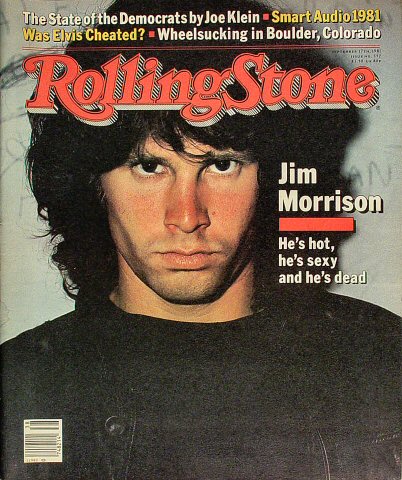
They're Hot, They're Sexy, And They're Dead

Book Review: Rock Shrines: Where the Myths Begin and the Stars Become Legends by Thomas H. Green


Nothing says rock and roll quite like dead rock stars. As crass or insensitive as this statement might seem, the fact remains that premature death has become as inextricably linked to rock and roll as the electric guitar.

Whether by pure accident, simple demand, or an even more distasteful form of commercial design, rock star deaths have also proven to be big business over the years. As the estates of such deceased artists as Elvis, John Lennon, Kurt Cobain, and Michael Jackson demonstrate, it's not at all unusual for rock stars to become even bigger commercial properties in death than they were in life.

In the cases of Jimi Hendrix and Tupac Shakur for example, their recorded output in death has exceeded the amount of music they released during their actual lifetimes. To quote a famous magazine article on one such dead rock star subject, "they're hot, they're sexy, and they're dead."


Given the fact that dead rock stars remain such a hot commodity, a book like Thomas H. Green's Rock Shrines was probably inevitable. For many fans of these artists, pilgrimages to their grave sites and other such historical markers — like Elvis' Graceland Mansion and the Dakota Building (site of John Lennon's 1980 murder) — are a necessary, if perhaps ghoulish ritual.

Rock Shrines is, for all intents and purposes, a fans guide to these very same locations. However, to call this book a mere Roadmap Of The Dead Rock Stars doesn't begin to do it the justice it deserves.

Using the theme of these dead rock star shrines as a launching point, Green — a British journalist whose work has appeared in Mixmag and Q Magazine — has actually assembled a visually striking historical overview of premature rock deaths that is highly detailed, yet also quite readable.

Each of the book's nearly two hundred individual entries is illustrated with beautiful photographs of both the stars and the shrines, along with a brief, but usually very complete composite of the artists work and impact in both life and death. What emerges from this is a picture often missed by a media eager to sensationalize the way many of these artists met their premature ends.


Not that the usually cited causes don't get coverage here — because they do. These include the already well-documented cases of drug overdoses (Hendrix, Janis Joplin, Brian Jones, Jim Morrison), murder (Lennon, Shakur, Marvin Gaye) and suicide (Cobain, Ian Curtis), as well as the equally sensational crashes by land (Duane Allman, Marc Bolan), and air (Lynyrd Skynyrd, Stevie Ray Vaughan, Buddy Holly).

Where Rock Shrines rises above many similar books though, is by paying equal tribute to those who met their premature exits due to far more mundane causes, including prostate cancer (Frank Zappa, Johnny Ramone), heart disease (Joe Strummer, Roy Orbison), and brain cancer (Bob Marley).

In his narrative, Green also shies away from some of the more notorious posthumous controversies surrounding dead rock-star subjects like Sid Vicious, Elvis, and Kurt Cobain. There are no "Who Killed Kurt?" or "Elvis is Alive" speculations here. Somewhat more strangely though, he takes a similarly hands-off approach regarding the suspicious death of Brian Jones, even as evidence in recent years has raised questions about the official verdict on the death of the original Rolling Stone.

But getting back to the original theme of the book, Green does provide a most interesting map to those famous Rock Shrines. In addition to the grave sites and the mansions, these include such unlikely locations as the tree in London where Marc Bolan crashed his car; the hotel room in Sydney where INXS vocalist Michael Hutchence is said to have died from auto-erotic asphyxiation; and New York's famous Chelsea Hotel — where, among other things, Sid Vicious is believed to have murdered Nancy Spungen.


In addition to the hundreds of photographs here, there are also a number of plastic bags filled with memorabilia that are placed throughout the book. These include such items as the death certificates of Cobain, Bolan, and Dennis Wilson; original autopsy and medical examiner's reports for Elvis and Jim Morrison (along with Jimbo's Last Will and Testament); newspaper articles on Lennon and Hendrix from the day they died; handwritten lyrics from many of these same artists, and much more. Rock Shrines also features an introduction by noted author and former groupie extraordinaire Pamela Des Barres.

If this all seems a little creepy in places, that's because, well quite frankly, it is.

Nonetheless, this is also often fascinating stuff, even if morbidly so. Given the task at hand, the author has also done an admirable job of putting the information together in an informative, yet tasteful manner. Lavishly illustrated and eminently readable, Rock Shrines is a beautifully assembled book that is a must for any serious student of rock history.

This review was first published as Book Review: Rock Shrines: Where the Myths Begin and the Stars Become Legends by Thomas H. Green at Blogcritics Magazine.

Saturday, May 1, 2010

The Women Who Have Rocked My World


They say that the voice of a woman can be enough to soothe both the savage beast in man, as well as serve as proverbial nails on a chalkboard.

Nowhere has this been more true over the years than in music. My own relationship with women in music over the years has been, well let's just say that as in life, it's been complicated.

The first time I can remember falling in love with a woman's voice was when as a pre-teen boy I first heard Grace Slick sing "White Rabbit" with the Jefferson Airplane. Even though I nary understood a thing that Grace was talking about with all her talk about pills that made you either larger or small, there was still something about her sweet, yet seductive voice that made me really want to fall down that particular rabbit hole.

Even so, I would grow to develop a certain love/hate relationship with the various women of rock over the years as I grew older. For every Janis Joplin or Aretha Franklin who were able to touch some unrealized yearning deep within my soul, or for every Ronnie Spector who was able to light the flame of innocent, unconditional romantic love — there would be those angry feminist singers who could just as quickly extinguish it.
This reached an apex in the nineties, during the era of the Cranberries, the Breeders, and especially Alanis Morisette — a singer whose songs more often than not left me wondering "hey, what'd I ever do to you?" than anything else.

Right around this time, I can remember going to an outdoor Neil Young show where The Pretenders were opening, and Chrissie Hynde — an artist whose toughness I always respected — going all ballistic on people barbecuing burgers, due to the "meat is murder" factor. I mean, it's a festival already! What the f...?

And then there was the Ani DeFranco show a friend dragged me out to, where me and him stood alone in a stadium full of angry feminists glaring menacingly at us. Never before or since have I gone to a concert where I felt more like the enemy than I did a mere spectator. I've been less scared as the lone white dude at an NWA show.

This was about the point I began asking myself "when did all these chicks get so damn angry?"

Thank God, that in between the angry feminism of the Anis and the Alanises — not to mention the empty trilling of the Mariahs and the Whitneys — there have still been some great female singers whose ability to soothe the soul have stood out from the rest.

These are great singers who understand implicitly that music works best as a comforter, rather than as a confronter.

A number of these amazing women come to mind right away, such as Sade — whose jazzy torch songs evoke a perfect mood of both longing and regret — and Annie Lennox, who just has an amazing voice period.

For me though, the female vocalists which left the deepest mark tend to fall into two categories, much as the females I tend to prefer in life do.

In category "A", we have the fiercely independent maverick, who also has the spirit of an angel. For me, there is no artist alive who epitomizes these qualities the way that Patti Smith does.


On the album Horses, and especially on extended tonal poems like her greatest song "Birdland," Patti effortlessly channels up both the spiritual and the profane in such a way as to take your head away to an entirely different sort of plane — at least if you are really listening. The fierce intellect and conviction Patti Smith brings to her work alone qualifies her as one of the true greats.

But when her unique vision is applied to an apocalyptic scenario like the one seen below in a scene from the short-lived TV series Millennium, it's as though every fear you ever had of the end of the world in your head was being split wide-open:


Speaking of great examples of music being wed to cinema, Angelo Badalamenti's soundtrack to David Lynch's TV cult-classic Twin Peaks is one of the best ever. But what was most key to this was the singularly angelic voice of Julee Cruise.

Lynch's hallucinatory vision of dark erotic danger in a small Northwestern town has often been imitated (most recently on ABC's Happy Town), but never equaled.

Perhaps the most key factor to this, was Cruise's haunting performance of the Twin Peaks theme, "Falling."

Set at closing time in the type of sleazy, smoke-filled lounge that no longer exists in these politically correct times, Cruise's rendering of this song suggests all of the possibilities, and all of the lingering erotic danger that exists in such a place as Twin Peaks.

As such, it conveys the moment perfectly.


Okay. So much for those women who appeal to the mind, and even to the soul. As for category "B," there are also those who appeal to the...well, you know...

When it comes to pure out and out eroticism, no one has ever communicated this as perfectly as Vanessa Daou did on her tragically slept on, Erica Jong-inspired album Zipless.

And this is the point where I guess I apologize for taking you through a personal mix-tape of my own fantasies.

But hell yeah. Damn, would I like to get with a girl like this:


On the other end of Vanessa Daou's pure sexuality, lies the innocent pre-"Cloudbusting" romanticism of Kate Bush. Before Kate got corrupted by the eighties New Wave of weird chicks like Lene Lovich, this was the "Dorothy in Oz" sort of girl every guy dreams of.

If there is any girl on God's green Earth I would love to be "alone on the stage tonight," with, it is the Kate Bush who is exclaiming "Wow! Wow! — Unbelievable!"


And then, of course, there are those girls who can simply sing their asses off. The first time I saw Annie Haslim perform with Renaissance, I swear to God I felt the air move when she hit those un-Godly five octave notes of hers:


Carole King — another female singer I respect by the way — once said she could make the earth move under my feet. And I had absolutely no idea what she was talking about. Annie Haslim on the other hand did it simply by opening her mouth.

Now that's my kinda girl.

This article was first published as The Rockologist: The Women Who Have Rocked My World at Blogcritics Magazine.

Thursday, April 29, 2010

The Weirdos, Secrets And Oddballs Of Happy Town: Sound Familiar?

TV Review: Happy Town


For weeks now, ABC has been hyping its new horror/mystery series Happy Town, and I can't say I blame them. With the clock rapidly ticking down on Lost, I'm sure that network executives have been just as stymied as to how to fill the void left by that franchise as its many fans have been.

For the network, the answer to that question seems to have come by way of tapping into the weirdness of another noteworthy cult classic. So, in the same way that Lost plays like what Gilligans Island might be like if it took place in The Twilight Zone, Happy Town has been hyped as sort of a modern take on Twin Peaks.

This has of course been tried before. Anybody remember Eerie, Indiana? How about Push, Nevada? Didn't think so.


In its attempt to out-Peak David Lynch, Happy Town works on some levels, and doesn't on others. There's plenty of weirdness here, some of which is genuinely intriguing. A sheriff played by M.C. Gainey (who Lost fans will recognize as that fake-beard guy from "The Others") goes into a trance every so-often and starts muttering about someone named "Chloe" while interrogating suspects. Sam O'Neill also does a nice job of making you go "hmmm" as a mysterious shop owner who could have walked right out of the script for Stephen King's Needful Things.


At other times however, things border on being cliched. There's a nasty bird that seems to hover around whenever bad things are about to happen (think of the owls from Twin Peaks or the crow from another King small-screen adaptation for The Stand). There's also kind of a glut of distracting oddball characters — from the boarding house full of spinster widows to the town drunk/tweaker, to the inbred redneck brothers who run the town landfill.

I'm assuming that at some point all of these characters will figure into some kind of larger significance to the overall plot. That's the hope, anyway.

But for now, it just seems to be a case of trying to cram too much quirkiness into a single hour. One of the things which gave Twin Peaks its allure, was the way Lynch drew you into its hallucinatory mysteries. For now at least, Happy Town seems to be more about clobbering you over the head with it.

Another thing which was key to the Twin Peaks mystique was the way it so expertly established its mood. From the towering peaks of its Pacific Northwest location, to the decadent sleaze of its dimly lit smoky bars, everything about Peaks just oozed erotic danger. The topper was the amazing music provided by Angelo Badalamenti's haunting soundtrack (featuring Julee Cruise's equally haunted vocals).


Happy Town also makes interesting use of music — at first anyway. The show opens to a pair of lovers parked in the woods as Elvis Costello's "Watching The Detectives" plays menacingly in the background — immediately tipping off the viewer something is about to happen that isn't good. Later on, the "happy" small town vibe is provided by some vintage Crosby, Stills & Nash. Following that initial promise however, the mood is broken by the worst type of canned sounding TV drama music.

So, the basic plot of Happy Town is your textbook vision of  weird small town America. Plenty of happy, shiny people living a Mayberry sense of false security that just happens to fall under the shadow of a mysterious presumed serial killer called the "Magic Man."

Nobody wants to talk about this guy for fear of bursting the bubble of their idyllic, if falsely placed crime-free small town existence. Yet, everybody from the powerful Haplin family (who the town is named after) to the gumshoes at the local cop-shop do so anyway. Not the least of which, are the local oddballs who, judging by this episode, make up about 99% of this small community. There's apparently a bigger weirdo population in Hapville, Minnesota than in San Francisco or New York City.

Unlike some of this show's harsher critics out there, I'm willing to give this Happy Town a few episodes to let the story play out — provided we get some plot development in the weeks ahead anyway. While we're at it, maybe if we could discover some of these characters and their many idiosyncrasies a few episodes at a time rather than trying to cram an entire town's worth of quirky oddballs into the first episode?


Let the mystery begin...

This review was first published as TV Review: Happy Town at Blogcritics Magazine

Sunday, April 25, 2010

The Internet, Class Warfare, And The Dumbing Down Of America


Does it bother anyone else out there besides me how we as a people seem to be rather methodically being dumbed down by the media?

From where I sit, the most obvious example of this lies in the whole "revolutionary" idea of the rhetoric being spouted by the tea-party folks. The thing is, the whole idea of a "revolution" (no matter how it is colored) sounds very exciting and romantic — especially to those of us who grew up during the volatile sixties. A lot of us sixties kids are pissed that we missed out on all the action back then.

But this?

I mean, what is it that the tea party crowd are actually rebelling against? As tea-party superstars like Sarah Palin and Glenn Beck spout their rhetoric about God, guns, taxes, and the like, and attempt to liken their protests to some sort of populist uprising, the actual picture looks very much the same as the same party line that conservatives have spouted all along:

Let the rich be rich, let the rest sort it out amongst themselves, and let the privileged amongst us get back to our lives — thank you very much, and can I get an amen?

The suspects may change over the years, but the song has always remained the same. Whether it's "Commies For McGovern" in 1972; "Adulterers for Clinton" in 1996; or the completely bizarre assortment of nutcases, birthers, and the like attempting to pin every sort of label from closet socialist to Antichrist fascist on Obama now, the agenda is always the same.
The big difference now, however, is that Barack Obama — as America's first elected African-American president — represents the sort of target that feeds into whatever lingering suspicions and prejudices remain in an entire generation of white Americans who are about to die out.

Personally, I thought that as a nation we had long since moved beyond this sort of nonsense, but there is ample evidence to the contrary. Just turn on your TV...

This is only further complicated by the fact that we are presently living in economically challenged times — a crisis that in fact was brought on by eight years under a Republican administration that spent public money like drunken sailors in order to finance an agenda that amounted to a combination of daddy issues and a war on the middle class.

You wanna' talk fascism?

How about the Immigration law just passed in Arizona? Nothing says Hitler quite like a law that demands that a racially profiled group of people "show me ze' papers."

Here in Seattle, the city council just passed a similar law targeting the more aggressive pan-handlers who inhabit the downtown area. Now, as a shopper myself (at least when I have the money), I can certainly speak to the fact that nobody likes a homeless guy following you for blocks on end attempting to shake a quarter or even a buck down from you.

But Seattle already has numerous laws on the books to combat this. Fining a guy who can scarcely afford it fifty bucks for asking for spare change to me sounds like class warfare more than anything else. Why not just string the beggars up from the highest telephone pole, right?

The solution isn't criminalizing poverty, but rather coming up with a viable alternative to it. Thankfully, newly elected Seattle mayor Mike McGinn looks to be vetoing it.

As an unemployed person myself (16 months and counting for those paying attention), there simply has to be an alternative to casting those who have fallen on hard times aside. Cutting off unemployment benefits, as some Republicans have rather aggressively pushed for (and which I can tell you from personal experience doesn't come close to paying the bills anyway) simply isn't the answer.
Yet, this is what many of those so-called "radical," romantic tea-party types actually want. This isn't a revolution. It's class warfare, albeit hidden by the same sort of "new conservatism" bullshit the Republican party has pushed for years, if not decades. Remember Newt Gingrich and his "Contract for America" in the nineties? Same dance, different partners.

What makes it different this time around, is that Barack Obama, as America's first African-American president, makes for such an easy target. As a progressive Democrat, I'm not real thrilled with Obama so far either — although my reasons for that probably differ greatly from those listening to the garbage being spewed by the tea-party crowd. Which brings me to the real point of this article...

My parents.

I love them dearly.

But every time I go over to their house for dinner, they are glued like zombies to Fox News. Which means that in between stories about the Octo-Mom, Kate Gosselin, Lindsay Lohan, or whoever the celebrity trainwreck of the week happens to be, they are being force-fed the sort of garbage journalism of how Obama is some kind of combination of Hitler, Charles Manson, and the Antichrist all rolled up into one superhuman, demonic sort of being.
The Octo-Moms and the Lindsay Lohans of the world are of course all distractions from the real problems facing the nation, and I believe they are personally designed as such. Color me a conspiracy theorist that way if you choose...

The problem here is there is simply no arguing with them about the trash they are being spoon-fed by the media here. And although Fox News is the most obvious culprit here, they are by no means the only guilty party.

As much as I love my Mom and Dad, there is no escaping the look in their eyes when I try to explain away why I haven't taken that job flipping burgers for Jack In The Box.

When the tea-baggers appeal to middle-America about over-taxation and a health care bill that is all about killing unborn babies, what they are really trying to protect is the gold-plated steering wheel on the company yacht. I'm all about the American Dream, but not when it involves common folk being put under Wall Street's thumb. That just isn't right.

The way they attract the votes of middle America has always been the same. What's different now is how they wrap that in the same nice package of Christian values and such media perpetuated sideshows as the Octo-Mom, Britney Spears, or whoever the celebrity tragedy of this week happens to be.

Guess what Farmboy? Britney's laughing at you while snorting coke from a glass slipper. Sure sucks to be you, doesn't it?
The nature of an internet journalism model based upon "content" over quality investigative reporting has only further complicated this.

However great the appeal of the "wild, wild west" atmosphere of the internet holds towards old sixties types who still romanticize the idea of a communication revolution, the fact remains that it was co-opted by Corporate America long ago.

They've already killed the checks and balances of traditional journalism, and they have certainly killed the fly in the ointment that was once represented by rock and roll.

That is unless your idea of the next John Lennon or Bob Dylan is Jay Z, or that guy from MGMT or whoever...

Meet the new boss. Same as the old boss.

Tuesday, April 20, 2010

Bruce Springsteen And The E Street Band To Release Live London Calling DVD On June 22


Bruce Springsteen And The E Street Band will release their third official live concert DVD (following 2001's Live In New York City and 2003's Live In Barcelona) on June 22, according to a report published today by Backstreets Magazine.

London Calling: Live In Hyde Park was recorded last year at London's Hard Rock Calling festival during their 2009 Working On A Dream tour. Portions of the concert have previously been seen on a television broadcast by the Fuse Network. This DVD will feature the complete performance for the first time, with the lone exception of "Rosalita," which has been dropped from the DVD (although it was shown during the Fuse broadcast).

The DVD however does include a standout version of "Jungleland" seen on that show, as well as the rest of the set including raucous cover versions of The Rascals' "Good Lovin'," Eddie Floyd's "Raise Your Hand," and the Clash's "London Calling" (which opens the show).

London Calling: Live In Hyde Park was overseen by Springsteen's usual team of producer/editor Thom Zimmy and director Chris Hilson, with audio mixing by Bob Clearmountain. It will be available in both single-disc Blu-ray and double-disc DVD versions. The set will also include two bonus performances: "Wrecking Ball" from Giants Stadium, and "The River" from England's Glastonbury Festival.

While this is the third officially released live concert DVD from Springsteen and the E Street Band, the Born To Run 30th Anniversary Deluxe Edition also features a 1975 performance from London's Hammersmith Odeon. Springsteen has also previously released live DVDs of a VH1 Storytellers performance as well as the 2007 Live In Dublin set with the Seeger Sessions Band.

Bruce Springsteen is widely expected to release a deluxe remastered boxed set edition of his 1978 album Darkness On The Edge Of Town later this year.

Here is the full track list for London Calling: Live in Hyde Park, courtesy of Backstreets Magazine:

1. London Calling
2. Badlands
3. Night
4. She's the One
5. Outlaw Pete
6. Out in the Street
7. Working on a Dream
8. Seeds
9. Johnny 99
10. Youngstown
11. Good Lovin'
12. Bobby Jean
13. Trapped
14. No Surrender
15. Waiting on a Sunny Day
16. Promised Land
17. Racing in the Street
18. Radio Nowhere
19. Lonesome Day
20. The Rising
21. Born to Run
22. Hard Times (Come Again No More)
23. Jungleland
24. American Land
25. Glory Days
26. Dancing in the Dark
27. Music under end credit sequence: Raise Your Hand

Bonus Tracks:
The River: Glastonbury Festival, 6/27/09
Wrecking Ball: Giants Stadium, 2009

Sunday, April 18, 2010

Glen's Job Search Adventures For The Week Ending 04/17/10


For the record this is month 16, week two (and a half). This week there was both good news and bad news. The bad news was that I learned that in addition to all the scams on the net that prey on the unemployed, and all the insurance companies willing to hire seemingly anyone willing to buy the license...that there are also those would-be employers who don't believe in follow-through.

This week I had two scheduled phone interviews where they simply never called. Of these, one later informed me that a decision had already been made, and the other never called at all. My question here is why contact me at all if you have zero intention of giving me any shot at all. But that's just how it is for those of us who managed to get caught being sucked down by the dying days of Bushonomics. The employers have all the power right now and the rest of us simply don't have much of a chance.

On the plus side, I did have one very promising phone interview which will be followed by an in-person interview next week. This is also a music-related gig which gives me reason for optimism, even if it is of the guarded type....
I'll keep you posted on how that goes. Till' then....will somebody...anybody... please stop referring to me as a former "legend" and just hire my ass, already? I'm quite content at this stage of my life with just working...former glories notwithstanding.

Till' next week...I'll try to keep on keeping the faith. Or something like that...